

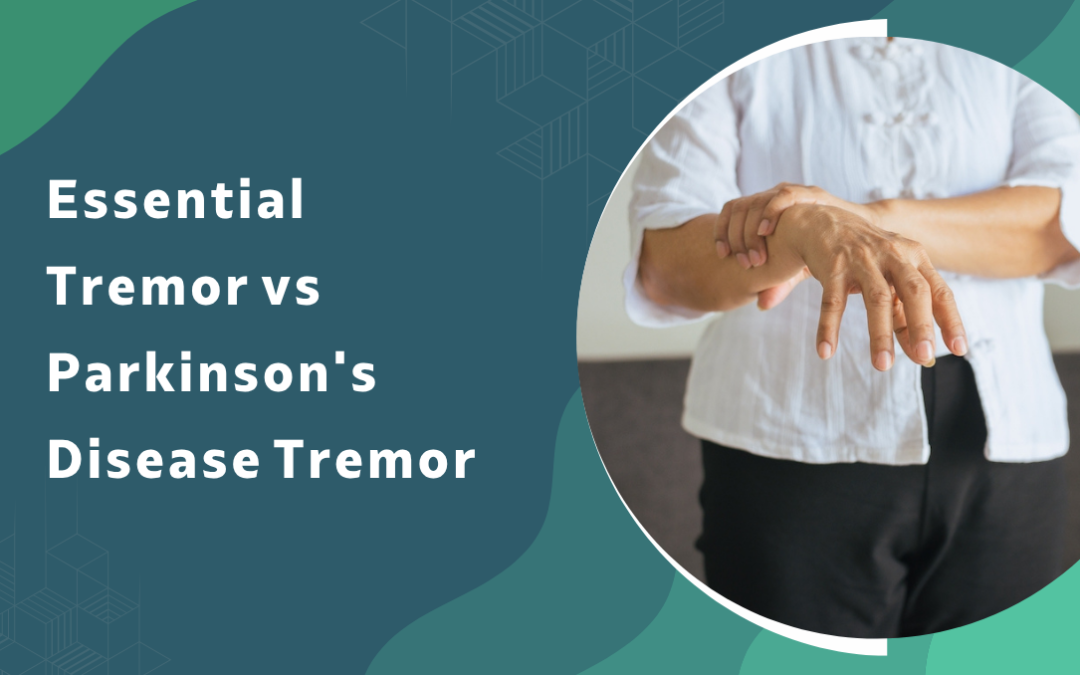
Essential tremor is a neurological movement disorder producing rhythmic shaking during voluntary movement or sustained posture. Parkinson’s tremor occurs at rest and is accompanied by rigidity, bradykinesia, and postural instability. The two conditions are clinically distinct, carry different prognoses, and require entirely different treatment pathways and misdiagnosis in either direction leads to treatments that don’t work and investigations that miss what’s actually happening.
According to Dr. Gurneet Singh Sawhney, Neurosurgeon in Mumbai, essential tremor and Parkinson’s tremor are misdiagnosed in both directions regularly the distinction matters because medication, surgical target, and long-term prognosis differ significantly between them.
What Is Essential Tremor and How Does It Present?
Essential tremor affects approximately five percent of adults over 60. It varies from mild functional inconvenience to complete loss of independence and many patients present late having adapted to significant limitation before seeking assessment.
- Tremor type and timing: Essential tremor appears during voluntary movement and sustained posture, not at rest. Handwriting, holding a cup, eating with a spoon these are the tasks that expose it. And the tremor typically reduces when the limb is fully relaxed and unsupported.
- Distribution and progression: Hands and arms are most commonly affected. Head tremor, voice tremor, and leg tremor occur in patients with longer disease duration. Because essential tremor is slowly progressive, functional impairment at presentation is often more significant than patients initially report.
- Medication response: Propranolol and primidone achieve meaningful tremor reduction in approximately 50 to 60 percent of patients at adequate doses. Temporary alcohol-related improvement is a characteristic feature clinically useful as a diagnostic pointer. Patients failing both medications are candidates for functional neurosurgery evaluation.
- Family history: Around 50 percent of essential tremor cases have a positive family history suggesting autosomal dominant inheritance in many families. A negative family history does not exclude the diagnosis or alter surgical candidacy assessment.
Essential tremor diagnosis is clinical. No biomarker confirms it history, tremor timing, and examination findings together determine the diagnosis.
Explore functional neurosurgery in Mumbai for essential tremor surgical evaluation at Fortis Hospital Mulund West.
How Does Essential Tremor Differ From Parkinson’s Tremor?
This distinction is one of the most clinically important assessments in movement disorder neurology. Getting it wrong means treating the wrong condition entirely.
- Rest versus action tremor: Parkinson’s tremor is most prominent when the limb is fully relaxed and reduces with voluntary movement. Essential tremor does the opposite. Because this single feature is the most reliable differentiator, examining the patient at rest and during action is the foundation of any assessment.
- Associated motor features: Parkinson’s disease produces rigidity, bradykinesia, micrographia, and shuffling gait alongside tremor. Essential tremor produces none of these. And a patient with isolated tremor and no additional motor findings on examination almost never has Parkinson’s disease which is precisely why examination technique matters more than any single investigation.
- Surgical targets differ: Deep brain stimulation for essential tremor targets the ventral intermediate nucleus of the thalamus. DBS for Parkinson’s disease targets the subthalamic nucleus or globus pallidus internus. Operating on the wrong target because the diagnosis was incorrect produces no clinical benefit and exposes the patient to surgical risk for nothing.
- Tremor character and frequency: Parkinson’s tremor has a pill-rolling quality at three to five hertz affecting the thumb and fingers. Essential tremor oscillates at six to twelve hertz involving the whole hand or wrist. But frequency alone is insufficient for diagnosis — the full clinical picture determines it.
Families who have read about whether neurological problems can exist with normal scans understand why clinical examination findings determine movement disorder diagnosis rather than imaging alone.
Why Choose Dr.Gurneet Singh Sawhney?
Dr. Gurneet Singh Sawhney completed dedicated fellowships in functional neurosurgery under Prof. Taira at Tokyo Women’s Medical University and epilepsy surgery under Prof. Sugano at Juntendo University, both high-volume academic centres where deep brain stimulation and movement disorder surgery formed a structured part of the caseload. At Fortis Hospital Mulund West, tremor cases receive full neurological examination, movement disorder evaluation, and MRI before any surgical planning begins.
Patients receive a structured assessment covering correct diagnosis, medication optimisation review, DBS candidacy where appropriate, and a direct discussion about which surgical target applies to their specific condition. The recommendation is based on objective clinical findings for that individual case.
FAQ's
What is the clinical difference between essential tremor and Parkinson's tremor?
Essential tremor is an action tremor during movement and posture. Parkinson’s tremor is a rest tremor with associated rigidity and bradykinesia two clinically distinct conditions.
Can essential tremor be treated with surgery?
Deep brain stimulation targeting the ventral intermediate nucleus of the thalamus achieves significant tremor reduction in medication-refractory essential tremor cases.
Does essential tremor lead to Parkinson's disease?
Essential tremor does not cause or convert to Parkinson’s disease. The two conditions have distinct pathological mechanisms, clinical features, and long-term prognoses.
What medications are used for essential tremor?
Propranolol and primidone are first-line medications achieving meaningful tremor reduction in approximately 50 to 60 percent of patients at adequate doses.
References
- National Institute of Neurological Disorders and Stroke. Neurological Diagnostic Tests and Procedures. NINDS, NIH.
- Louis ED, et al. Essential Tremor and its Distinction from Parkinson’s Disease. PubMed Central, NCBI.
