

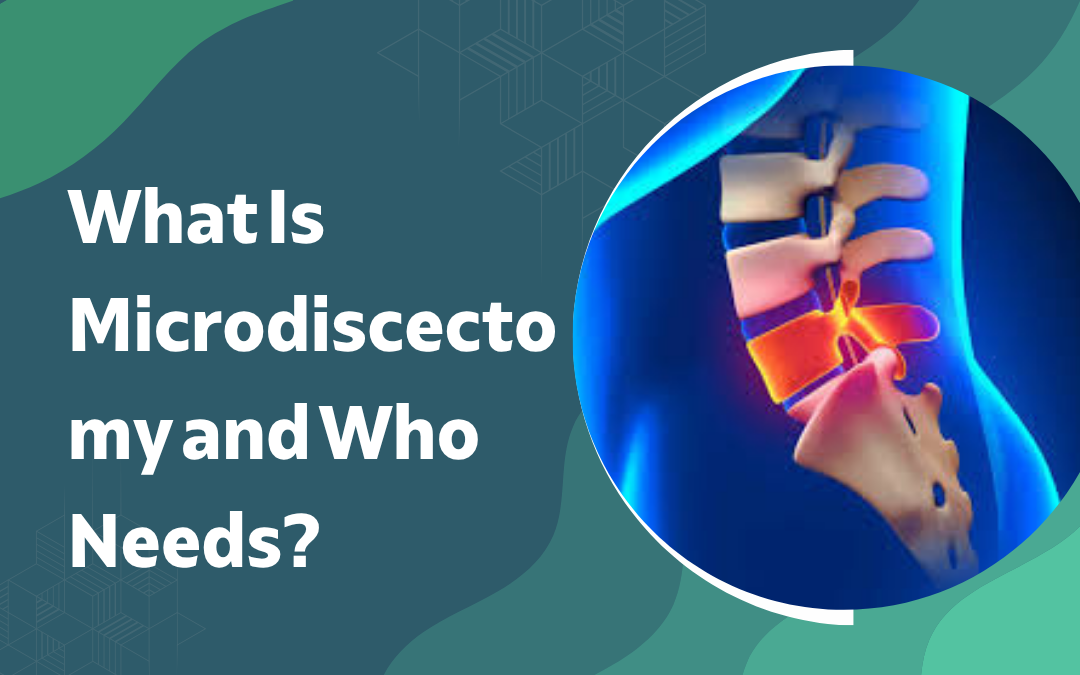
Microdiscectomy removes the herniated part of a lumbar disc that’s pressing on a spinal nerve root. It’s minimally invasive, done through a small incision, and most patients go home the same day. Leg pain relief tends to be immediate. Back pain and nerve symptoms like numbness or weakness take longer to settle. It’s the surgery that comes up when sciatica doesn’t improve on its own.
According to Dr. Gurneet Singh Sawhney, a leading spine specialist in Mumbai, Microdiscectomy has an excellent track record for relieving leg pain from disc herniation. The patients who do best are those operated at the right time not too early, and not after years of progressive neurological deficit.
Leg pain, numbness, or weakness not settling with physiotherapy?
Who Is a Candidate for Microdiscectomy?
Surgery isn’t the first step. It comes up when conservative treatment has run its course or when something more urgent forces the issue.
Persistent sciatica: Six to twelve weeks of leg pain, numbness, or weakness that hasn’t responded to physiotherapy and medication is the standard threshold for surgical discussion. Some patients recover faster with early surgery, but one-year outcomes are similar either way.
Progressive neurological deficit: A foot drop or rapidly worsening leg weakness over days to weeks can’t wait for another round of conservative treatment. That’s when the timing shifts.
Cauda equina syndrome: Bladder or bowel dysfunction, saddle anaesthesia, and bilateral leg weakness from a massive central disc herniation this needs emergency surgery, not an outpatient referral.
Failed conservative care: Physiotherapy, NSAIDs, and epidural injections are tried first. When an adequate trial of these hasn’t worked, surgery is the logical next conversation.
Most herniations at L4-L5 and L5-S1 respond well to this procedure. For patients weighing whether surgery is the right step, a structured spine surgery assessment covers the full range of options and what each one realistically offers.
How Is Microdiscectomy Performed?
It runs under general anaesthesia and takes between 45 and 90 minutes in most cases. The patient is positioned prone on the operating table.
The incision: A 2 to 3 centimetre midline cut is made over the affected level. Nothing like conventional open spine surgery. Muscle damage is minimal because retraction replaces stripping.
Accessing the disc: A tubular retractor holds the paraspinal muscles aside. The operating microscope goes in, giving the surgeon a clear magnified view of the nerve root and the disc.
Removing the herniation: The fragment pressing on the nerve comes out. The rest of the disc stays. That’s the whole point of the procedure targeted removal, not wholesale disc excision.
Closure: Retractor out, muscles settle back, wound closed with sutures. Most patients are up and walking within a few hours and discharged before the end of the day.
Recovery after this is predictable for most patients. The microdiscectomy recovery blog breaks down what to expect week by week.
What Are the Outcomes and Risks of Microdiscectomy?
The surgery works well for the right problem. It doesn’t fix everything, and patients should know that going in.
Leg pain relief: About 85% of patients report meaningful improvement in leg pain. That’s the symptom this surgery targets. For most it’s noticeable within days of waking up.
Back pain: Axial back pain doesn’t respond to microdiscectomy the way leg pain does. Patients whose primary complaint is back rather than leg symptoms tend to be less satisfied with results.
Recurrence: Roughly 5 to 10% of patients herniate at the same level again within five years. Smoking, obesity, and going back to heavy lifting too soon push that number up.
Complications: Dural tears happen in about 2 to 4% of cases. When managed on the table, there’s usually no lasting consequence. Nerve injury, infection, and haematoma are uncommon. For persistent chronic pain after surgery, spinal cord stimulation is worth reviewing as a next option.
Patient selection is what determines outcomes. Clear nerve compression with predominantly leg symptoms gives the most consistent result.
Why Choose Dr. Gurneet Singh Sawhney?
Dr. Gurneet Singh Sawhney is a spine neurosurgeon with fellowship training from Japan and over 18 years managing lumbar disc disease, from straightforward L4-L5 and L5-S1 herniations through to revision surgery and complex spinal reconstruction. Minimally invasive microdiscectomy is a routine part of that practice.
Most patients who reach surgery have already spent weeks or months trying everything else. By that point the nerve has been compressed long enough. Waiting further rarely improves that picture. The right operation, timed correctly, is what separates a fast recovery from a drawn-out one.
Diagnosed with a herniated disc and unsure whether surgery is the right next step for you?
Frequently Asked Questions
What is microdiscectomy used for?
Microdiscectomy removes the herniated portion of a lumbar disc compressing a spinal nerve root. It is the gold standard surgical treatment for sciatica that has not resolved after 6 to 12 weeks of conservative care.
How long does microdiscectomy recovery take?
Most patients return to light activity within 2 weeks and resume full function by 6 weeks. Nerve-related symptoms like numbness or weakness may take longer to fully resolve.
What are the risks of microdiscectomy?
Main risks include recurrent disc herniation in around 5 to 10 percent of cases, dural tear, infection, and nerve injury. Overall complication rates are low with experienced surgeons.
When is microdiscectomy recommended over conservative treatment?
Surgery is recommended when sciatica persists beyond 6 to 12 weeks despite conservative care, when progressive neurological deficit is present, or when cauda equina syndrome develops.
Is microdiscectomy a major surgery?
No. It is a minimally invasive procedure through a small incision, typically completed in under an hour, with most patients discharged the same day.
Disclaimer: The information shared in this content is for educational purposes only and not for promotional use.