
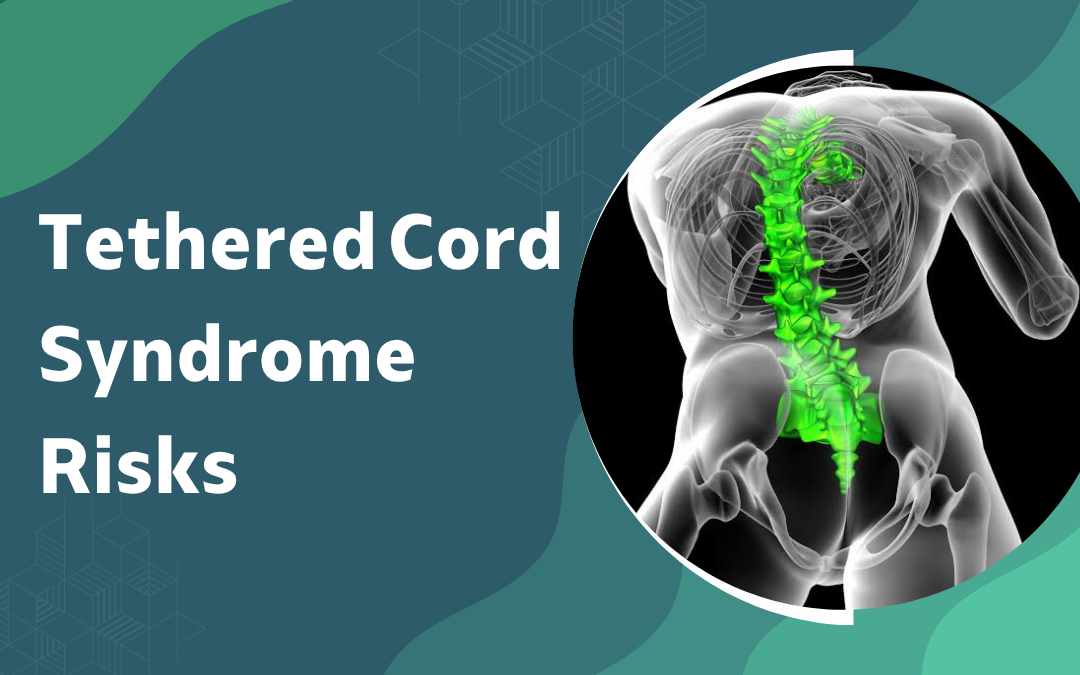
Tethered cord syndrome can cause paralysis in adults when the spinal cord stays abnormally anchored, gradually cutting blood flow and damaging the nerves controlling leg strength, bladder function and sensation. Many adults carry it undiagnosed from birth, only noticing symptoms decades later once the tension crosses a threshold the cord can’t absorb. Paralysis here isn’t sudden it builds over months or years, which is why early recognition matters.
According to Dr. Gurneet Singh Sawhney, a leading spine surgeon in Mumbai, “By the time an adult with tethered cord reaches me with leg weakness, the nerve damage has usually been building quietly for years, so waiting rarely helps.”
Could Tethered Cord Syndrome Be Causing Your Symptoms? Get Expert Answers Today.
What Causes Tethered Cord Syndrome in Adults?
Adult tethered cord usually traces back to a congenital anomaly that stayed silent until mechanical stress finally caught up with it.
- Spina Bifida Occulta: a hidden gap in the vertebral arch can leave the spinal cord fused to surrounding tissue from birth, and this quiet fusion often stays symptom-free until everyday spinal flexion outpaces what the cord can absorb.
- Fatty Filum: fat infiltration thickens and stiffens the lowest strand of the spinal cord so it can no longer slide freely during bending, and that lost slack is frequently the real trigger behind symptoms that show up decades late.
- Prior Surgery: scar tissue from an earlier spinal operation, even one performed in childhood for something unrelated, can re-tether a previously released cord and bring symptoms back years afterwards.
- Lipomeningocele: a fatty mass tethered to the spinal cord through a bony defect anchors the cord in place, and because that mass grows slowly alongside the patient, weakness tends to creep in rather than announce itself.
Patients weighing their options can also read more on spine surgery and when it becomes medically necessary.
How Is Tethered Cord Syndrome Treated to Prevent Paralysis?
Treatment focuses on releasing the cord before nerve damage turns permanent, and timing matters more than technique.
- Detethering Surgery: a neurosurgeon carefully divides the fibrous or fatty band anchoring the cord under microscopic guidance, restoring normal movement of the cord within the canal and halting further nerve stretch.
- Neuromonitoring: continuous nerve signal tracking during surgery lets the surgical team tell functional nerve tissue apart from scar or fat in real time, which sharply lowers the risk of new deficits during release.
- Spasticity Management: patients with established muscle tightness often need spinal cord stimulation or targeted medication alongside detethering, because releasing the cord doesn’t automatically reverse tone changes built up over years.
- Physical Rehabilitation: recovery of strength and bladder control after detethering can take months and depends heavily on how much nerve damage existed before surgery. But rehabilitation usually starts almost as soon as the wound heals.
Surgical outcomes are consistently better when detethering happens before permanent weakness sets in. Earlier surgery, better odds, fewer permanent deficits a pattern seen across spinal cord injury surgery more broadly, where timing before deficits solidify is often the single biggest factor in recovery.
Why Choose Dr. Gurneet Singh Sawhney?
Dr. Gurneet Singh Sawhney brings 18 years of overall neurosurgical experience, including advanced fellowship training in functional neurosurgery and neuroendoscopy from Japan. Dr. Gurneet Singh Sawhney has managed complex spinal cord conditions across thousands of patients, using microsurgical and minimally invasive techniques to protect nerve function during detethering.
Patients who come in with early gait changes typically retain far more strength after surgery than those who wait until bladder symptoms appear (a gap most patients don’t realize exists until it’s explained to them). That difference in outcome is the entire reason this condition can’t be left alone.
Frequently Asked Questions
Can tethered cord syndrome be reversed completely?
Detethering surgery halts progression, but pre-existing nerve damage may not fully reverse.
Is tethered cord syndrome always present from birth?
Yes, it’s congenital, though symptoms often appear only in adulthood.
Does tethered cord syndrome always require surgery?
No, mild cases without progressive symptoms may be monitored instead.
How fast can paralysis develop once symptoms start?
Progression is usually gradual, over months to years, not sudden.
Disclaimer: The information shared in this content is for educational purposes only and not for promotional use.