

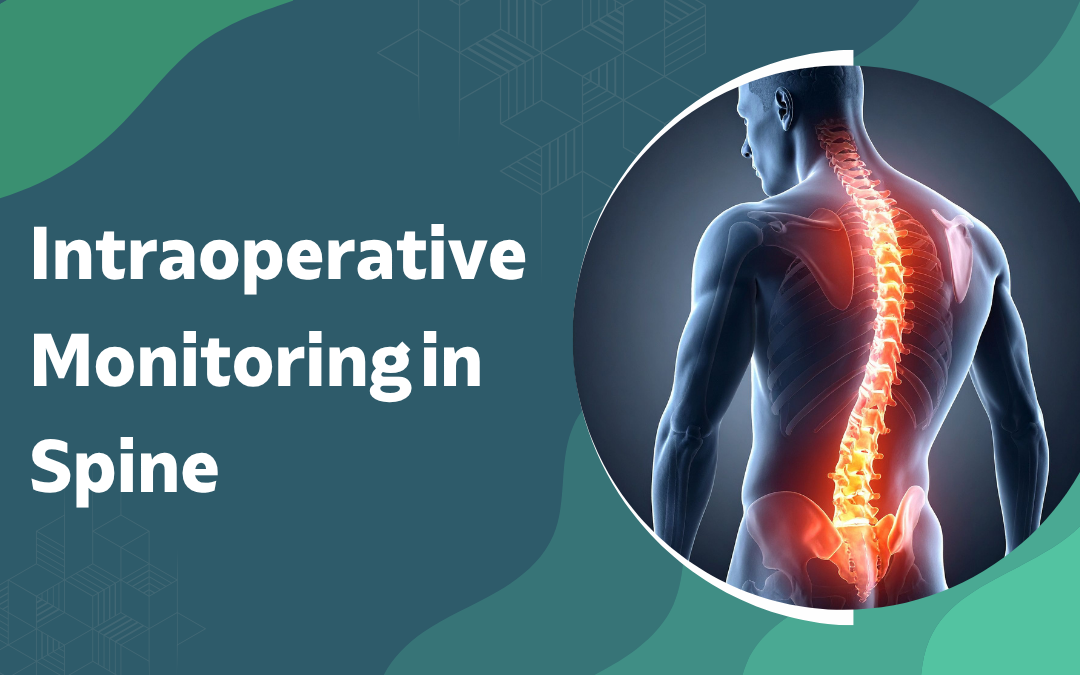
Intraoperative monitoring tracks spinal cord and nerve function in real time throughout an operation, alerting the surgeon to a problem before it becomes a permanent deficit. Electrodes placed on the patient measure electrical signals travelling along the cord and nerve roots. When those signals change, the surgeon investigates and reverses the cause, adjusting a retractor, releasing a vessel or repositioning an implant, before the damage sets in. It is standard practice in complex spine surgery and has meaningfully reduced post-operative neurological complications.
According to Dr. Gurneet Singh Sawhney, a leading spine surgeon in Mumbai, IONM doesn’t make surgery safer by removing the risk, it makes it safer by flagging the risk early enough to act on. A change in signal is information, and information is exactly what you need when the cord is at stake.
Scheduled for complex spine surgery and want to understand what the monitoring involves?
What Does Intraoperative Monitoring Actually Measure?
Several electrical signals are tracked simultaneously, each covering a different part of the neurological pathway.
SSEPs: somatosensory evoked potentials measure the sensory pathway from peripheral nerve all the way to the cortex, detecting any interruption along the cord
MEPs: motor evoked potentials track the descending motor pathway from cortex to muscle, covering the front of the cord that SSEPs alone cannot fully assess
EMG: electromyography monitors individual nerve roots both continuously and through triggered testing during screw placement, confirming proximity to nerve tissue in real time
Combined: using SSEPs and MEPs together gives the most complete picture of spinal cord function, since MEP shows the highest sensitivity at around 90 percent while SSEP delivers high specificity at over 97 percent
So the system gives continuous feedback on every pathway the surgery could affect. That feedback is what separates spine surgery that monitors from one that operates without it.
When Is Intraoperative Monitoring Most Important?
Some operations carry more neurological risk than others. Those are where monitoring does the most work.
Deformity: correcting scoliosis and spinal curves puts mechanical stress on the cord during correction manoeuvres, and real-time alerts allow the surgeon to pause or reduce the correction before damage sets in
Tumours: removing a tumour from or near the spinal cord requires constant monitoring to distinguish functional tissue from tumour at the margin, where the visual field alone isn’t enough
High cervical: surgery at C1 to C3 puts both spinal cord and brainstem pathways within the operative field, making complex spine surgery at that level one of the highest monitoring priorities
Revision: re-operating on a previously scarred spine adds unpredictability that routine cases don’t carry, and monitoring adds a safety layer when anatomy is distorted
For straightforward lumbar procedures, monitoring matters less since the cord ends above that level. But for anything that threatens the cord directly, a signal change is the last warning before a deficit. This guide on spinal cord injuries explains what cord-level injury actually means for function.
Why Choose Dr. Gurneet Singh Sawhney?
Dr. Gurneet Singh Sawhney trained in spine and neurosurgery in Japan and has performed complex spinal procedures using intraoperative monitoring for over 18 years. His practice integrates IONM across deformity correction, tumour surgery and high cervical work.
Most neurological complications in spine surgery announce themselves as a signal change before they show up clinically. Monitoring doesn’t prevent every complication. It catches the preventable ones before they become permanent.
Frequently Asked Questions
Is intraoperative monitoring used in all spine surgeries?
No, it is mainly used in complex procedures where the spinal cord is at risk.
Can intraoperative monitoring prevent paralysis?
It detects the warning signal early enough to allow intervention before paralysis occurs.
What happens when a signal change occurs during surgery?
The surgeon pauses and investigates the cause before any neurological deficit becomes permanent.
Does intraoperative monitoring add time to the operation?
Setup takes additional time but the monitoring itself runs continuously throughout the procedure.
Disclaimer: The information shared in this content is for educational purposes only and not for promotional use.