
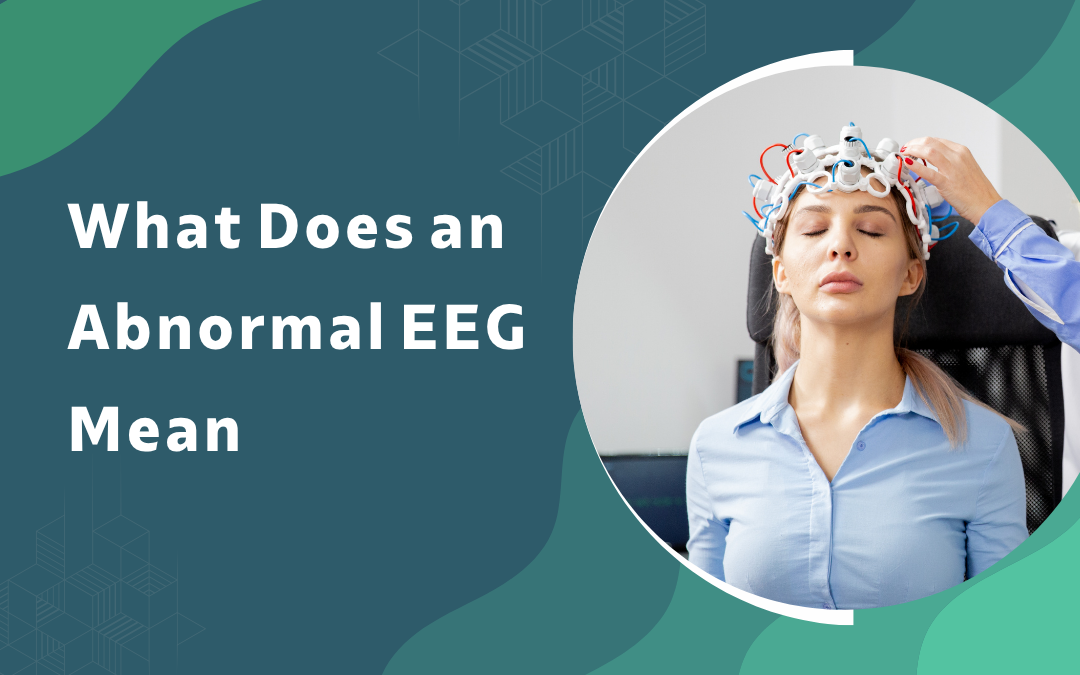
An abnormal EEG means the brain’s electrical activity isn’t running on its usual rhythm. The report flags irregular patterns, mostly slowing or spikes, and these can point to epilepsy, tumours, brain injuries, or metabolic problems. But no, an abnormal EEG doesn’t always mean epilepsy. Plenty of other things cause it. Infections, migraines, sleep loss, and even normal variants in children can throw off the trace without any seizure being involved.
Here’s a quick reference for what shows up on most reports.
| EEG Pattern | What It Indicates | Epilepsy Link |
| Spikes and sharp waves | Cortical irritability | Strong |
| Generalised slowing | Encephalopathy or metabolic issue | Weak |
| Focal slowing | Localised brain dysfunction | Possible |
| Triphasic waves | Liver or kidney dysfunction | Rare |
| Benign variants | Normal in children and young adults | None |
According to Dr. Gurneet Singh Sawhney, neurosurgeon in Mumbai, Abnormal EEG findings need careful correlation with the patient’s history because not every spike or slowing on the report points to epilepsy.
What conditions other than epilepsy can cause an abnormal EEG?
Plenty. EEG abnormalities turn up across all kinds of neurological and systemic conditions, and seizures are just one entry on a fairly long list. What’s actually causing the trace usually depends on what the brain has been through lately, and what the patient’s medical history looks like underneath it all.
- Stroke: Damaged tissue throws off focal slowing on the affected side, and a quick read can make it look almost identical to epileptic activity if you’re not careful.
- Migraine: Severe attacks can produce transient slowing during or just after an episode. It clears up on its own. No seizure, no follow-through.
- Infections: Encephalitis and meningitis disturb brain rhythms well before the patient feels recovered, which is why post-illness EEGs sometimes look worse than the patient does.
- Brain tumours: A mass distorts the electrical activity around it. Sometimes the pattern mimics an epileptic focus closely enough that imaging becomes the deciding factor.
Because so much overlaps clinically, the report alone never tells you the whole story. You need imaging, history, and clinical context together. Patients with structural concerns are usually referred for specialised seizure treatment in Mumbai once the underlying cause becomes clear.
When does an abnormal EEG actually confirm epilepsy?
Confirming epilepsy takes more than one odd-looking trace. There are specific things doctors hunt for, and they only carry weight when the clinical picture matches.
- Recurrent spikes: When epileptiform discharges keep firing from the same brain region across multiple recordings, that’s a strong pointer toward a real epileptic focus.
- Witnessed seizure: Catching an actual seizure on EEG, sometimes during workup for epilepsy surgery, is about as definitive as the diagnosis ever gets.
- Generalised discharges: Three-per-second spike-wave complexes lean toward absence epilepsy. Polyspike patterns suggest something else, usually juvenile myoclonic types.
- Photic response: A strange reaction to flashing light during the test can flag photosensitive epilepsy, which often slips past routine recordings.
And here’s the thing most people don’t realise. A normal EEG between episodes doesn’t actually rule out epilepsy. Roughly half of patients with confirmed epilepsy have completely normal interictal recordings the first time around. So repeat studies, sleep-deprived runs, or video monitoring often follow. For more on this, see this guide on tonic-clonic seizures and their risks.
Why Choose Dr.Gurneet Singh Sawhney?
Dr. Gurneet Singh Sawhney is a neurosurgeon in Mumbai with over 18 years of clinical work behind him and fellowships in Epilepsy Surgery and Functional Neurosurgery from Japan. He’s spent years reading complex EEG reports the way they should be read, and that’s pulled many patients off anti-epileptic medication they never actually needed.
People come in after years of being misdiagnosed. They walk out with proper answers, the right scans, and a treatment plan that fits what’s really going on.
FAQ's
Can a healthy person have an abnormal EEG?
Yes, around 1-2% of healthy adults show minor EEG abnormalities without any neurological disease.
Does a normal EEG rule out epilepsy?
No, nearly half of epilepsy patients show normal EEG between seizure episodes on first recording.
How long should an EEG be done?
Standard EEG runs 20-40 minutes, but prolonged or video EEG may extend to 24-72 hours.
Can stress cause abnormal EEG findings?
Stress alone does not cause abnormal EEG, but sleep loss linked to stress can produce mild changes.
References
- World Health Organization. Epilepsy fact sheet
- National Institute of Neurological Disorders and Stroke. Epilepsies and Seizures Information