
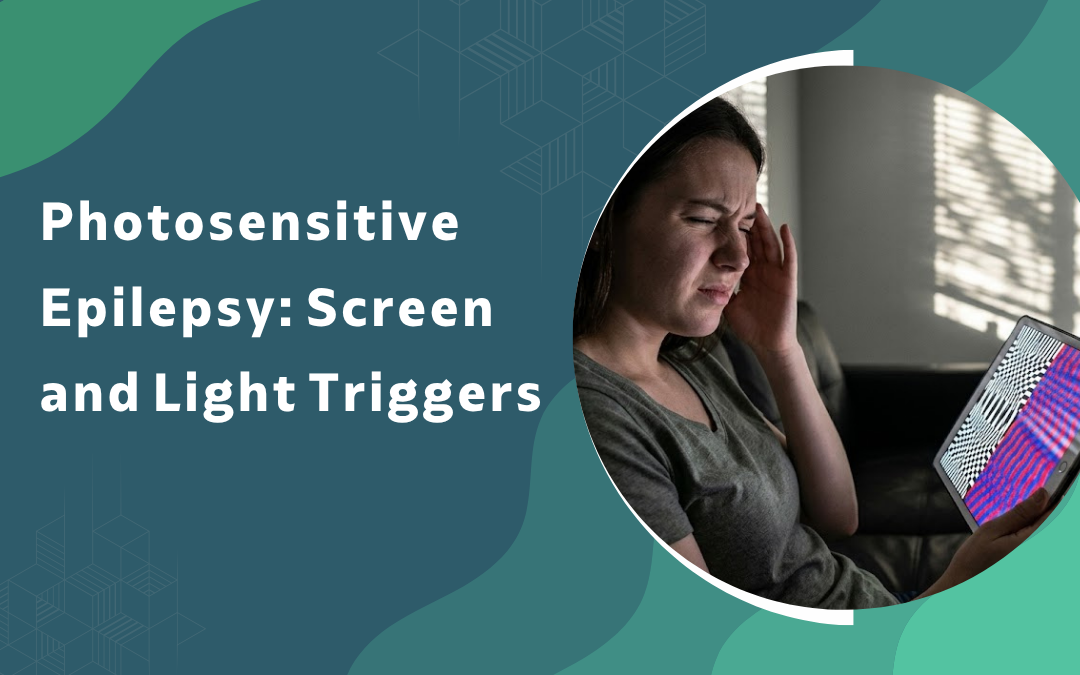
Yes, certain lights and screens can trigger seizures in people with photosensitive epilepsy, a condition affecting about 3% of those with epilepsy. Common triggers include flashing lights, strobe effects, fast-changing video game images, and high-contrast or pulsating patterns. The most provocative flash frequencies fall between 3 and 30 flashes per second, with 15 to 25 Hz carrying the highest risk.
According to Dr. Gurneet Singh Sawhney, an experienced neurosurgeon in Mumbai, Most photosensitive seizures fire in response to flash rates between 15 and 25 Hz, which is exactly the range you find in poorly calibrated screens, strobing club lights, and certain animated content.
Noticed your child freezing during gameplay or after watching strobing content?
What lights and screens actually trigger photosensitive seizures?
Not every flash sets off a seizure, the brain reacts to specific frequencies, contrast levels, and patterns more than to brightness alone. The table below breaks down the four main trigger categories by risk level and real-world source.
Trigger Type | Risk Range | Real-World Source | Why It Provokes |
Flash rate | 3 to 60 Hz, peak 15–25 Hz | Strobe lights, gaming effects, club lighting | Matches cortical firing rhythm and overwhelms inhibitory circuits |
Pattern contrast | High-contrast, static or moving | Black-white stripes, checkerboards, geometric grids | Visual cortex reacts to spatial pattern itself, not just motion |
Screen distance | Closer than 2 metres | TV, monitor, mobile screens at arm’s length | Flashing surface fills more of the visual field, full-field stimulation is far stronger |
Red flashes | Saturated deep red, alternating | Animated content, LED displays, certain ads | Red wavelength hits retinal pathways harder than other colors |
If photic triggers keep showing up in episodes, a structured seizure treatment plan with EEG photic stimulation testing is the right next step.
How is photosensitive epilepsy diagnosed and managed?
Diagnosis starts with the seizure history but confirmation needs an EEG done with controlled light stimulation, called intermittent photic stimulation, or IPS.
- EEG with IPS: A flashing strobe at varying frequencies is shown during the EEG, and a positive photoparoxysmal response on the trace confirms photosensitivity even if no full seizure happens during the test.
- Trigger audit: Reviewing daily exposure, screen time, gaming habits, and lighting environments helps map what set off past episodes, because patients often miss subtle triggers like ceiling fan strobing or sunlight through trees.
- Medication: Sodium valproate remains the first-line option for generalised photosensitive epilepsy, and levetiracetam is often added or substituted when valproate is unsuitable, particularly for women of childbearing age. Drug-resistant cases sometimes need epilepsy surgery evaluation.
- Screen rules: Polarised glasses with one lens covered, a 2-metre TV distance, lower screen brightness, and avoiding gaming when tired all reduce trigger exposure measurably.
For a closer look at how severe seizure types behave, our blog on whether a tonic clonic seizure can be fatal covers the warning signs every family should know.
Why Choose Dr. Gurneet Singh Sawhney
Dr. Gurneet Singh Sawhney brings 18 years in neurosurgery with fellowship training in epilepsy surgery from Juntendo University Japan, and that hands-on experience with reflex and drug-resistant epilepsy cases shapes how every photosensitive workup is handled here.
What patients consistently mention is the EEG report walkthrough. They get the trace explained line by line, with the exact flash frequency that triggered the response shown on screen, so families understand what to avoid before they leave the room.
FAQ's
Can photosensitive epilepsy go away with age?
Yes, about 25% of patients outgrow photosensitivity by their mid-twenties.
Are all video games dangerous for photosensitive patients?
No, only games with rapid flashes or strobing effects pose real risk.
Does wearing sunglasses help prevent seizures?
Polarised blue-tinted glasses can reduce photic response in many patients.
Is photosensitive epilepsy inherited?
Yes, it has a strong genetic component and often runs in families.
References
- Photosensitive Epilepsy and Photic Stimulation — Epilepsy Foundation
- Reflex Seizures and Photosensitivity Clinical Review — PubMed Central