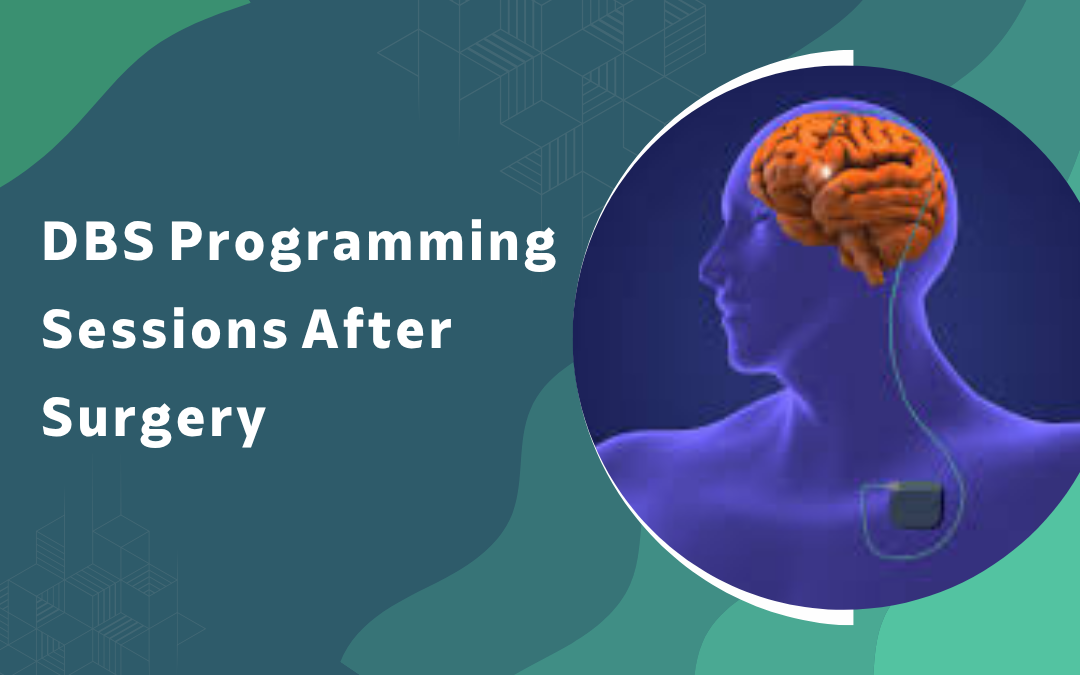
DBS programming starts roughly 3 to 4 weeks post-op. A neurologist sits with you, holds a small wireless device, and switches the stimulator on for the first time. Then the real work begins testing contacts, nudging voltage, tweaking pulse width and frequency until tremor and stiffness back off. Most sessions run 30 to 60 minutes. You’ll need several over a few months.
According to Dr. Gurneet Singh Sawhney, neurosurgeon in Mumbai, The surgery only places the leads. Symptom control comes later, from how carefully we tune the current.
Tremors still breaking through your meds?
How does the first DBS programming session work?
First session is the long one. Sets the tone for everything after.
- Initial check: Doctor pulls up the lead position on the programmer, then walks through all four contacts on each side, one at a time. Some contacts ease tremor cleanly. Others trigger tingling or muscle pulling, and those get ruled out fast
- Threshold testing: Voltage gets pushed up slowly. You report what you feel — tremor stopping, stiffness loosening, anything weird like a tugging in your face. The neurologist watches, notes the working window, and stops before side effects show up
- Setting selection: Once a good contact is locked in, pulse width and frequency get programmed in. Parkinson’s usually starts at 60 microseconds and 130 Hz. Dystonia patients run wider pulses. Numbers shift case by case
- Medication review: Levodopa gets trimmed down. Full medication plus full stimulation can throw patients into dyskinesia, so the doctor pulls back the drug load as the stimulation builds. It’s a balancing act, not a clean swap
You’ll spend 2 to 3 hours in that first visit. You go home with a patient programmer, and your follow-up DBS treatment appointments get booked across the coming months.
Why are multiple programming sessions needed after DBS?
One session never nails it. The brain takes time to settle into stimulation, and so does the body.
- Symptom shift: Parkinson’s doesn’t sit still. What worked at session one might fall short by session three, and the doctor keeps recalibrating to hold tremor and rigidity steady week after week
- Side effects: Slurred speech, balance off, numb patches — these don’t always show up on day one. Sometimes they creep in after days of continuous stimulation. Each visit checks for them and dials things back if needed
- Battery life: Settings aren’t just about symptoms. Lower voltage on the right contact stretches battery years and pushes back replacement surgery, which matters a lot if you’re younger and looking at Parkinson’s disease surgery as a long-term plan
- Long-term tuning: After 6 months, sessions thin out. Once or twice a year is plenty for most patients. And if you’ve got newer directional leads, the doctor can steer current more precisely without changing the hardware
By session four or five, most patients are stable. Our blog on Parkinson’s disease symptoms helps families spot what’s worth flagging between visits.
Why Choose Dr. Gurneet Singh Sawhney
Dr. Gurneet Singh Sawhney has been doing functional neurosurgery for over 20 years. More than 200 DBS cases — Parkinson’s, dystonia, essential tremor — and he works hand-in-hand with movement disorder neurologists for the programming side. That whole-loop approach is why he’s one of the trusted names in Dr. Gurneet Singh Sawhney’s neurosurgery practice.
Patients keep saying the same thing tremor backs off in the very first session, and within a few months their meds drop by 30 to 50 percent. That’s what careful lead placement and unhurried programming actually buy you.
FAQ's
How long after DBS surgery does programming start?
Usually 3 to 4 weeks after surgery, once swelling has settled.
Is DBS programming painful?
No, it’s done externally with a wireless device, completely non-invasive.
How often will I need programming sessions?
Often in the first 6 months, then once or twice a year after.
Can DBS settings be adjusted at home?
You can switch between preset programs, but core settings stay locked.
References
- Deep Brain Stimulation for Parkinson’s Disease — National Institute of Neurological Disorders and Stroke
- DBS Programming and Outcomes — PubMed, National Library of Medicine