

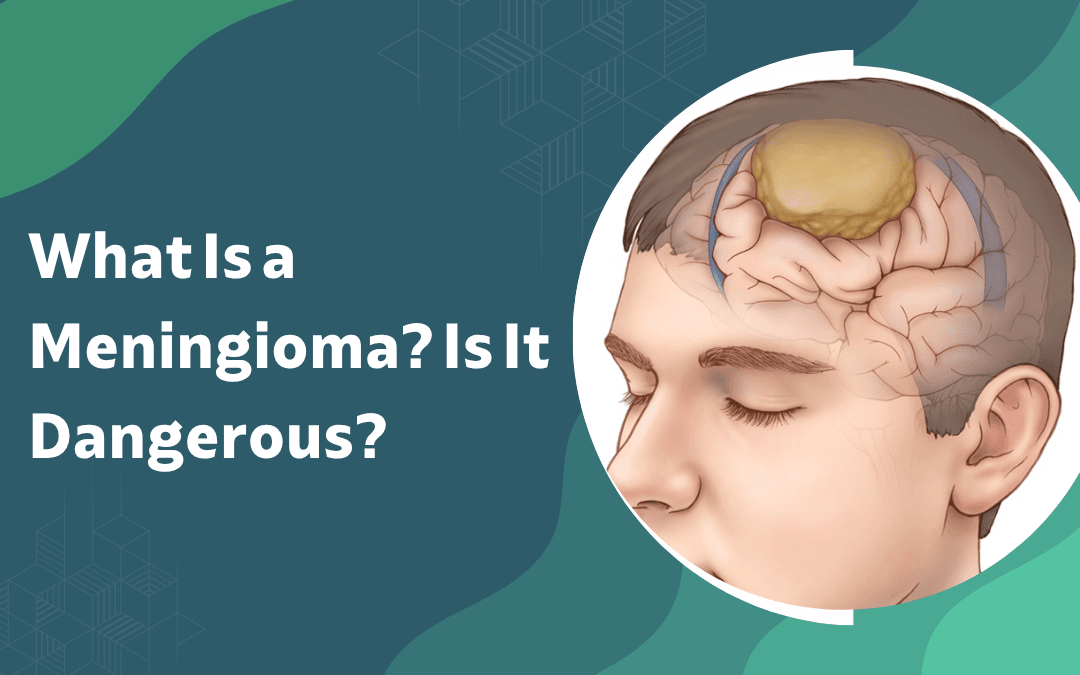
Diagnosed with a meningioma and unsure what to do next?
What Are the Common Symptoms of a Meningioma?
Meningiomas are frequently asymptomatic for years. When symptoms do appear, they reflect the tumour’s pressure on adjacent brain tissue rather than invasion of it.
Headaches: These tend to worsen gradually over weeks or months and are often most noticeable in the morning when intracranial pressure peaks after hours of being horizontal, though many patients initially attribute them to tension or sinus issues.
Seizures: A first-ever seizure in an adult with no prior epilepsy history warrants immediate imaging, since meningiomas overlying the motor cortex or frontal lobes are a recognised cause, particularly when the seizure has a focal onset.
Vision Changes: Tumours near the sphenoid wing or anterior skull base can compress the optic nerve or chiasm, producing blurring, double vision, or a partial field loss that creeps in so slowly patients adjust without noticing the change.
Personality or Cognitive Shifts: Frontal lobe meningiomas specifically can alter judgment, impulse control, or memory in ways that family members pick up on before the patient recognises anything is wrong.
Symptom severity doesn’t always correlate with tumour size. A small meningioma near the brainstem can cause significant deficits while a larger one over a silent cortical region produces none for years. For symptomatic, enlarging, or surgically accessible tumours, brain tumor surgery remains the primary treatment pathway and the decision to operate is driven by location and rate of growth rather than size alone.
How Is a Meningioma Diagnosed and Treated?
Diagnosis follows a structured pathway that starts with imaging, not surgery. Treatment isn’t automatic and depends on grade, location, growth pattern, and the patient’s overall neurological status.
MRI Scan: Gadolinium-enhanced MRI is the definitive diagnostic tool for meningiomas, producing a characteristic “dural tail” sign where the tumour appears to blend into the meningeal lining, a finding that distinguishes it from most other intracranial masses without a biopsy.
Active Surveillance: For small, incidentally discovered, asymptomatic meningiomas in older patients, a watch-and-wait protocol with serial MRIs every 6 to 12 months is often the most appropriate first step since many tumours don’t grow meaningfully over years.
Surgical Resection: When the tumour is symptomatic, enlarging, or accessible, brain surgery with the goal of complete excision offers the best long-term control, particularly for Grade I tumours where gross total removal significantly reduces the recurrence risk compared to partial resection.
Radiosurgery: Stereotactic radiosurgery, including Gamma Knife, is suitable for residual or recurrent meningiomas under 3 cm in diameter, or for tumours in locations where open surgery carries unacceptable risk given proximity to cranial nerves or venous sinuses.
Grade I meningiomas rarely recur after complete removal. Grade II and III need closer follow-up. Catching warning signs early gives patients more surgical options see Brain Tumour Symptoms That Should Not Be Ignored for how pressure symptoms progress and when they become an emergency.
Why Choose Dr. Gurneet Singh Sawhney?
Dr. Gurneet Singh Sawhney holds an MBBS, MS in General Surgery, and an MCh in Neurosurgery from St. John’s Medical College, Bangalore, where he ranked 1st in the Karnataka university examination. He has completed Fellowships in Functional Neurosurgery and Epilepsy Surgery from Tokyo and Juntendo University, Japan, and brings over 18 years of surgical experience including 6 years as a specialist, with more than 5,000 patients treated across complex brain and spine conditions.
His track record in neurooncology surgeries, including meningioma excision, reflects consistent outcomes across Grade I and Grade II presentations. Patients travelling for second opinions frequently find that his pre-operative planning, especially for skull base and convexity meningiomas, differs meaningfully from what they were previously offered.
Frequently Asked Questions
Is a meningioma always cancerous?
No, roughly 80% of meningiomas are Grade I and benign, not malignant.
Can a meningioma go away without treatment?
It won’t resolve on its own, but small asymptomatic ones are often monitored safely.
How long can you live with an untreated meningioma?
Many patients live decades with slow-growing tumours under regular surveillance.
What triggers meningioma growth?
Prior radiation exposure and certain genetic conditions are established risk factors.
Disclaimer: The information shared in this content is for educational purposes only and not for promotional use.