

Speech & Swallowing Therapy in Mumbai
Losing the ability to speak clearly or swallow safely changes daily life in ways most people never expect. A conversation that used to be effortless becomes a struggle. A simple meal turns into a source of anxiety. These challenges, whether caused by a stroke, brain injury, developmental delay, or a progressive neurological condition, deserve focused, expert care.
According to Ms. Shivani Batra, “Speech and swallowing are two of the most fundamental functions we rely on every single day. When they’re disrupted, the goal isn’t just to treat the symptom, it’s to restore a person’s confidence, safety, and connection with the people around them.”
Speech and swallowing therapy addresses both communication and the physical mechanics of eating and drinking safely. It’s a specialised field that combines assessment, targeted exercises, and compensatory strategies to help patients regain function, whether that means speaking clearly again, understanding language better, or eating without the risk of choking or aspiration.
This page walks you through what speech and swallowing therapy treats, how sessions work, what to expect, and why early, structured intervention makes such a meaningful difference in recovery.
What Is Speech & Swallowing Therapy?
Speech and swallowing therapy, often provided by a speech-language pathologist, focuses on two closely connected functions: the ability to communicate and the ability to eat and drink safely. While they might seem like separate skills, both rely on many of the same muscles, nerves, and brain pathways, which is why they’re so often treated together, especially after a neurological event like a stroke or brain injury.
Speech therapy covers articulation, language comprehension, fluency, and voice quality. Swallowing therapy, sometimes called dysphagia management, focuses on the mechanics of chewing, moving food safely to the throat, and protecting the airway during swallowing. Many patients need support with both, particularly after conditions that affect the brainstem or the muscles controlling the mouth and throat.
Conditions Treated With Speech & Swallowing Therapy
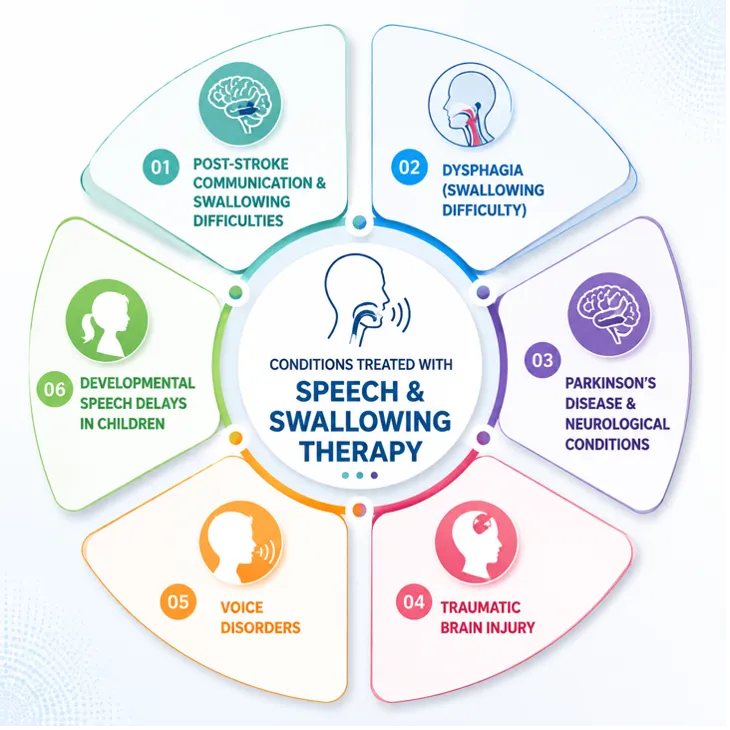
Speech and swallowing disorders can stem from a wide range of causes, and each requires a tailored approach.
Post-stroke communication and swallowing difficulties: Rehab rebuilds the ability to speak clearly, understand language, and swallow safely.
Dysphagia (swallowing difficulty): Structured therapy strengthens the muscles involved in swallowing and reduces the risk of choking or aspiration pneumonia.
Parkinson’s disease and neurological conditions: Speech therapy helps manage soft, slurred speech and swallowing changes that often develop as the condition progresses.
Traumatic brain injury: Targeted therapy restores language, memory-based communication, and safe eating patterns.
Voice disorders: Techniques address hoarseness, vocal strain, and reduced vocal projection.
Developmental speech delays in children: Early, consistent therapy helps children build clear articulation and language skills during key developmental years.
Because every condition affects speech and swallowing differently, therapy always begins with a detailed, individual assessment rather than a standardised programme. For patients recovering from neurosurgical procedures, this rehab often works in coordination with broader neurological care in Mumbai, ensuring the recovery plan aligns with the underlying medical treatment.
Post-Surgical & Post-Stroke Speech Rehabilitation
Recovery after brain surgery or a stroke isn’t automatic, it takes consistent, guided practice. Patients who begin speech and swallowing therapy early tend to regain function faster and face fewer complications like aspiration or prolonged dependence on feeding tubes.
Early therapy also protects overall recovery outcomes. Whether the underlying cause was a stroke, an awake craniotomy, or another neurological procedure, therapy is paced according to what the patient’s condition allows, gradually building toward safer swallowing and clearer speech.
Paediatric Speech Therapy
Children with speech delays, developmental disorders, or early neurological conditions often respond remarkably well to early intervention. Because a child’s brain is still developing, consistent therapy during these years can significantly improve articulation, language comprehension, and overall communication confidence, setting the foundation for stronger academic and social skills later on.
Signs You May Need Speech or Swallowing Therapy
It’s not always obvious when a communication or swallowing issue needs professional attention. Some signs are subtle at first and easy to dismiss as temporary or age-related.
Common warning signs include slurred or unclear speech, frequent coughing or throat-clearing during meals, difficulty finding the right words, a wet or gurgly voice after swallowing, unexplained weight loss due to eating difficulty, and changes in voice quality like hoarseness that doesn’t resolve. In children, delayed speech development, difficulty being understood by others outside the family, or trouble with feeding and chewing can all signal a need for evaluation.
If any of these sound familiar, whether in yourself, a family member, or your child, an early assessment can prevent the issue from becoming more complicated to manage later.
How Speech & Swallowing Therapy Works
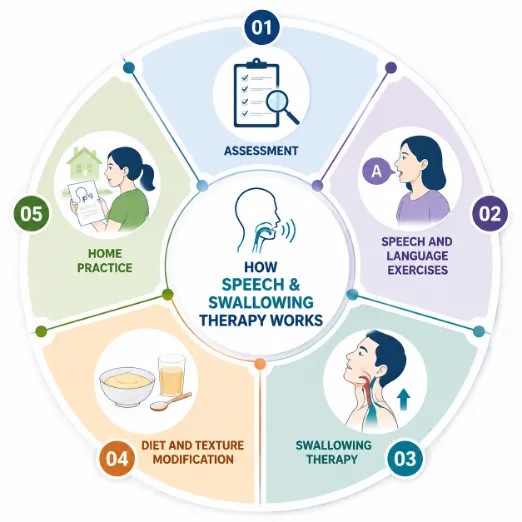
Every treatment plan starts with a comprehensive evaluation of the patient’s speech, language, and swallowing function.
Assessment: A detailed evaluation identifies the specific nature of the communication or swallowing difficulty, whether it’s articulation, language processing, voice, or muscle coordination.
Speech and language exercises: Targeted drills rebuild articulation, fluency, and comprehension skills.
Swallowing therapy: Specific exercises strengthen the muscles used in swallowing and introduce safe swallowing strategies.
Diet and texture modification: For patients with dysphagia, adjusted food and liquid textures reduce choking risk while therapy progresses.
Home practice: A structured home routine reinforces gains made in the clinic and speeds up overall progress.
This approach is grounded in the same neuroplasticity principles that drive all neurological rehabilitation, the brain’s ability to adapt and form new pathways through consistent, repeated practice. According to the World Health Organization, rehabilitation services, including speech and swallowing therapy, are essential to restoring independence and quality of life after illness or injury.
What to Expect During Your Sessions
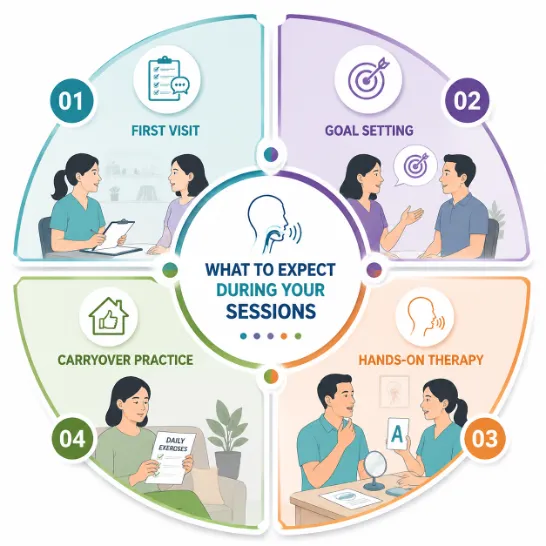
Knowing what a session actually involves can ease a lot of the uncertainty around starting therapy.
First visit: A thorough assessment of speech, language, and swallowing function, along with a review of medical history.
Goal setting: Clear, realistic targets are agreed upon together, whether that’s clearer speech, safer swallowing, or improved vocal strength.
Hands-on therapy: Sessions combine guided exercises, verbal drills, and swallowing techniques, adjusted to the patient’s comfort and progress.
Carryover practice: Patients leave with simple daily exercises, since consistent practice at home is where much of the real improvement happens.
Sessions typically run 30 to 45 minutes, with frequency depending on the severity of the condition. Many patients start with two to three sessions a week and gradually reduce frequency as function improves. This progressive, patient-paced model aligns with global standards set by organisations like the American Speech-Language-Hearing Association, which emphasise individualised care over fixed treatment timelines.
Why Choose Ms. Shivani Batra for Speech & Swallowing Therapy in Mumbai?
Ms. Shivani Batra brings a patient-centred, evidence-based approach to speech and swallowing therapy, built around understanding each patient’s specific condition rather than applying a one-size-fits-all programme. Her experience spans post-stroke rehabilitation, neurological speech disorders, dysphagia management, and paediatric speech delays.
What sets her approach apart is the emphasis on functional, real-world outcomes, not just clinical improvement on paper, but actual gains in a patient’s ability to hold a conversation, eat a meal safely, or express themselves clearly again. For patients recovering from neurological conditions or surgery, this therapy is often closely coordinated with the treating neurosurgical team in Mumbai, ensuring the rehabilitation plan stays aligned with the broader medical picture.
Patients and families consistently value her clear communication, structured goal-setting, and steady, encouraging approach, especially important in a field where progress can feel slow without the right guidance and support.
When Should Speech & Swallowing Therapy Begin?
Timing plays a significant role in recovery outcomes. After a stroke, brain injury, or surgery, starting therapy early, often within the first few weeks, tends to produce the best long-term results. This window is when the brain’s adaptability is at its highest, making consistent practice especially effective.
That said, it’s rarely too late to see meaningful improvement. Patients who are months or even years past their initial diagnosis can still make real progress with a consistent, well-structured therapy plan. Similarly, children showing early signs of speech delay benefit most from starting therapy as soon as concerns are identified, rather than waiting to see if the issue resolves on its own. Working alongside a broader neurorehabilitation programme can further support consistent, long-term progress.
Frequently Asked Questions
1. What is speech and swallowing therapy used for?
2. How long does speech therapy take to show results?
3. Is swallowing therapy uncomfortable?
4. Can speech therapy help after a stroke?
5. At what age should a child start speech therapy?
References
● World Health Organization, Rehabilitation: who.int/news-room/fact-sheets/detail/rehabilitation
● American Speech-Language-Hearing Association: asha.org
Blogs
Recovery After Minimally Invasive Spine Surgery
Recovery after minimally invasive spine surgery is faster than open surgery because less muscle is...
When Is Spine Surgery Necessary and When to Avoid It
Spine surgery is necessary when nerve compression causes progressive weakness, numbness, or loss...
The Truth About Spine Surgery: 8 Myths Debunked
You have tried everything: painkillers, physiotherapy, massages, and yoga. However, your back pain...