

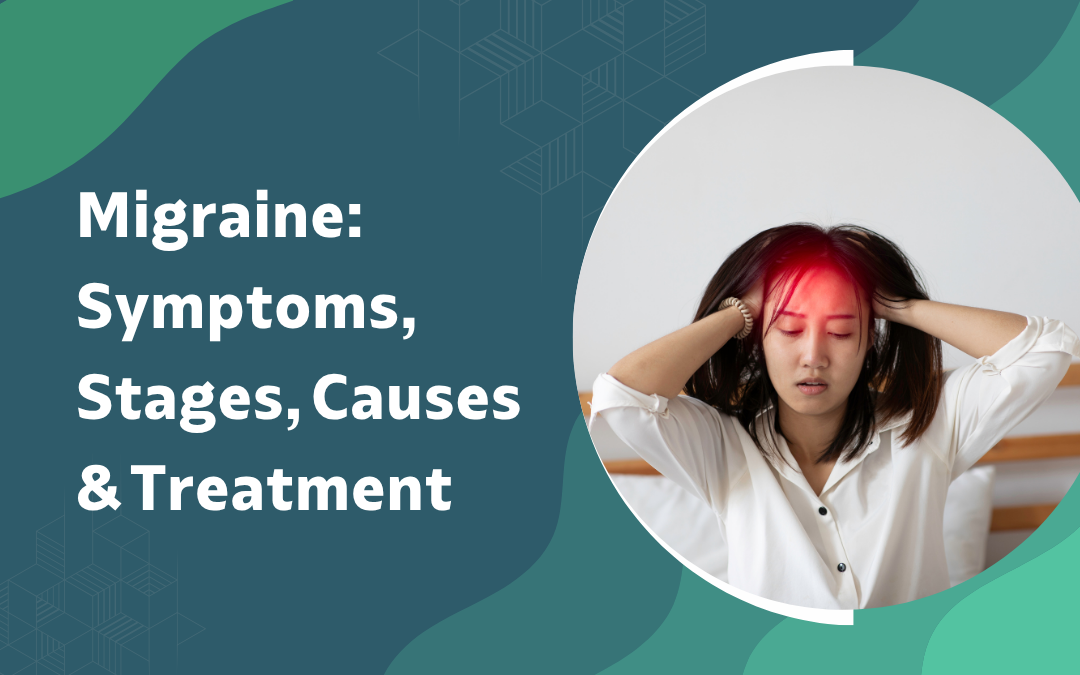
Migraine is a neurological disorder, not just a bad headache. The pain throbs on one side of the head and an untreated attack lasts 4 to 72 hours. About one person in eight has it worldwide. Women outnumber men three to one. Nausea, vomiting, and sensitivity to light and sound come with the pain, which is why attacks cost entire workdays.
According to Dr. Gurneet Singh Sawhney, a leading Neurosurgeon in Mumbai, “Migraine is far more than a bad headache. It is a brain condition with distinct stages, and identifying your triggers early is the single most effective step toward controlling attacks.”
Parkinson’s diagnosis confirmed and non-motor symptoms not being addressed in current management?
What Are the Symptoms and Stages of a Migraine Attack?
Textbooks describe four stages. Real patients are messier, some skip stages, some find the sequence changes attack to attack, so read this as a rough map.
Prodrome: Hours before pain, small oddities creep in. Maybe you yawn constantly. Maybe you want one specific food, badly. Mood slides, bathroom trips multiply. Roughly six in ten patients notice something in this window, even if they only connect it afterwards.
Aura: Rarer, one patient in five, and hard to mistake for anything else. Zig-zag lines. A shimmering blind spot wandering across whatever you’re looking at. Sometimes pins and needles travel up an arm or along one side of the face.
Headache: The pain itself. One-sided, throbbing, moderate to severe, and it makes light, sound, even smells feel like an assault. Nausea and vomiting tend to peak here as well.
Postdrome: The day after can feel like a hangover you didn’t earn. Body aches, exhaustion, a head full of cotton. It fades within a day, generally.
Note which of these stages you actually experience, then bring that list to your consultation. It directly shapes your migraine treatment plan.
What Causes Migraine and How Is It Treated?
Honest answer first: nobody can cure migraine permanently yet. What medicine can do, and does well, is thin out the attacks and take the edge off the ones that still come.
Common triggers: Stress, more than anything else. After that comes disturbed sleep, skipped meals, alcohol, hormonal swings, strong perfume, loud environments, and a handful of foods and medicines. Most patients discover they have two or three personal culprits, not the whole list.
Family history: Migraine runs in families. One affected parent raises a child’s risk noticeably. Two affected parents raise it more.
Acute and preventive medication: These do different jobs. Triptans and anti-nausea tablets rescue you mid-attack. Preventives are taken daily so fewer attacks happen at all.
Lifestyle and therapy: Biofeedback, counselling, and plain old stress management earn their place in most treatment plans. For women whose attacks track their cycle, hormone therapy is worth discussing.
One caution before you self-diagnose. Some headaches that look like migraine aren’t. Our previous blog on intracranial hypertension covers when raised pressure inside the skull mimics migraine.
Why Choose Dr. Gurneet Singh Sawhney?
Dr. Gurneet Singh Sawhney trained in functional neurosurgery in Japan and has spent over 18 years evaluating complex headache disorders. His first job with any new patient is separation: is this primary migraine, or is something else, a tumour, a bleed, raised intracranial pressure, hiding behind it? No treatment plan gets written until that question is answered.
Plenty of patients arrive after years of headaches nobody explained properly. Many walk out of the first consultation with a name for their condition, because MRI and CT imaging rule out the structural causes before any prescription is considered. The right diagnosis leading to the right treatment is exactly what the assessment is designed to produce.
Frequently Asked Questions
How long does a migraine attack last?
Between 4 and 72 hours if you count prodrome and postdrome.
Can migraine be cured permanently?
No. Trigger management plus medication cuts frequency and severity considerably though.
When should I see a doctor for headaches?
Frequent, severe, one-sided, or paired with vision changes. Any of those.
Do children get migraines?
They do. Watch for forceful vomiting, odd eye movements, or behaviour changes.
Disclaimer: The information shared in this content is for educational purposes only and not for promotional use.