

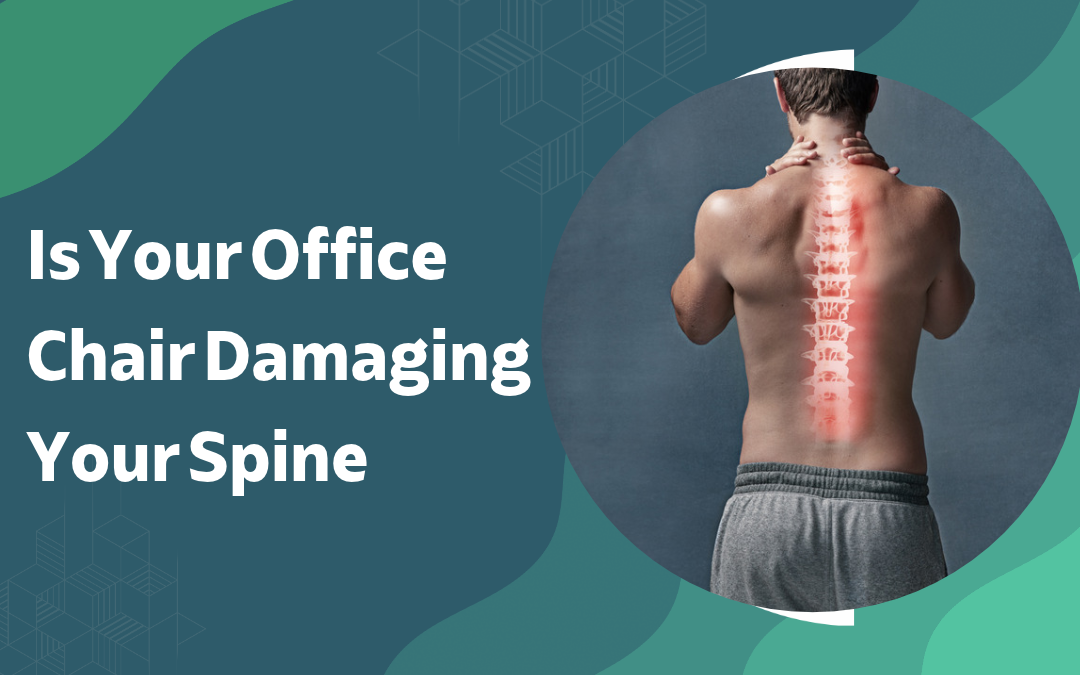
Sitting feels restful. The spine disagrees. Intradiscal pressure is higher when sitting than standing; slumping or forward-leaning makes it worse. Eight hours a day, five days a week, the disc doesn’t rehydrate. Facet joints load asymmetrically. Paraspinal muscles disengage. An improper or poorly set-up office chair accelerates every part of this. Most people blame tiredness. It isn’t tiredness it’s accumulated mechanical load on a structure that wasn’t designed for sustained static compression.
According to Dr. Gurneet Singh Sawhney, a neurosurgeon in Mumbai, “The office chair isn’t the villain the unbroken hours in it are. I see patients with significant disc degeneration at L4-L5 and L5-S1 who’ve never lifted anything heavy in their lives. They’ve just sat badly for a decade.”
Lower back pain that’s worse at the end of a desk day and doesn’t fully settle overnight?
What Does Prolonged Sitting Actually Do to the Spine?
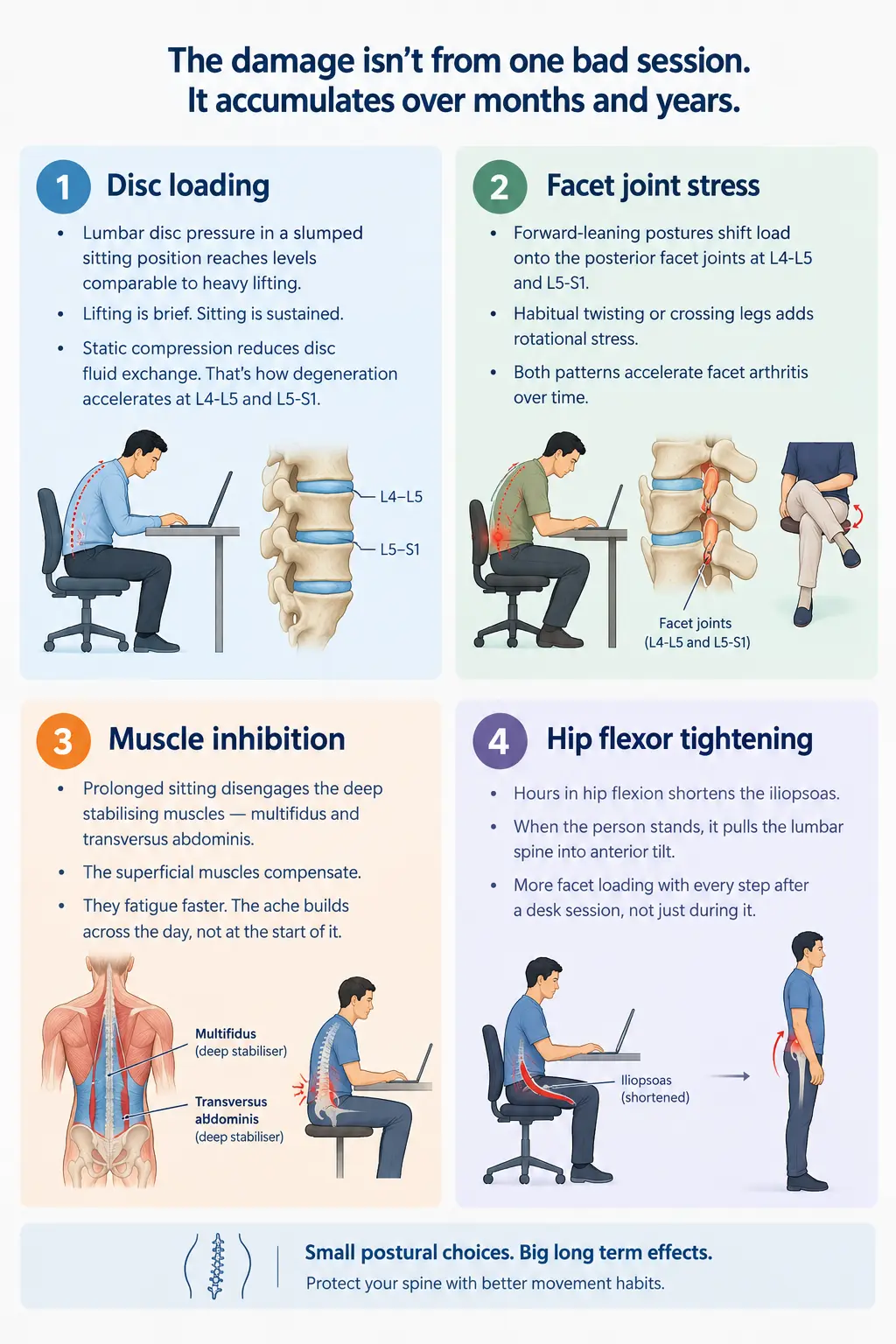
The changes are reversible early. Structural disc height loss and facet arthritic change aren’t. That transition is what spine assessment and spine assessment identifies before it reaches surgical territory.
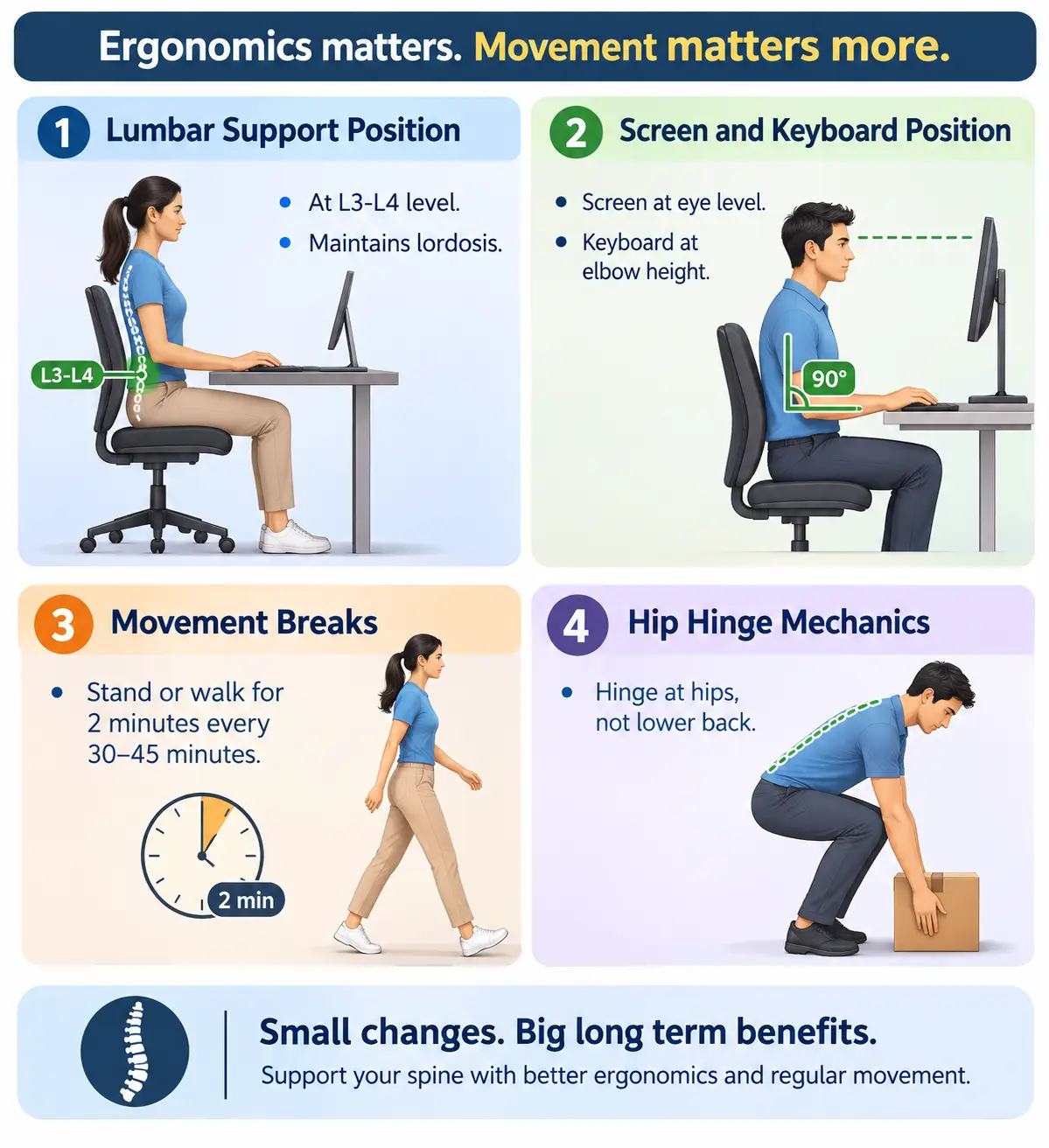
What Chair Setup and Habits Actually Protect the Spine?
For patients where postural management hasn’t prevented progression, see recurring slipped disc.
When Is Office-Related Back Pain More Than a Postural Problem?

Knowing the difference between mechanical back pain and something that needs investigation is what changes the outcome. Back pain taken seriously at six weeks costs less and produces better results than the same pathology treated at two years.
Frequently Asked Questions
Can an office chair cause disc herniation?
Poor sitting posture accelerates degeneration over time. Acute herniation usually needs a mechanical trigger on top of that accumulated damage.
How often should you stand up from a desk to protect the spine?
Every 30 to 45 minutes. Two minutes of movement interrupts the compression cycle.
Does an expensive ergonomic chair prevent back pain?
Movement frequency matters more than chair cost. Static sitting in an ergonomic chair still loads the disc continuously.
When does desk-related back pain need a spine specialist?
When it radiates below the knee, disturbs sleep, affects both legs, or hasn’t improved after six weeks of appropriate conservative management.
References
Disclaimer: The information shared in this content is for educational purposes only and not for promotional use.