

Normal pressure hydrocephalus is treatable. That’s often news to families who’ve spent months managing what looked like dementia. Gait disturbance, cognitive decline, urinary incontinence. All three from one cause: excess CSF accumulating in the ventricles and pressing on surrounding brain tissue. Normal intracranial pressure. A shunt drains it. Symptoms often reverse, not always completely, but meaningfully.
According to Dr. Gurneet Singh Sawhney, a neurosurgeon in Mumbai, brain surgery: “NPH is one of the few conditions where a patient who arrives in a wheelchair can walk out after surgery. That’s not an exaggeration.”
Difficulty swallowing, coughing at meals, or wet voice after brain tumor surgery?
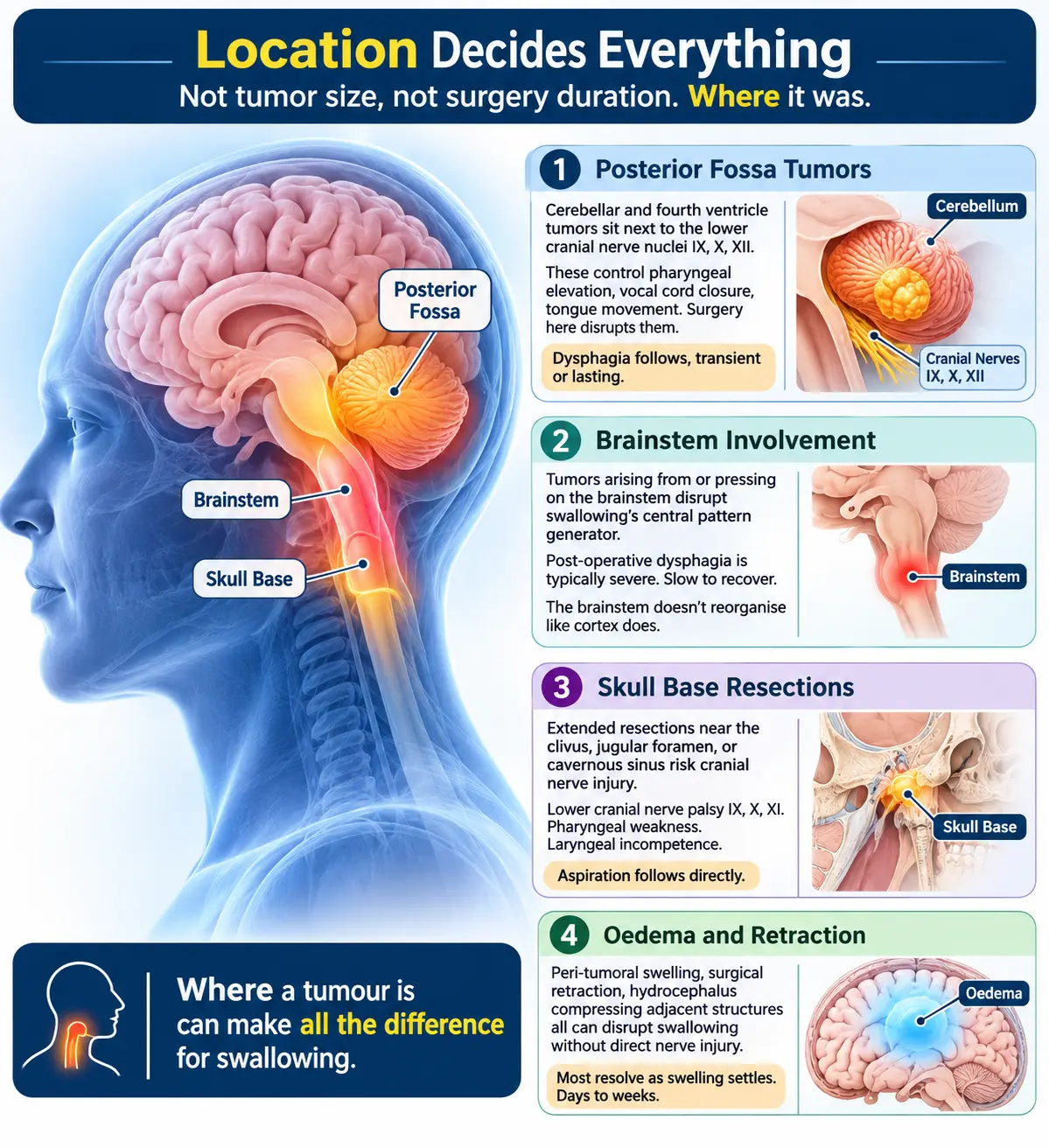
Why Does Brain Tumor Surgery Cause Swallowing Problems?
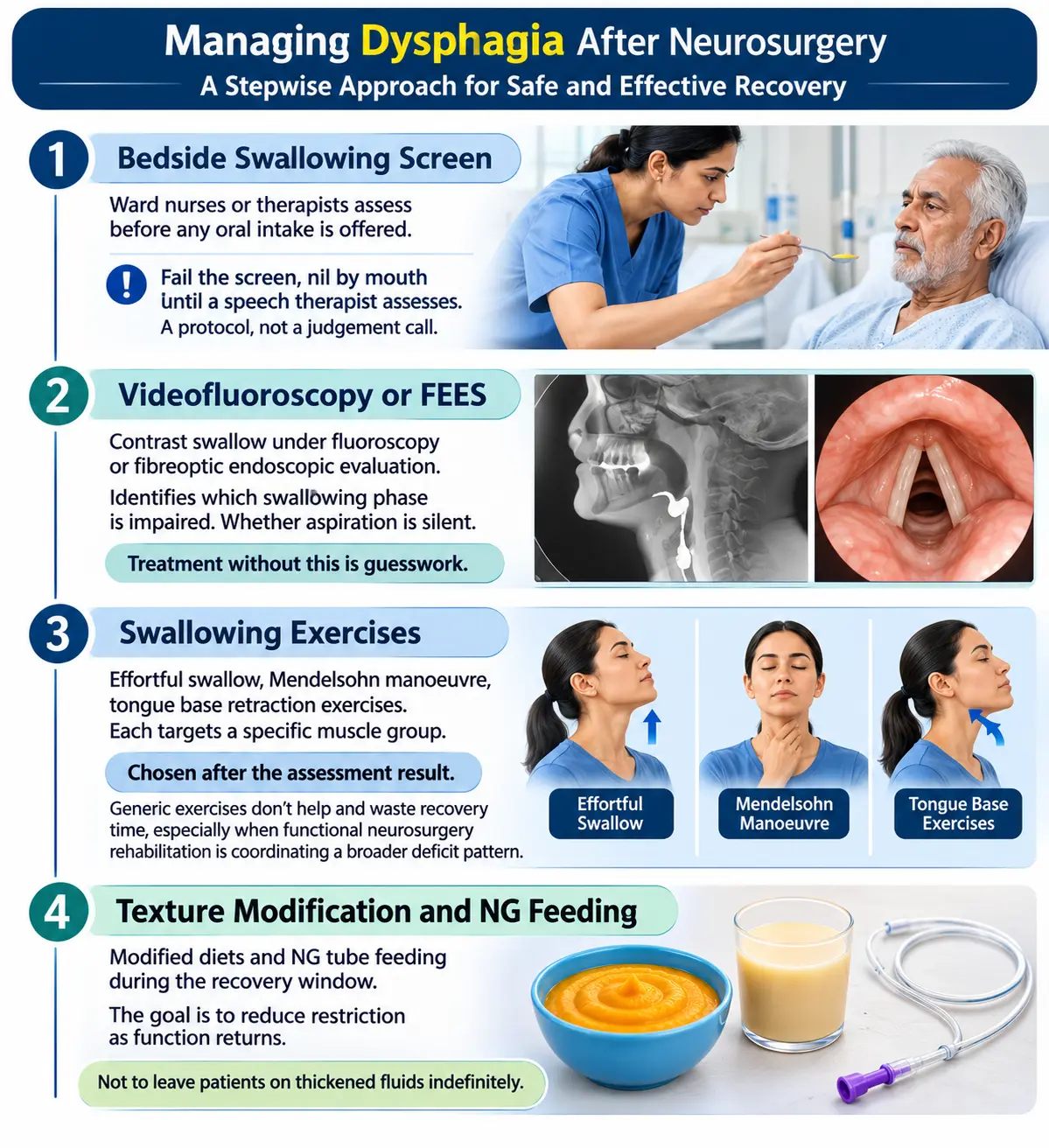
Assessment starts before the first oral intake. The speech and swallowing therapy team handles the post-surgical pathway.
What Assessment and Treatment Actually Helps After Brain Tumor Surgery?
For comparison with post-stroke dysphagia which shares many of the same rehabilitation principles, see swallowing problems after stroke.
What Happens After Shunt Surgery for Normal Pressure Hydrocephalus?
Improvement takes time. Valve adjustments are part of it.
Gait timeline: Most responders show gait improvement within days to weeks. Some take months. It’s the most reliable early indicator that the shunt is working, which is why gait assessment at six weeks post-operatively is the standard first review target.
Valve programming: Adjusted non-invasively using a magnet. Drainage pressure titrated to improve symptoms without over-draining. Multiple adjustments in the first three to six months routine, not failure.
Cognitive recovery: Slower. Less complete than gait. Some patients improve in attention and processing speed. Others plateau. Pre-operative neuropsychological testing establishes the baseline; without it, post-operative cognitive change is impossible to measure objectively.
Long-term outlook: Shunts need monitoring. Valve malfunction, catheter displacement, and infection are all possible years after implantation. Most patients need at least one revision over ten years factored into consent upfront. For a broader picture of what surgical management involves, the brain surgery overview covers the procedure and recovery expectations in detail.
Swallowing rehabilitation after brain tumor surgery is part of the wider neurological recovery picture. For all the components of that picture together, see neuro physiotherapy after brain surgery.
Frequently Asked Questions
Is dysphagia common after all brain tumor surgeries?
No. It’s most common after posterior fossa, brainstem, and skull base surgeries involving lower cranial nerve territory.
How is swallowing assessed after brain tumor surgery?
Bedside screen first. Then videofluoroscopy or FEES to identify exactly which phase failed.
Can swallowing return to normal after brain tumor surgery?
Often yes after oedema-related dysphagia. Nerve injury and brainstem damage: slower, sometimes incomplete.
When should swallowing therapy start after brain tumor surgery?
As soon as the patient is medically stable ideally within the first post-operative days, before aspiration has time to cause pneumonia.
References
Disclaimer: The information shared in this content is for educational purposes only and not for promotional use.