

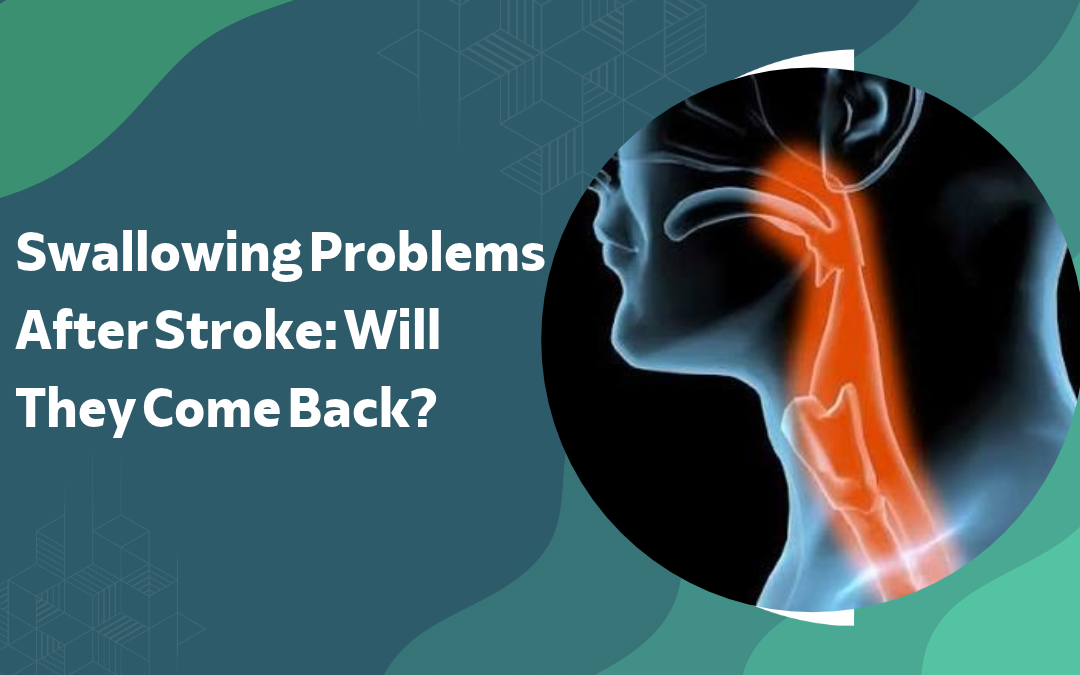
Half of stroke patients have trouble swallowing in the first days. It has a name: dysphagia, but the experience varies more than the label suggests. Food goes the wrong way. Liquids are harder than solids. Coughing at meals. The feeling that something is stuck. Most patients improve but not all, and not on the same timeline. What determines recovery isn’t just the stroke. It’s the size of the lesion, where it sits, how quickly rehabilitation starts, and how intensively it’s pursued.
According to Dr. Gurneet Singh Sawhney, a neurosurgeon in Mumbai, speech and swallowing therapy, “Swallowing after stroke is one of the most underassessed deficits; patients don’t always report it, families don’t always notice it, and aspiration pneumonia is the consequence when it’s missed.”
Coughing at meals, wet voice after eating, or food sticking since your stroke?
Why Does Stroke Cause Swallowing Problems?
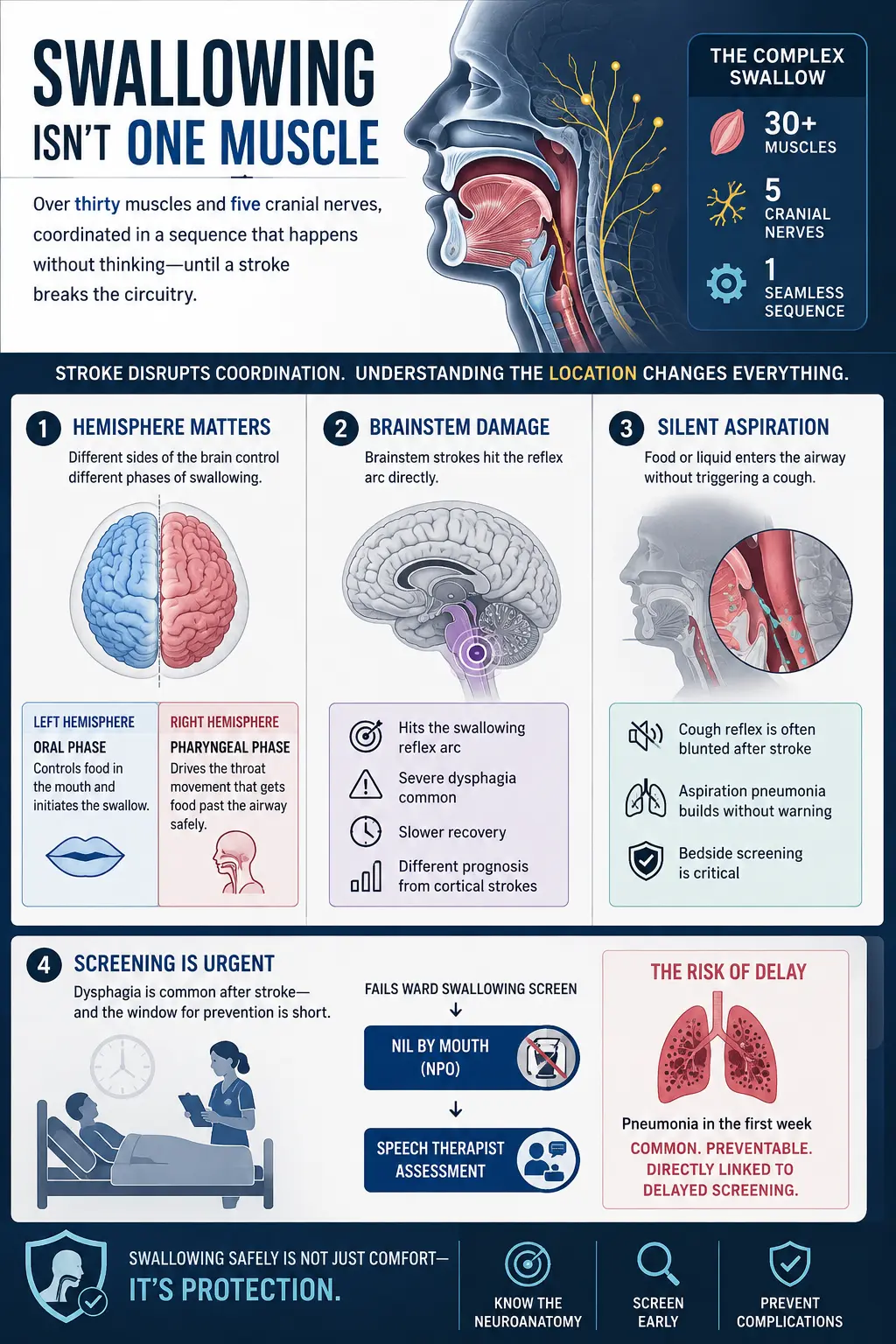
Swallowing assessment after stroke runs through the same neurological evaluation pathway used in speech and swallowing therapy for patients with dysphagia from any cause.
How Much Swallowing Function Returns After Stroke?
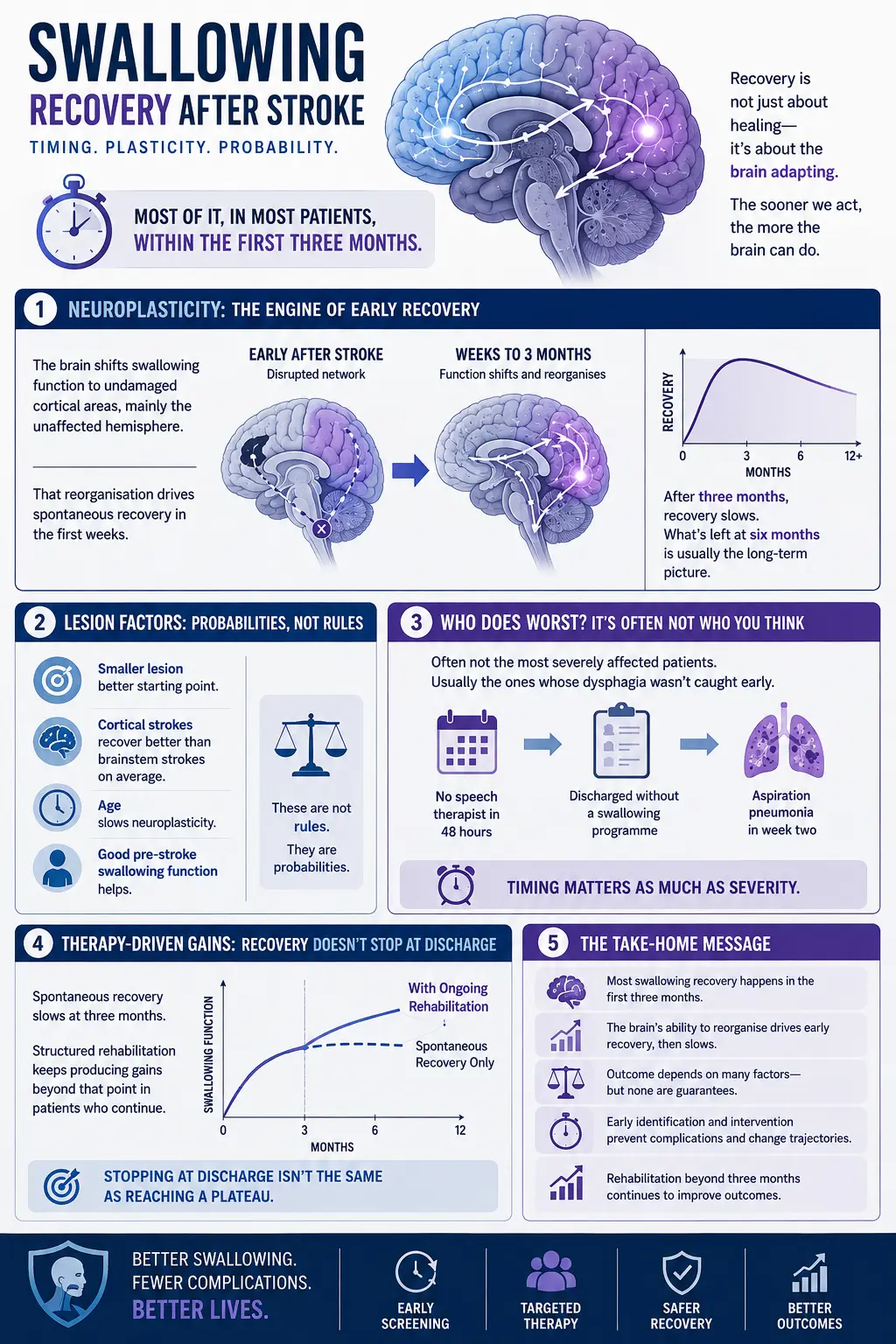
For a closer look at how recovery typically unfolds from the first days to the long term, see this guide on the stages of stroke recovery.
How Long Does Neuro Physiotherapy Continue After Brain Surgery?
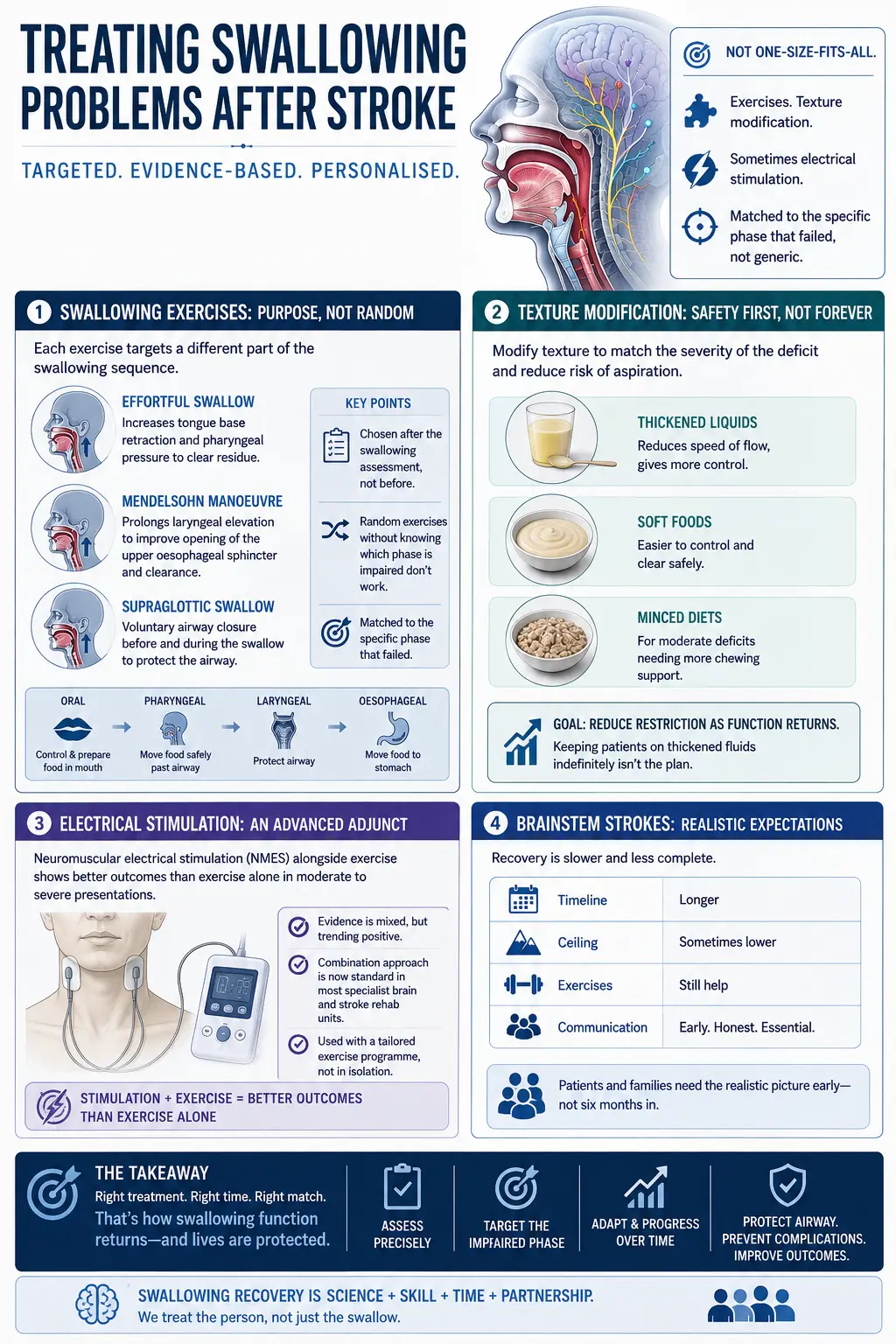
Stroke can leave behind other complications that develop and improve over time in a similar way. One common example is muscle stiffness, which you can read about in this guide on spasticity after stroke.
Frequently Asked Questions
Do swallowing problems after stroke always go away?
Most improve within three months. A small proportion don’t fully recover, particularly after brainstem stroke.
What is silent aspiration after stroke?
Food or liquid into the airway. No cough. Common after stroke the cough reflex is often blunted along with everything else.
How soon should swallowing be assessed after stroke?
Within 24 to 48 hours. Miss that window and aspiration pneumonia risk in the first week goes up.
Can swallowing therapy still help six months after stroke?
Yes. Spontaneous recovery slows after three months. Therapy-driven gains keep going.
References
Disclaimer: The information shared in this content is for educational purposes only and not for promotional use.