

Dropped head syndrome is severe weakness of the neck extensor muscles that lets the head fall into a chin-on-chest position flexible enough to correct by hand or lying down. It mostly affects older adults. Common causes include isolated neck extensor myopathy, Parkinson’s disease, myasthenia gravis, and ALS. It can often be improved a treatable trigger like thyroid disease or inflammatory myopathy can reverse it. Bracing and physiotherapy support the neck in the meantime. Surgery corrects deformity that is fixed or worsening. Left alone, it can eventually compress the spinal cord.
According to Dr. Gurneet Singh Sawhney, spine surgeon in Mumbai, “The first question isn’t how to lift the head, it’s why the neck muscles gave way, because treating that cause decides whether the deformity needs surgery at all.”
Is your chin dropping toward your chest even when you try to hold your head up?
What Causes Dropped Head Syndrome?
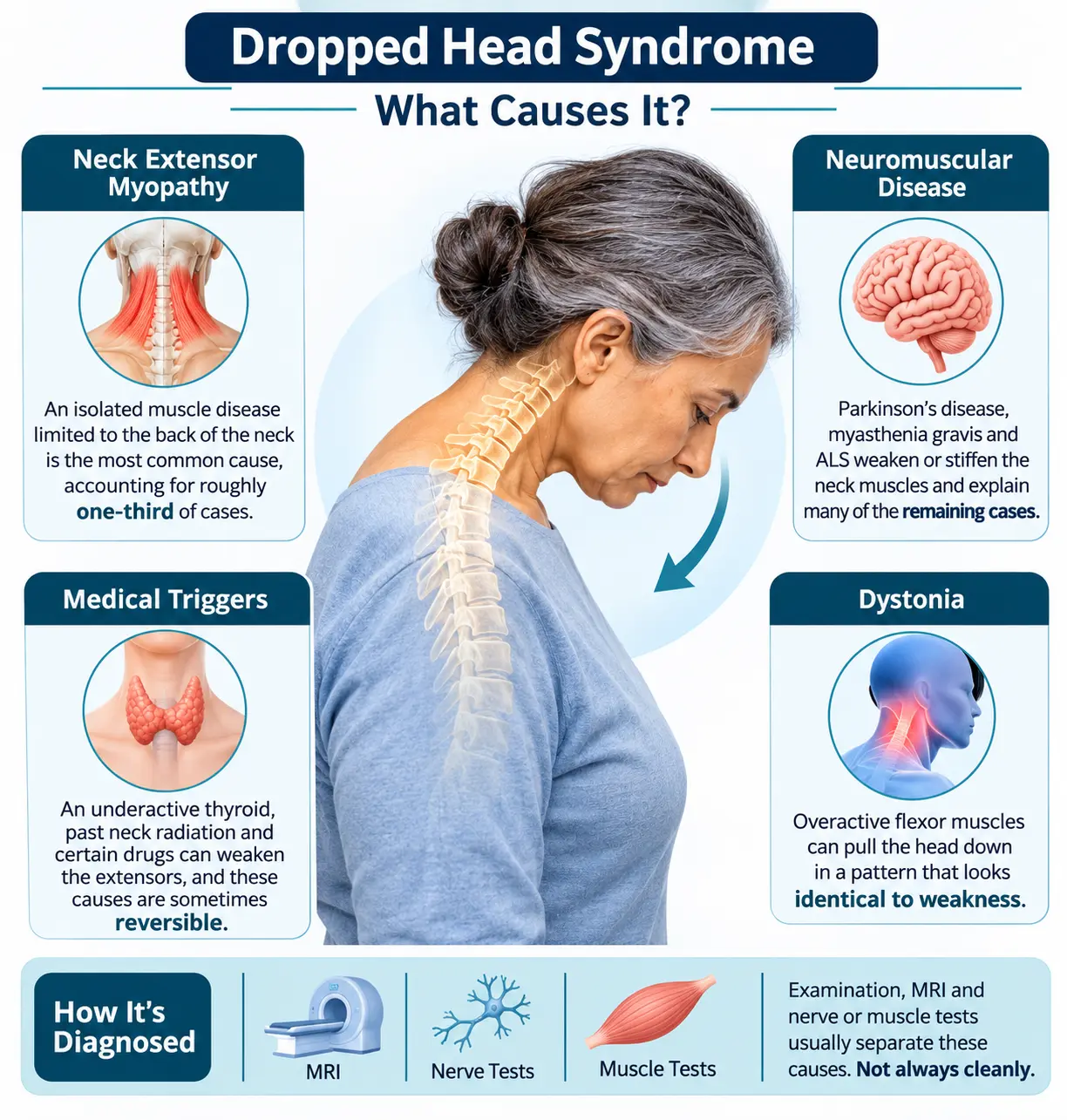
When overactive flexors are behind the posture, care overlaps with dystonia treatment rather than strengthening alone.
Can Dropped Head Syndrome Be Fixed?
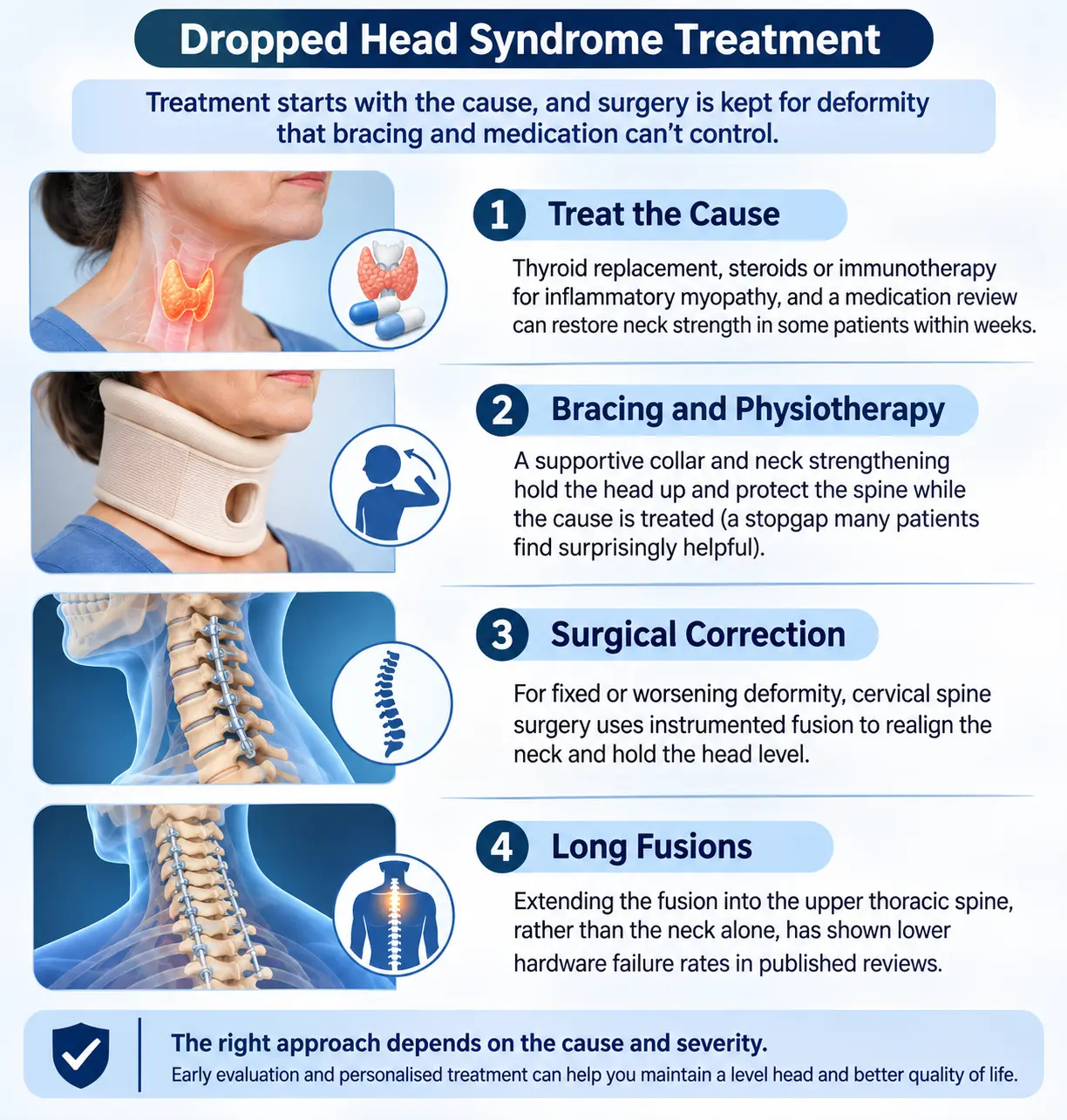
Outcomes are best when the cause is found early and the spine hasn’t stiffened. Compression from long-standing neck deformity is covered in cervical myelopathy.
What Determines the Right Treatment Approach?
The plan depends on why the head drops and how rigid the deformity has become.
- Underlying Cause: a treatable thyroid, inflammatory or drug-related cause is addressed first, while neurodegenerative causes are managed alongside supportive care.
- Flexibility: a deformity that straightens with gentle support suits bracing and rehabilitation, whereas a stiff, fixed curve usually needs surgery.
- Spinal Cord Involvement: numbness, clumsy hands or a changing gait point to cord compression and move the plan toward earlier decompression and fusion.
- Overall Fitness: age, bone strength and other illnesses decide whether a long fusion is safe or bracing alone is the wiser course.
Examination, imaging, and nerve or muscle tests are weighed together before any plan is set the foundation of any spine assessment before treatment is considered.
Frequently Asked Questions
Is dropped head syndrome reversible?
Sometimes, especially when a treatable cause like thyroid disease or myositis is found.
Does dropped head syndrome always need surgery?
No, bracing, physiotherapy and treating the cause are tried first.
Can dropped head syndrome affect the spinal cord?
Yes, long-standing neck deformity can eventually compress the cord.
Who gets dropped head syndrome?
It mainly affects older adults, usually around the age of 60 or above.
References
Disclaimer: The information shared in this content is for educational purposes only and not for promotional use.