

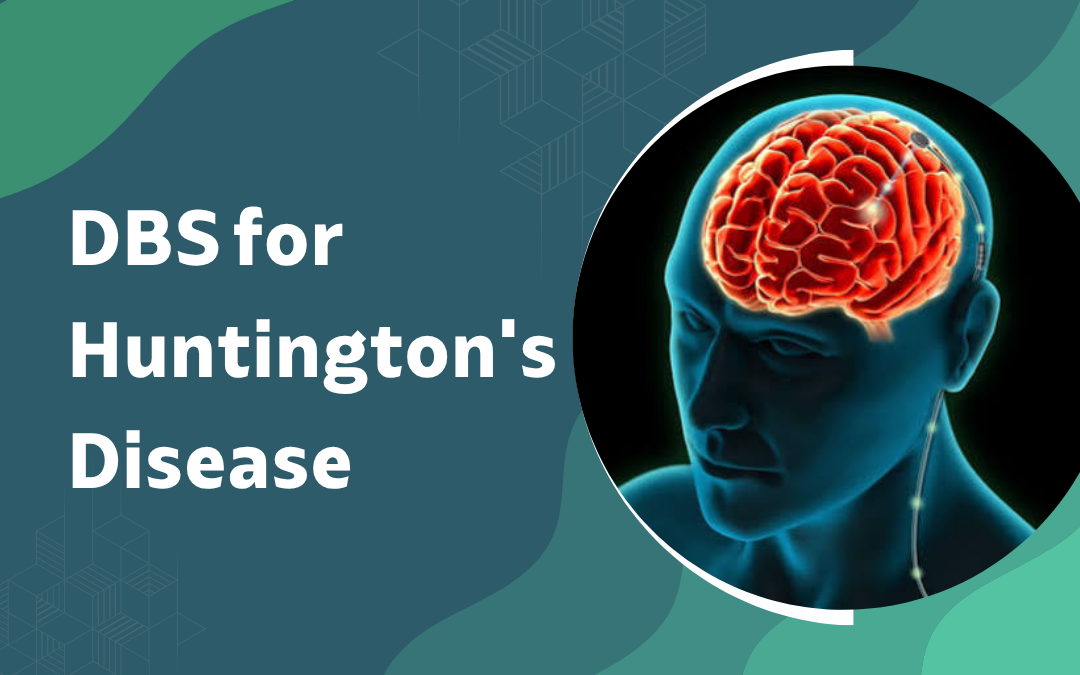
DBS can reduce chorea in selected Huntington’s disease patients, but that is the limit of what it offers. It does not slow neurodegeneration or address cognitive decline. In patients with existing cognitive impairment, it may worsen it. The evidence base is small, patient selection is critical and it is not yet standard of care.
According to Dr. Gurneet Singh Sawhney, a leading neurosurgeon in mumbai, DBS for Huntington’s disease requires a very different conversation than DBS for Parkinson’s. The procedure is technically similar but the disease context is entirely different, and the candidacy assessment is far more complex given the cognitive trajectory of HD.
What Is Huntington’s Disease and Why Is It Difficult to Treat?
Huntington’s disease is a progressive inherited neurodegeneration. The combination of movement disorder, cognitive decline and psychiatric symptoms makes it one of the most clinically challenging conditions in neurology.
Cause: autosomal dominant HTT gene mutation with CAG repeat expansion, causing progressive striatal and cortical degeneration. A parent with HD has a 50 percent chance of passing it to each child.
Motor symptoms: chorea dominates early disease. As HD progresses, rigidity and dystonia replace it. Swallowing and speech deteriorate in later stages.
Cognitive and psychiatric: progressive dementia, depression, irritability and psychosis are part of the HD picture from early on, complicating any surgical candidacy assessment.
No disease-modifying treatment: tetrabenazine and deutetrabenazine reduce chorea symptomatically. Nothing currently slows the underlying neurodegeneration.
With no curative option, every intervention including DBS surgery aims at improving quality of life for a defined period, not altering the disease course.
What Does the Evidence Say About DBS for Huntington’s Disease?
The evidence base is small but consistent on one point. GPi-DBS reduces chorea. Everything else is more complicated.
Chorea reduction: GPi-DBS consistently reduces chorea severity in published case series and trials. A prospective open-label study demonstrated 58 percent improvement in the chorea subscore at 12 months, maintained at 59 percent at three years.
Cognitive risk: HD patients have progressive cognitive decline as a baseline. DBS carries a small risk of worsening cognition, which is clinically more significant in HD than in Parkinson’s disease.
Patient selection: best candidates have predominantly choreic symptoms, meaningful functional impairment from chorea and preserved cognitive function. Advanced cognitive decline is generally a contraindication.
Not standard of care: DBS is not yet a routine treatment for HD. It is offered in selected centres as part of an evaluated approach, requiring multidisciplinary assessment by teams experienced in both DBS and HD management.
The gap between what surgery can achieve and what patients hope it will deliver requires honest pre-operative discussion. This guide on when DBS is recommended for Parkinson’s shows how established candidacy criteria compare to the more emerging HD context.
Why Choose Dr. Gurneet Singh Sawhney?
Dr. Gurneet Singh Sawhney trained in functional neurosurgery in Japan and has over 18 years of experience in deep brain stimulation across Parkinson’s disease, essential tremor and dystonia. His practice approaches HD candidacy for DBS with the same rigour applied to established indications.
Patients and families considering DBS for Huntington’s arrive with expectations shaped by what they have read about DBS for Parkinson’s. The two conversations are different. Outcome expectations, candidacy criteria and the informed consent discussion for HD require more nuance, and that is what the first consultation is designed to provide.
Frequently Asked Questions
Is DBS approved for Huntington's disease?
DBS is not currently approved as a standard treatment for Huntington’s disease.
Which symptom of HD does DBS target?
DBS targets chorea, the involuntary movements, rather than cognitive or psychiatric symptoms.
Can DBS slow the progression of Huntington's disease?
No, DBS does not modify the underlying neurodegeneration or slow disease progression.
Who is the best candidate for DBS in Huntington's disease?
Patients with predominantly choreic symptoms and preserved cognitive function are the best candidates.
Disclaimer: The information shared in this content is for educational purposes only and not for promotional use.