
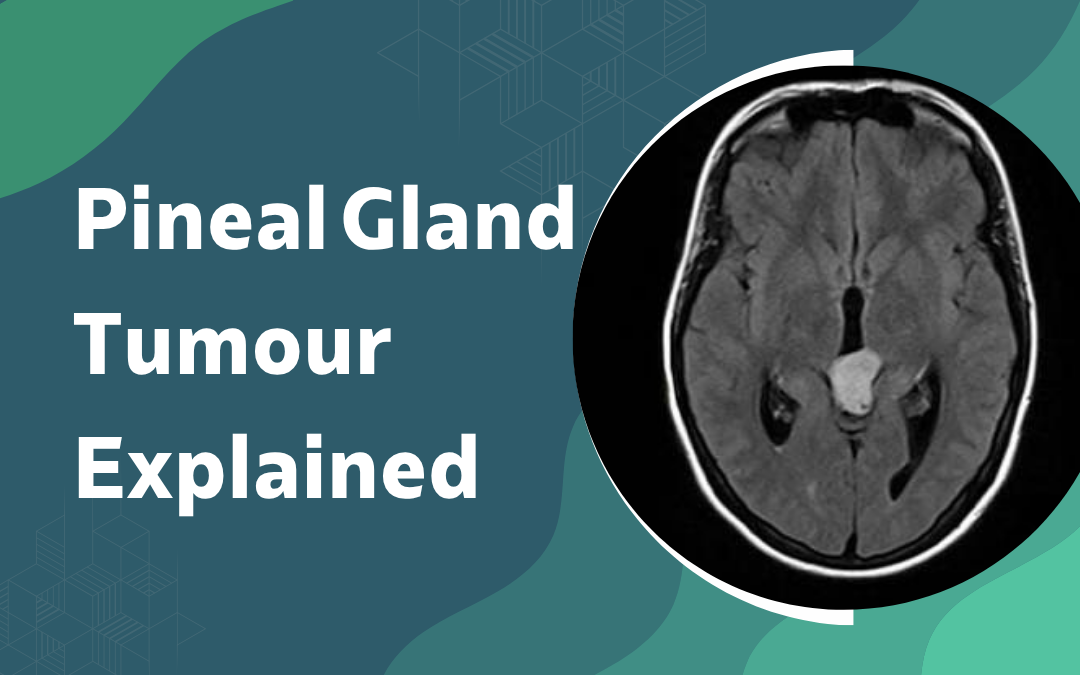
Dealing with unexplained headaches and blurred vision together?
What Are the Symptoms of a Pineal Gland Tumour?
Most symptoms trace back to either raised pressure inside the skull or direct pressure on nearby midbrain structures.
Headaches: these tend to be worse in the morning or after lying down, and they often come with nausea once cerebrospinal fluid starts backing up behind the blocked aqueduct.
Vision Changes: difficulty looking upward is a classic sign, sometimes paired with double vision or eyelid retraction, a pattern doctors call Parinaud’s syndrome.
Gait Problems. Some patients notice unsteadiness or clumsiness before anything else shows up, and it’s easy to dismiss until imaging explains why.
Hormonal Shifts: because the pineal gland sits close to structures involved in appetite and metabolism, a tumour here can occasionally trigger weight changes that seem unrelated at first glance.
None of these symptoms are exclusive to pineal tumours, which is precisely why imaging, not symptom pattern alone, confirms the diagnosis.
Persistent hydrocephalus symptoms alongside these signs usually point toward the same underlying blockage, which is why Functional Neurosurgery often gets addressed before the tumour itself.
How Is a Pineal Gland Tumour Treated?
Treatment starts with controlling any fluid buildup, then moves toward getting an accurate tissue diagnosis.
- Fluid Relief First: When hydrocephalus is present, an endoscopic third ventriculostomy is usually done first to relieve pressure without placing a permanent shunt.
- Biopsy or Resection: A single small entry point can often accomplish both the ventriculostomy and a tumour biopsy in one sitting, which is why this combined approach has become the preferred first step in many centres.
- Tumour Type Decides Everything After That: Germinomas typically shrink well with radiotherapy alone, while other tumour types need a mix of surgery, chemotherapy, and radiation.
- Long-Term Monitoring: Because some pineal tumours can spread through cerebrospinal fluid pathways, follow-up imaging and spinal fluid checks continue well after initial treatment ends.
The plan isn’t fixed at diagnosis. It shifts as biopsy results and imaging come back, sometimes within days of surgery.
Patients weighing minimally invasive options for deep brain lesions often ask the same questions covered in what is cortical mapping in awake brain surgery, which explains how function gets preserved during delicate procedures.
Why Choose Dr. Gurneet Singh Sawhney?
Dr. Gurneet Singh Sawhney brings 18 years of overall neurosurgical experience, including advanced fellowship training in functional neurosurgery and neuroendoscopy from Japan, a background that matters directly for pineal region cases where endoscopic access reduces risk near critical structures. As Dr. Gurneet Singh Sawhney explains it, planning starts with detailed imaging and tumour marker testing before any decision on approach is made.
Patients treated with a single-entry endoscopic approach for hydrocephalus and biopsy typically avoid a second surgery and the long-term risks that come with a permanent shunt. That’s not a small win. It’s often the difference between one procedure and a lifetime of shunt revisions.
Frequently Asked Questions
Is every pineal gland tumour cancerous?
No, several types, including some germinomas, are benign or highly treatable.
Can a pineal tumour be treated without surgery?
Sometimes, if tumour markers strongly suggest a radiosensitive type.
Does a pineal tumour always cause hydrocephalus?
No, but it’s common because of the tumour’s location near CSF pathways.
Is recovery from endoscopic third ventriculostomy quick?
Most patients recover faster than with traditional shunt surgery.
Disclaimer: The information shared in this content is for educational purposes only and not for promotional use.