
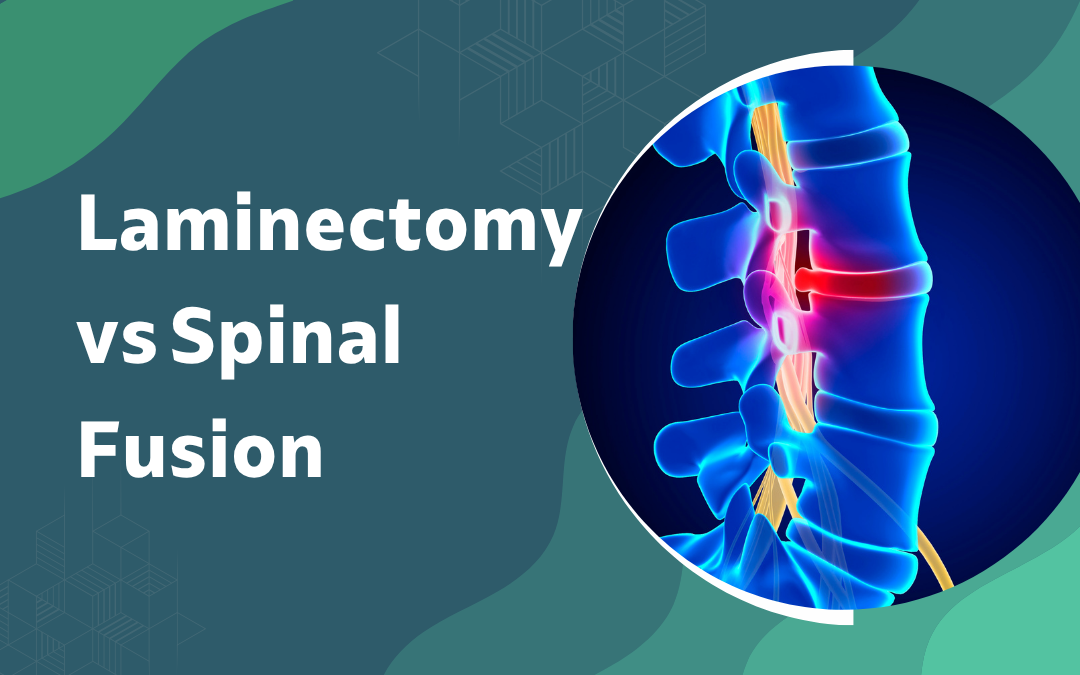
Laminectomy is less invasive. Shorter operation, less blood loss, faster recovery, no implanted hardware. Spinal fusion is larger, screws, rods, bone graft, months before the bone consolidates. But the comparison only matters when both are genuinely options for the same patient. Usually they are not. The condition decides, and the wrong choice in either direction leads to a preventable failure.
According to Dr. Gurneet Singh Sawhney, a leading neurosurgeon in Mumbai, the question is never which operation is smaller. It is which operation the spine actually requires. Getting that wrong in either direction has consequences that are entirely avoidable with the right assessment upfront.
Persistent hand numbness or weakness that has not responded to splints or injections?
How Do Laminectomy and Spinal Fusion Differ?
One opens the canal. The other locks the segment permanently. Confusing them is how patients end up with the wrong operation.
Laminectomy: bone comes out, canal opens, nerve roots get room. Motion is preserved. Nothing implanted. For the right patient it is the end of the story.
Spinal fusion: screws go into the pedicles, rods connect them, bone graft fills the gaps. The segment stops moving. Permanently. Larger operation by every measure.
Recovery: laminectomy means shorter stay, faster return to activity. Fusion means months before the bone consolidates. Not comparable timelines.
Invasiveness: laminectomy disturbs less tissue, involves less blood loss and carries a lower operative risk than fusion. Minimally invasive versions of both exist, but even MIS fusion is a larger procedure than MIS laminectomy.
Both are well-established operations with decades of outcome data. Which one is indicated depends entirely on whether the problem is compression, instability or both. That distinction is what spine surgery assessment establishes before any operation is planned.
Which Patients Need Fusion and Which Need Laminectomy Alone?
Compression without instability gets decompression. Instability gets fusion. The cases in between are where the imaging and the clinical assessment do their work.
Laminectomy alone: spinal stenosis without spondylolisthesis, adequate facet joint preservation and a stable motion segment are the conditions where decompression alone reliably delivers a good outcome
Fusion indicated: a slipped vertebra, significant deformity, or a decompression that would remove enough posterior support to destabilise the segment are all reasons to add fusion alongside the laminectomy
Age and activity: younger patients who need wide decompression or who have degenerative instability are more likely to need fusion than older patients with simple single-level stenosis and no slip
Progression: a spine that was stable at the time of laminectomy can develop instability over time, which is why some patients return for fusion years after a successful initial decompression
The decision is not about which operation is smaller. It is about which one the imaging and the clinical picture call for. This guide on multi-level stenosis and fusion covers this decision in detail for multi-level disease.
Why Choose Dr. Gurneet Singh Sawhney?
Dr. Gurneet Singh Sawhney trained in spine and neurosurgery in Japan and has over 18 years of experience performing both laminectomy and spinal fusion, including minimally invasive approaches of each.
Patients are often referred having already been told they need fusion. In some of those cases, decompression alone is the right operation. Getting an independent assessment of whether fusion is genuinely indicated is what the imaging review at the first consultation is for.
Frequently Asked Questions
Is laminectomy always less invasive than spinal fusion?
Yes, laminectomy involves less tissue disruption, shorter operating time and faster recovery than fusion.
Can laminectomy be done instead of spinal fusion?
Only if the spine is stable; fusion is required when instability or spondylolisthesis is present.
How long does recovery take after spinal fusion?
Most patients need three to six months for full recovery after spinal fusion surgery.
Does spinal fusion permanently restrict movement?
Yes, fusion eliminates movement at the fused levels though adjacent segments remain mobile.
Disclaimer: The information shared in this content is for educational purposes only and not for promotional use.