
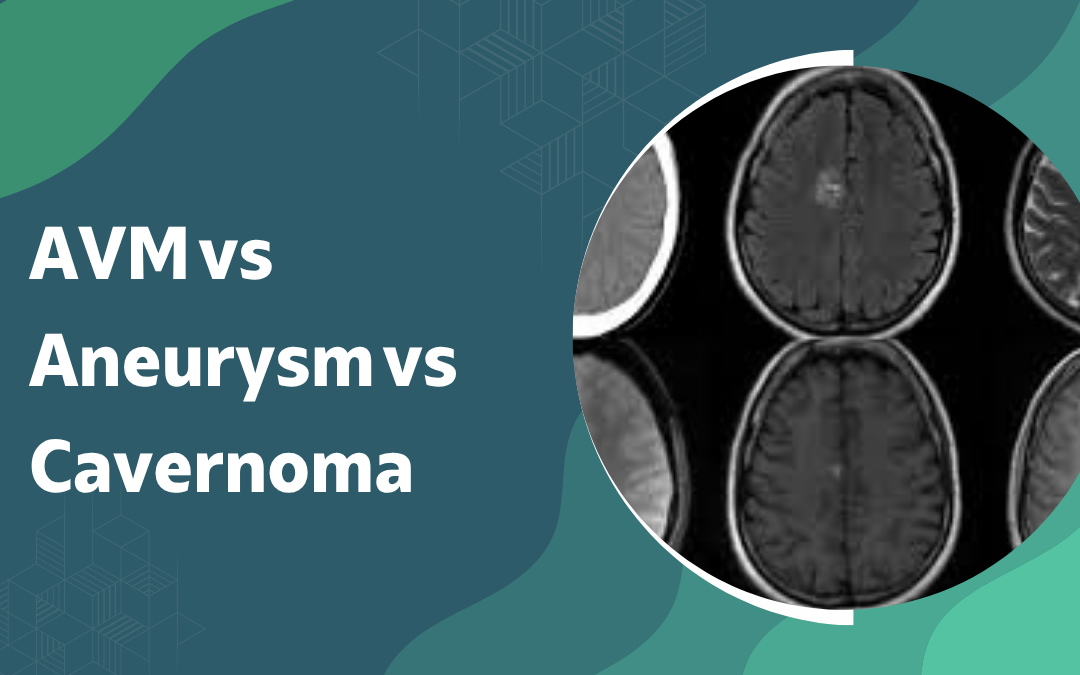
Three conditions, one label covering all of them: brain vascular malformation. But the similarities stop there. An AVM is an abnormal tangle of arteries and veins connected directly, bypassing the capillary system, high flow, high pressure, lifelong rupture risk. An aneurysm is a focal bulge in an artery wall filled with blood under pressure, and if it ruptures the result is often catastrophic. A cavernoma is different again, thin-walled, low-pressure capillaries that leak slowly rather than blow. The risk level, the treatment and what comes next are entirely different for each.
According to Dr. Gurneet Singh Sawhney, a leading neurosurgeon in Mumbai, the three often get lumped together as brain vascular conditions, but managing an AVM is a completely different conversation from managing an aneurysm, and a cavernoma is different again. Mixing them up is how patients arrive with the wrong expectations about what treatment and recovery actually involve.
Diagnosed with a brain vascular lesion and unsure what it means for you?
What Makes AVM, Aneurysm and Cavernoma Different?
Each one is built differently. And how it’s built is what decides how dangerous it is.
AVM: an abnormal tangle of arteries and veins with no capillary buffer creates a high-pressure shunt. Annual rupture risk runs around two to four percent, and that figure compounds across a lifetime without treatment.
Aneurysm: a focal bulge in an artery wall filled with pressurised blood, the most catastrophic of the three if it goes. Subarachnoid haemorrhage kills roughly 40 to 50 percent of patients who experience it.
Cavernoma: thin-walled, low-pressure capillaries that bleed slowly rather than catastrophically, causing seizures and focal deficits more often than a major haemorrhage
Risk profile: all three can bleed, but the nature of that bleeding is entirely different: AVM is high-flow and cumulative, aneurysm rupture is sudden and potentially fatal, cavernoma bleeds are small and recurrent
A diagnosis of one is not the same conversation as a diagnosis of another. The overlap is the word brain and the word vessel, nothing more. Understanding which lesion you have is where brain surgery assessment begins.
How Is Each Vascular Lesion Treated?
No single treatment fits all three. Each lesion has a different toolkit and a different threshold for acting.
AVM: surgical resection, stereotactic radiosurgery and endovascular embolisation are used alone or in combination, the choice depending on size, location and whether the AVM has already bled
Aneurysm: endovascular coiling or cerebrovascular surgery to clip the aneurysm neck are the main options. Small unruptured aneurysms can sometimes be observed rather than treated immediately.
Cavernoma: many incidental cavernomas are observed without any procedure. Surgery is considered when repeated bleeds, a growing neurological deficit or refractory seizures make the risk of operating less than the risk of leaving it.
Timing: ruptured lesions need immediate assessment, no exceptions. Unruptured ones allow more planning time, though AVM is never a truly safe-to-ignore diagnosis given the annual rupture risk.
The treatment pathways are distinct. Get the diagnosis right and the rest follows. This guide on brain AVM covers what makes an AVM specifically worth treating rather than watching.
Why Choose Dr. Gurneet Singh Sawhney?
Dr. Gurneet Singh Sawhney trained in cerebrovascular neurosurgery in Japan. Over 18 years he has managed AVMs, aneurysms and cavernomas across their full range of presentations. Surgical resection, endovascular coiling, radiosurgery planning are all part of the same working knowledge.
Patients referred with one of these diagnoses often arrive with the wrong understanding of what it means for them. Sometimes that’s more frightening than the diagnosis itself. Getting clarity on which lesion, and what it actually demands, is usually the most useful thing the first consultation delivers.
Frequently Asked Questions
Is an AVM the same as a brain aneurysm?
No, an AVM is an abnormal vessel tangle while an aneurysm is an arterial wall bulge.
Which is more dangerous: AVM, aneurysm or cavernoma?
A ruptured aneurysm is most immediately dangerous, though AVM carries a significant lifelong risk.
Does a cavernoma always need surgery?
No, many cavernomas are observed unless they cause repeated bleeds or seizures.
Can a brain AVM be cured?
Yes, complete surgical resection or successful radiosurgery can permanently eliminate an AVM.
Disclaimer: The information shared in this content is for educational purposes only and not for promotional use.