
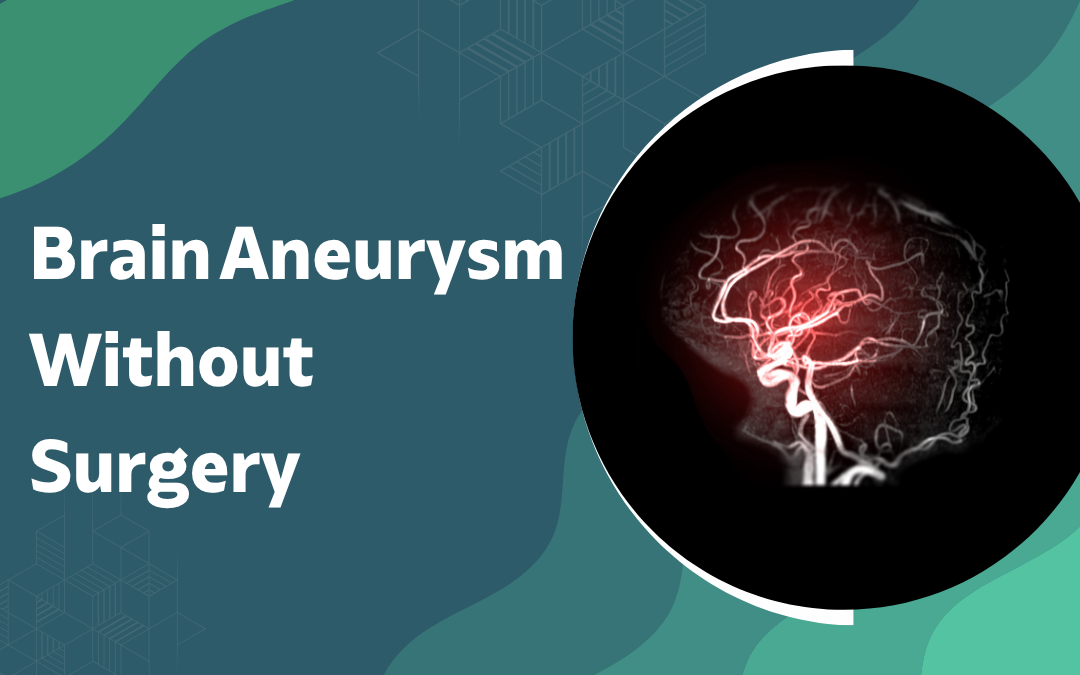
A brain aneurysm does not always mean surgery. Not even close to always. Small, stable, unruptured aneurysms with a low rupture risk are often just watched with serial imaging and nothing more. Where treatment is needed, endovascular coiling or flow diversion seals the aneurysm through a catheter, no craniotomy required. Open clipping still has its place, but only for anatomy that coiling cannot handle. Size, location, rupture status and patient fitness together decide which path fits.
According to Dr. Gurneet Singh Sawhney, a leading neurosurgeon in Mumbai, the question is never simply surgery or no surgery, it is which treatment best matches this specific aneurysm in this specific patient. Some are best left alone with careful monitoring, others need coiling, and a few are safer with open clipping.
Diagnosed with a brain aneurysm and unsure which treatment applies?
When Can a Brain Aneurysm Be Treated Without Open Surgery?
The options don’t overlap. Each fits a different aneurysm, a different set of circumstances.
Observation: a small, low-risk unruptured aneurysm often warrants nothing more than serial imaging and blood pressure control, no procedure at all
Coiling: a thin catheter is guided to the sac, platinum coils packed in to block blood flow, no skull opened, no scar left behind
Flow diversion: for large or complex-necked aneurysms that coiling won’t hold, a mesh device across the neck redirects flow away from the sac entirely
Clipping: some aneurysms, particularly in younger patients with wide-necked anatomy, are better addressed through a craniotomy and a permanent metal clip at the neck
For most aneurysms, endovascular treatment gets there without any open wound and with a shorter recovery. But anatomy doesn’t always cooperate. When it doesn’t, brain surgery is the safer call.
What Determines the Right Treatment for a Brain Aneurysm?
Nothing decides it alone. Size, anatomy, rupture status, patient age, all of it lands on the table at once.
Size: small aneurysms below five to seven millimetres in low-risk locations are typically monitored, since the rupture risk often doesn’t justify the risks of intervention
Rupture: once an aneurysm has bled it needs securing fast, either by coiling or brain aneurysm surgery, because a rebleed in the hours after carries some of the worst outcomes in neurosurgery
Anatomy: wide-necked or fusiform aneurysms don’t hold coils reliably, and for those cases open clipping tends to last better
Patient factors: age and overall fitness matter, because an intervention right for a 40 year old can be the wrong call entirely for a frail patient with other conditions
It’s always case by case. Never a formula. This guide on brain aneurysm warning signs covers what flags the aneurysm in the first place.
Why Choose Dr. Gurneet Singh Sawhney?
Dr. Gurneet Singh Sawhney trained in cerebrovascular neurosurgery in Japan and has spent over 18 years treating brain aneurysms, the ones that need a catheter and the ones that need a craniotomy. Working across both means the recommendation reflects the imaging. Not a preference for one technique over the other.
Some patients walk in expecting surgery and leave with a monitoring plan instead. Others arrive expecting to watch and need an operation the same week. That gap between expectation and reality is almost always closed by a proper look at the imaging.
Frequently Asked Questions
Can all brain aneurysms be treated with endovascular coiling?
No. Some anatomies won’t hold coils, and those need open clipping.
Does a small unruptured aneurysm always need treatment?
Not always. Small, low-risk ones are often just watched on serial scans.
What is endovascular coiling for a brain aneurysm?
Coils are threaded via catheter into the aneurysm sac to block blood flow, no open skull.
Is a ruptured brain aneurysm always treated with open surgery?
No. Endovascular coiling is now the first choice for many ruptured aneurysms.
Disclaimer: The information shared in this content is for educational purposes only and not for promotional use.