

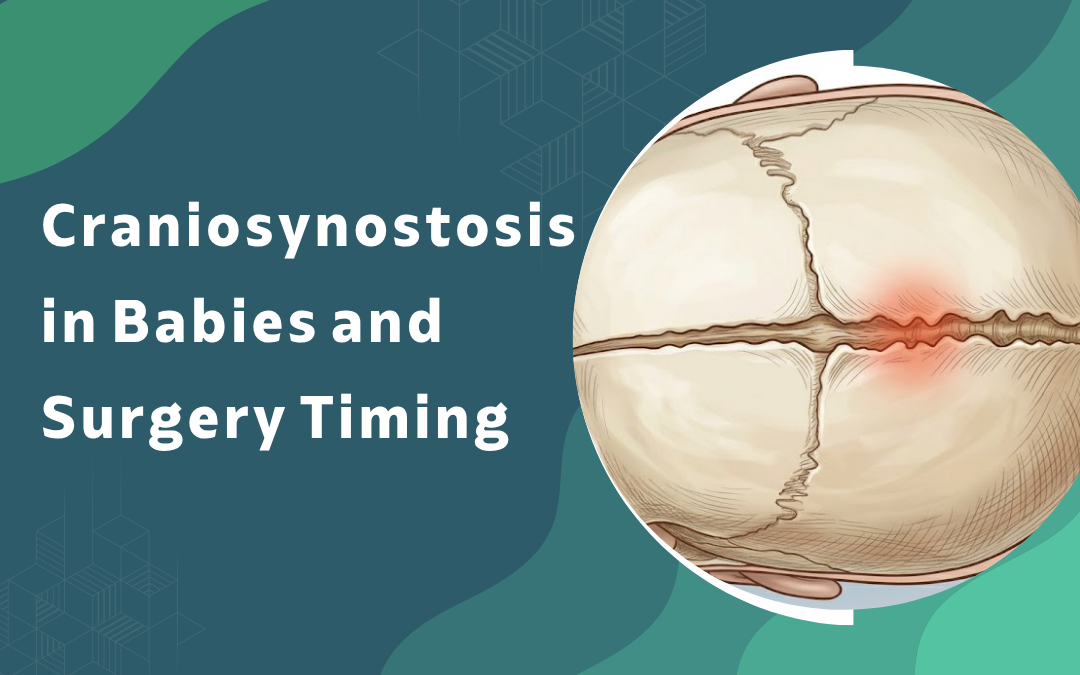
Craniosynostosis is a birth defect where a baby’s skull bones fuse too early, restricting brain growth and causing a misshapen head. Symptoms? Skull ridges, abnormal head shape, a firm soft spot, and signs of raised pressure inside the skull. Surgery is generally needed between 3 and 8 months of age. The goal? Release the fused suture, free up brain expansion, fix the skull shape before bones harden.
Diagnosis usually starts when a paediatrician notices the head looks off. Then a CT scan with 3D reconstruction confirms which suture has closed. Single-suture cases? Endoscopic strip craniectomy works well. Multi-suture or syndromic ones, that’s open cranial vault remodelling territory.
According to Dr. Gurneet Singh Sawhney, a leading expert in brain surgery in Mumbai, If a baby’s head shape isn’t correcting by 4 to 6 months and the soft spot feels unusually firm, that’s a clinical flag worth imaging. Waiting longer narrows the surgical window.
What causes craniosynostosis and how is it diagnosed in infants?
Most cases just happen. No clear reason, no family history, nothing to point at. A small share is genetic though, tied to syndromes like Apert, Crouzon, or Pfeiffer, and those usually carry their own facial and limb features alongside the skull issue.
- Genetic mutations: single-gene changes in FGFR pathways throw off how cranial sutures form during fetal development, and that’s where most syndromic cases trace back to
- Intrauterine constraint: tight space inside the womb, twin pregnancies, breech positioning, all of it can press on the skull and push a suture to fuse early
- Diagnosis: paediatricians usually catch it during routine head circumference checks because the numbers stop tracking right
- Examination: a hard ridge along the fused suture, a forehead pulled to one side, or a flat spot, those are the first things felt on the head
Soft skull bones in infancy reshape easily. Toddler bones? Not so much. Imaging confirms it, not just eyeballing the shape from across the room. For severe or syndromic presentations, pediatric brain surgery planning kicks off as soon as the CT report lands.
When does craniosynostosis need surgery and which procedure is used?
Surgery isn’t automatic. Plenty of mild head-shape issues correct themselves or just need positioning therapy. But when the fusion starts blocking brain growth, threatens vision, or pushes intracranial pressure up? That’s when the surgical conversation starts. Choice of procedure depends on age, number of fused sutures, and whether the case is syndromic.
Case Type | Ideal Surgery Age | Procedure | Helmet After |
Single suture, mild | 3 to 6 months | Endoscopic strip craniectomy | Yes, 6 to 12 months |
Single suture, late | 9 to 12 months | Open cranial vault remodelling | Usually no |
Multiple sutures | 6 to 12 months | Open cranial vault remodelling | Usually no |
Syndromic (Apert, Crouzon) | Staged, 6 months onward | Vault remodelling plus midface advancement later | Case dependent |
Raised pressure (any age) | Urgent | Open decompression and remodelling | Case dependent |
Done under general anaesthesia, with a neurosurgeon and craniofacial team working together. Hospital stay runs 3 to 5 days usually. Most kids bounce back to normal activity in 4 to 6 weeks, though parents get told to expect a quieter first fortnight. For families weighing surgical timing, this case study on tonic-clonic seizures walks through how unaddressed pressure on the developing brain can show up neurologically.
Why Choose Dr.Gurneet Singh Sawhney?
18 years of neurosurgical work. MCh in Neurosurgery with university 1st rank. International fellowships from Japan in functional neurosurgery and epilepsy surgery. Paediatric work covers hydrocephalus, craniosynostosis correction, and complex intracranial procedures, all of it done at Fortis Hospital Mulund. For paediatric craniosynostosis specifically, Dr. Gurneet Singh Sawhney coordinates with craniofacial and anaesthesia teams trained for infant skull surgery, which matters because routine adult-anaesthesia setups don’t translate.
Families travelling from across India and abroad consistently highlight the same things. Transparent imaging reviews. Conservative recommendations when surgery isn’t yet warranted. Surgical outcomes that hold up against international benchmarks. No upselling. No rushed decisions.
FAQ's
How soon after birth can craniosynostosis be diagnosed?
Sometimes at birth, but most cases get confirmed between 2 and 6 months.
Will my baby need a helmet after surgery?
Endoscopic surgery needs helmet therapy for 6 to 12 months, open surgery usually doesn’t.
Can craniosynostosis correct itself without surgery?
True suture fusion never reverses on its own and needs surgical correction.
Does craniosynostosis affect brain development?
Untreated cases can cause raised pressure, vision issues, and developmental delays.