

Not the same thing. Not even close. Migraine is a neurological disorder with its own phases, triggers and symptoms that go well beyond head pain. A tension headache and a migraine both hurt. That is where the similarity ends. Treatment that works for one does nothing for the other. Getting the diagnosis right is the first step in getting the management right.
According to Dr. Gurneet Singh Sawhney, a leading neurosurgeon in Mumbai, treating every headache the same way is the most common mistake. Migraine has its own pathophysiology. Managing it like a tension headache is how patients stay on the wrong treatment for years without knowing why it isn’t working.
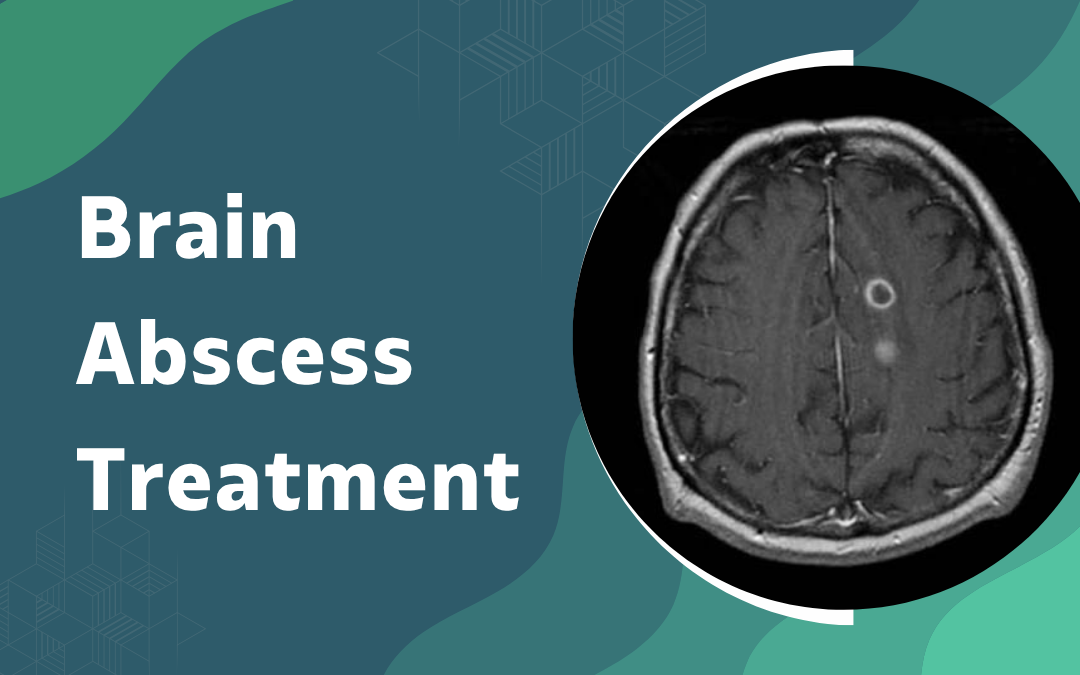
New ring-enhancing lesion on brain imaging with fever and headache that needs urgent specialist review?
How Is Brain Abscess Diagnosed?
The MRI is what does the work. One sequence in particular separates abscess from tumour more reliably than anything else in the clinical picture.
MRI with contrast: ring-enhancing lesion with surrounding oedema, similar to a high-grade tumour. The enhancement pattern alone cannot separate them.
DWI sequence: restricted diffusion inside the enhancing ring is the abscess signature. Tumours don’t restrict. That single sequence often closes the diagnostic question.
CT scan: shows ring enhancement and mass effect in emergency settings. Fast. But less specific than MRI and cannot reliably differentiate abscess from tumour.
Source identification: blood cultures, echocardiogram, dental and ENT review find the primary infection. That finding drives antibiotic selection and source control.
The imaging identifies what needs draining. Brain surgery for abscess aspiration is planned directly from MRI findings once the diagnosis is confirmed.
How Is Brain Abscess Treated?
Surgery and antibiotics in most cases. Antibiotics alone only when the abscess is small, there is no significant mass effect and the patient can be monitored closely enough that any deterioration is caught immediately.
Stereotactic aspiration: CT or MRI-guided needle aspiration. Minimally invasive. Gets pus for culture. Can be repeated if the cavity refills.
Craniotomy and excision: multiloculated abscesses, posterior fossa locations and cases that fail repeated aspiration. Bigger operation but sometimes the only option that works.
Antibiotics: IV for six to eight weeks. Empirical to start, then culture-guided once the aspirated pus is analysed.
Conservative management: antibiotics alone for abscesses under 2.5 centimetres without significant mass effect in patients who cannot tolerate anaesthesia.
Historical mortality above 50 percent. Modern stereotactic surgery and targeted antibiotics have changed that substantially. The imaging overlap that makes this diagnosis easy to miss is covered in this guide on benign vs malignant brain tumours.
Why Choose Dr. Gurneet Singh Sawhney?
Dr. Gurneet Singh Sawhney trained in Japan. Over 18 years in brain surgery, stereotactic abscess aspiration, craniotomy for complex multiloculated cases and management of post-surgical intracranial infection.
Brain abscess is misread as a tumour more often than it should be. A surgeon who operates on both conditions reads the MRI differently. Whether the patient goes to theatre for aspiration or biopsy is decided at that reading, and the two pathways are not interchangeable.
Frequently Asked Questions
Is migraine the same as a severe headache?
No, a brain abscess is a pus-filled infection; a tumour is an abnormal cell growth.
Can a brain abscess be treated without surgery?
Small abscesses without mass effect can sometimes be managed with antibiotics alone under close monitoring.
How long is antibiotic treatment for brain abscess?
Intravenous antibiotics are typically required for six to eight weeks after surgery.
What causes a brain abscess?
Spread from ear or sinus infection, blood-borne seeding from a distant site or penetrating trauma.
Disclaimer: The information shared in this content is for educational purposes only and not for promotional use.