

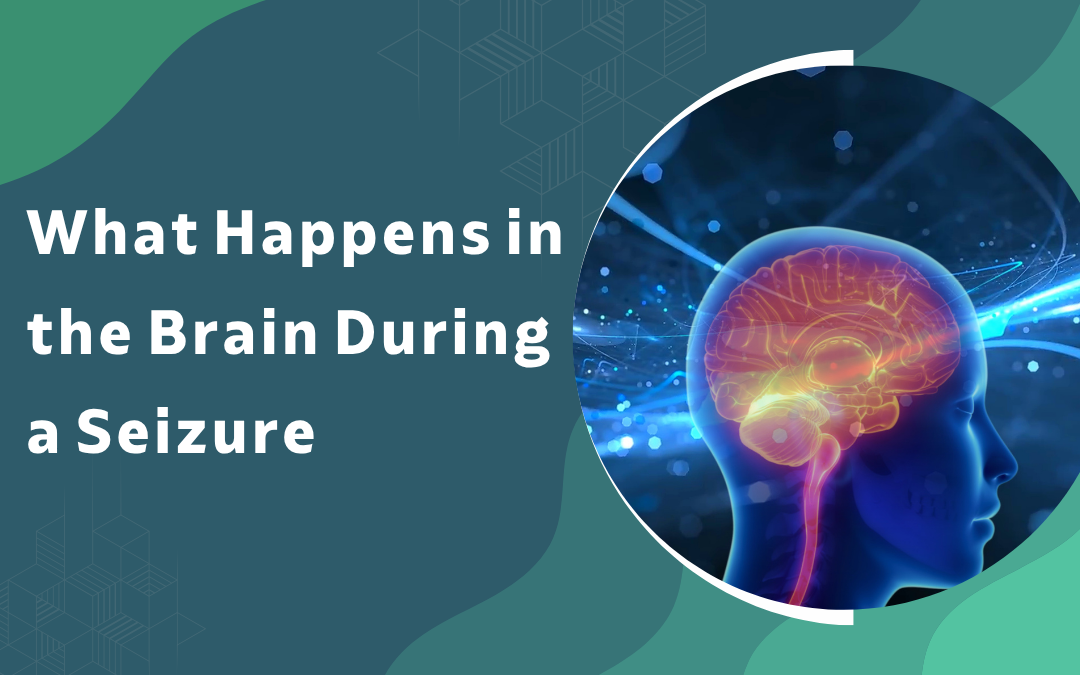
A seizure happens when a sudden burst of abnormal electrical activity in the brain disrupts the normal signalling between neurons. Large groups of nerve cells fire together at high speed, almost like an electrical storm, and the activity either stays confined to one small area or spreads across the brain. Outward signs depend entirely on which region is involved. A collapse, a blank stare, sudden jerking, a strange smell that isn’t there, all of these point to different parts of the brain misfiring. Seizures generally fall into two broad groups, focal and generalised, and the distinction shapes everything from drug choice to surgical eligibility. Most seizures last under three minutes, but what happens before, during, and right after carries real diagnostic weight.
According to Dr. Gurneet Singh Sawhney, a senior neurosurgeon in Mumbai, Identifying where in the brain the seizure starts is the first and most important step. Once the origin is mapped through video-EEG and MRI, the treatment plan changes completely. For eligible patients, surgery becomes a primary option, not a last resort.
Looking for a Neurosurgeon Who Handles Drug-Resistant Epilepsy?
How Do Seizure Types Differ From Each Other?
Seizures don’t all look the same. And getting the type right isn’t textbook stuff. It changes everything about the treatment plan.
Seizure Type | Hemisphere Involved | Awareness During Episode | Visible Features |
Tonic-Clonic | Both (generalised) | Lost | Stiffening followed by rhythmic jerking |
Absence | Both (generalised) | Impaired | Brief staring, no postictal phase |
Focal Aware | One hemisphere | Preserved | Sensory or motor symptoms, person can recall |
Focal Impaired Awareness | One hemisphere | Impaired | Automatisms, amnesia for the episode |
Atonic | Both (generalised) | Brief loss | Sudden muscle limpness, drop to ground |
Myoclonic | Both (generalised) | Usually preserved | Brief, sudden muscle jerks |
One patient can have more than one type. Something like Lennox-Gastaut syndrome, several types coexist, combination therapy becomes necessary. Misclassifying the type early on is honestly one of the biggest reasons treatment quietly fails over the first couple of years.
What Triggers a Seizure?
Seizures don’t really come out of nowhere in people prone to them. There are real physiological triggers that lower the threshold.
- Sleep deprivation. One bad night is enough. Even someone whose epilepsy is otherwise well-controlled can have a breakthrough after a single rough sleep.
- Electrolyte imbalance. Low sodium, glucose, magnesium shifts how excitable neurons get, and that can trigger a seizure even in people who’ve never had epilepsy.
- Photic stimulation. Around three percent of people with epilepsy react badly to flickering light, sharp visual patterns. Seizure can come on within seconds.
- Missed medication. Biggest single reason for breakthrough seizures in diagnosed patients. How badly one missed dose hits really depends on the drug’s half-life.
Knowing your own triggers is half the battle in long-term management. A simple seizure diary before any appointment gives the specialist something concrete to work with.
.
What Happens Immediately After a Seizure Ends?
The seizure itself rarely lasts beyond three minutes. What follows the postictal state often tells the neurosurgeon as much as the seizure did. These few minutes carry real diagnostic value.
- Postictal confusion: Disorientation for five to thirty minutes is common after tonic-clonic or focal impaired-awareness seizures. Longer the confusion, heavier the seizure usually was.
- Todd’s paralysis: One side of the body can go weak for hours after a focal motor seizure. Looks like a stroke. Gets mistaken for one often enough.
- Memory loss: Forgetting the seizure itself is expected. But if memory gaps stretch beyond that, points to temporal lobe involvement, imaging becomes necessary.
- Headache and fatigue: Heavy headache, sore muscles, completely drained for the day. That’s the brain paying back the metabolic cost.
Writing these postictal signs down, especially when nobody saw the seizure itself, gives the neurosurgeon real localising clues. For surgical candidates, this feeds straight into the pre-op workup for epilepsy surgery evaluation.
Does Every Seizure Need Long-Term Medication?
Not always. A provoked seizure fever, metabolic problem, alcohol withdrawal, drug interaction doesn’t automatically mean epilepsy. In those cases, you treat the cause, not the seizure. Antiepileptic drugs may not be needed beyond the acute phase.
Unprovoked seizures are different. After a first unprovoked seizure, whether to start medication depends on how likely a second one is. That comes from imaging, EEG, family history. Published ILAE data puts the recurrence risk at 21 to 45 percent within two years, and the number rises if there’s a structural lesion or abnormal EEG.
For drug-resistant epilepsy two properly chosen drugs already failed surgery isn’t a last resort. It’s the next step. Temporal lobe resection, LITT, corpus callosotomy, RNS each one reduces seizures in eligible patients.
Why Choose Dr. Gurneet Singh Sawhney for Seizure Treatment?
Dr. Gurneet Singh Sawhney is a senior consultant neurosurgeon at Fortis Hospital Mulund with over 15 years of experience in epilepsy surgery and complex seizure management. His training includes advanced work in temporal lobe resection, LITT, and minimally invasive neurosurgical techniques.
Patients with drug-resistant epilepsy come to him after years of failed medication trials. The clinic handles video-EEG localisation, MRI-based seizure focus mapping, surgical workup, and long-term follow-up under one roof. No referral chains, no delays.
Has Your Seizure Pattern Changed Recently?
Frequently Asked Questions
What happens in the brain during a seizure?
Neurons fire abnormally and in sync, breaking normal brain signalling. Activity can stay localised or spread right across both hemispheres.
What is the difference between a provoked and an unprovoked seizure?
Provoked seizure has a clear cause like fever or metabolic imbalance. Unprovoked one happens without a reversible trigger, carries higher recurrence risk.
What is the survival rate for small chronic subdural hematomas?
Small chronic hematomas under 10 mm without midline shift carry favourable survival rates, with most patients returning to baseline function after structured observation.
How long does a typical seizure last?
Usually one to three minutes. Anything past five minutes is status epilepticus, needs emergency care.
Reference:
- Epilepsy — Global Burden and Classification — World Health Organization
- Seizure First Aid and Clinical Management — National Institute of Neurological Disorders and Stroke, NIH
Disclaimer: The information shared in this content is for educational purposes only and not for promotional use.