
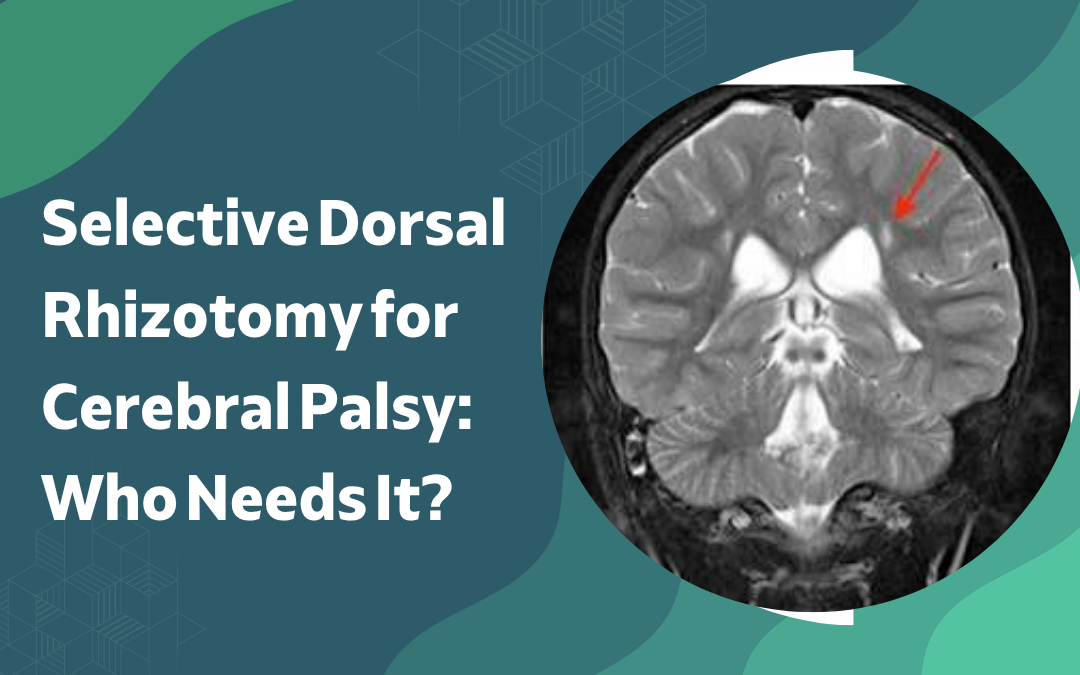
Selective dorsal rhizotomy suits children with spastic cerebral palsy where spasticity in the legs, not weakness, is the main barrier to movement. The ideal window is ages 3 to 8, with spastic diplegia, reasonable underlying strength, and the ability to commit to intensive physiotherapy after surgery. Adults may qualify in select cases, but outcomes are best established in children. Candidate selection always involves neurosurgery, physiotherapy, and neurology together not a single opinion.
According to Dr. Gurneet Singh Sawhney, a neurosurgeon in Mumbai, “SDR can be genuinely transformative for a well-selected child with cerebral palsy, but the selection process deserves as much attention as the surgery itself, perhaps more.”
Is spasticity still limiting movement or care despite maximum oral medication?
What Does Selective Dorsal Rhizotomy Actually Do?
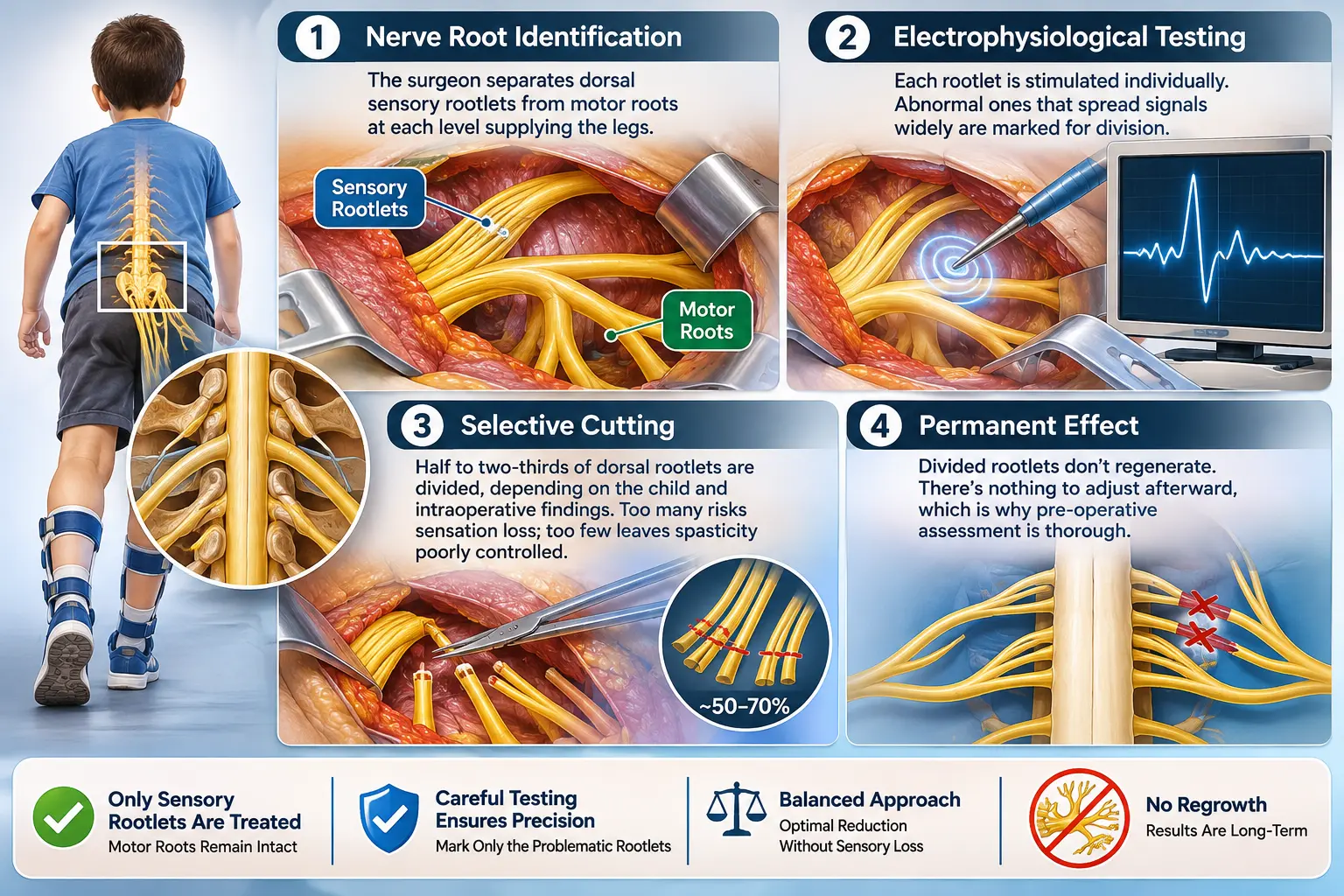
Surgery creates the conditions for better movement. How far that goes depends almost entirely on physiotherapy afterward.
SDR sits within the broader range of spasticity treatment options and functional neurosurgery approaches available for children with cerebral palsy.
Who Is a Candidate for Selective Dorsal Rhizotomy?
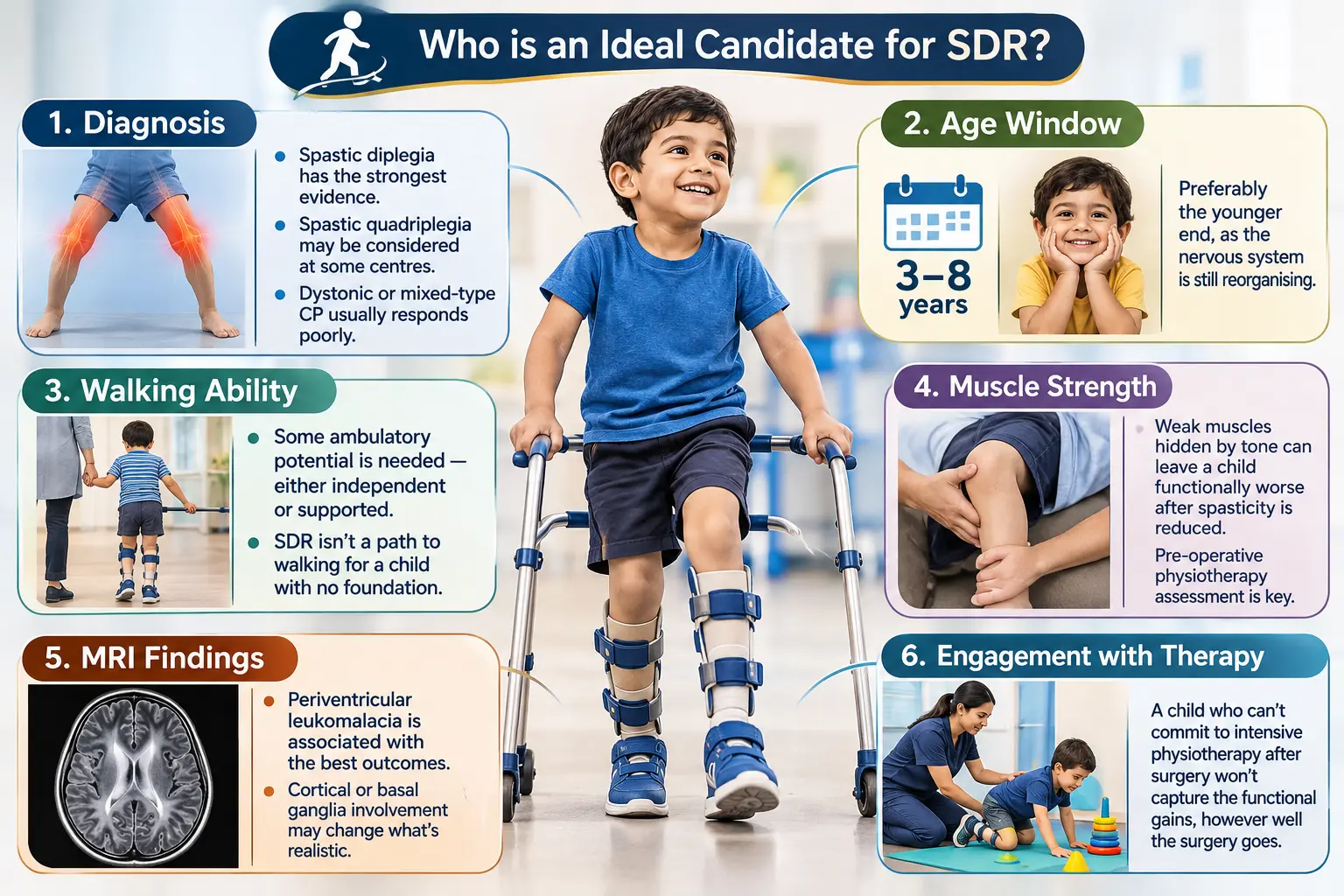
Not every child with tight legs needs SDR. For some, botulinum toxin injections or a baclofen pump alongside physiotherapy is the better fit.
A functional neurosurgery assessment weighs all of these together before any recommendation is made.
What Are the Risks and What Does Recovery Look Like?
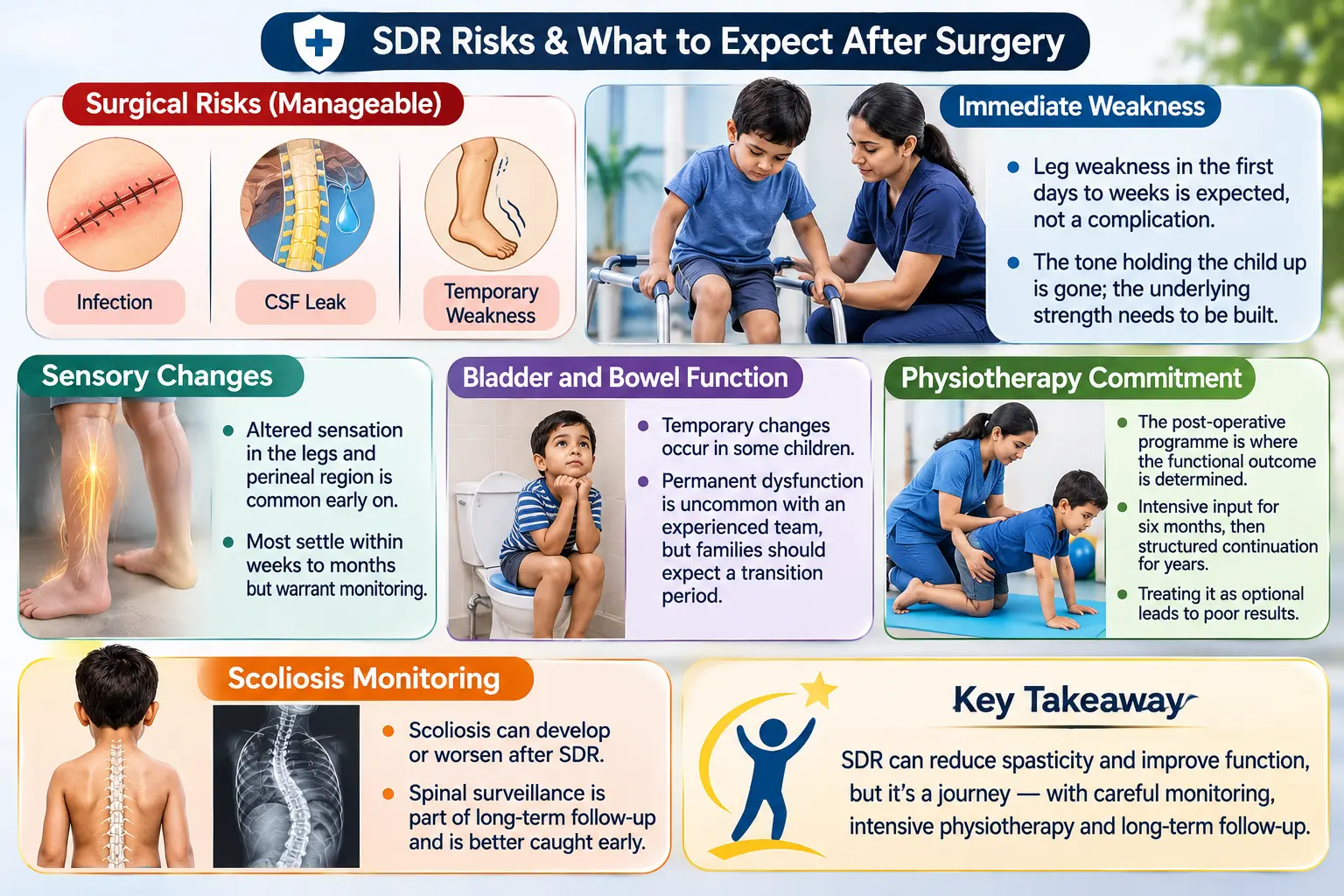
Meaningful gains build over months to years, not weeks. The rehabilitation plan is set before surgery, not after, because the outcome depends on both in equal measure. What determines success rates in spine surgery follows the same logic.
Frequently Asked Questions
Is selective dorsal rhizotomy painful?
General anaesthesia covers the surgery itself. The first few days after involve pain that’s managed in hospital. What families often find harder than the surgical site is the physiotherapy that starts shortly after, necessary, but demanding for a young child.
How long does the effect of SDR last?
The divided rootlets don’t regenerate, so the spasticity reduction is permanent. The child’s functional picture keeps evolving over years depending on how the physiotherapy goes the surgery sets the conditions, the therapy determines how far those conditions are used.
Can SDR be done alongside botulinum toxin or a baclofen pump?
Not at the same time, and rarely in direct combination. SDR tends to be considered when those approaches haven’t delivered enough functional benefit, or when a permanent change is more appropriate than ongoing repeat interventions.
What is the ideal age for SDR in cerebral palsy?
Three to eight is the window most programmes work within, with four to six being where the evidence sits most comfortably. Past eight, the nervous system’s plasticity is lower, fixed contractures become more of a factor, and the returns from SDR tend to be less predictable.
References
Disclaimer: The information shared in this content is for educational purposes only and not for promotional use.