


Intracranial pressure is measured by placing a catheter or pressure sensor inside the skull in the ventricle or brain tissue, connected to a continuous monitor recording pressure in mmHg. Normal adult pressure is 7 to 15 mmHg; sustained readings above 20 to 22 mmHg call for treatment. The ventricular catheter is the reference method because it also drains fluid. Lumbar puncture, optic nerve ultrasound, and imaging signs estimate pressure but can’t replace direct monitoring in critical cases. A single reading means little without the trend behind it.
According to Dr. Gurneet Singh Sawhney, neurosurgeon in Mumbai, “Imaging suggests that pressure is high, but only a monitor tells us how high it is and how it responds to treatment from one hour to the next.”
Dealing with persistent headaches, vomiting or vision changes that suggest raised pressure?
What Are the Methods of Measuring Intracranial Pressure?
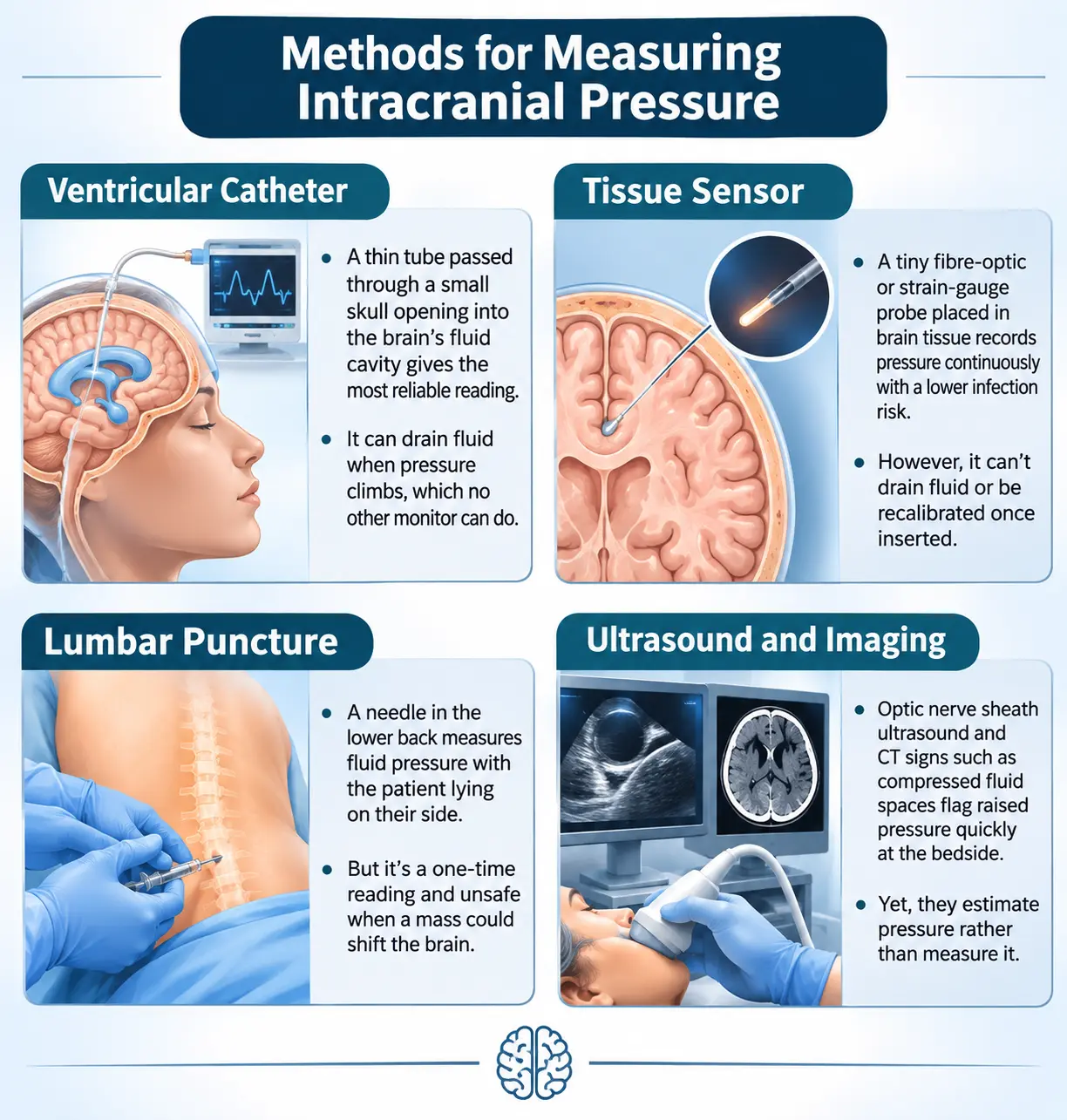
Invasive monitors give exact numbers, while non-invasive tools help decide who needs one. Placing a monitor means a small opening in the skull, a step carried out within brain surgery protocols under sterile conditions.
When Is Intracranial Pressure Measurement Needed?
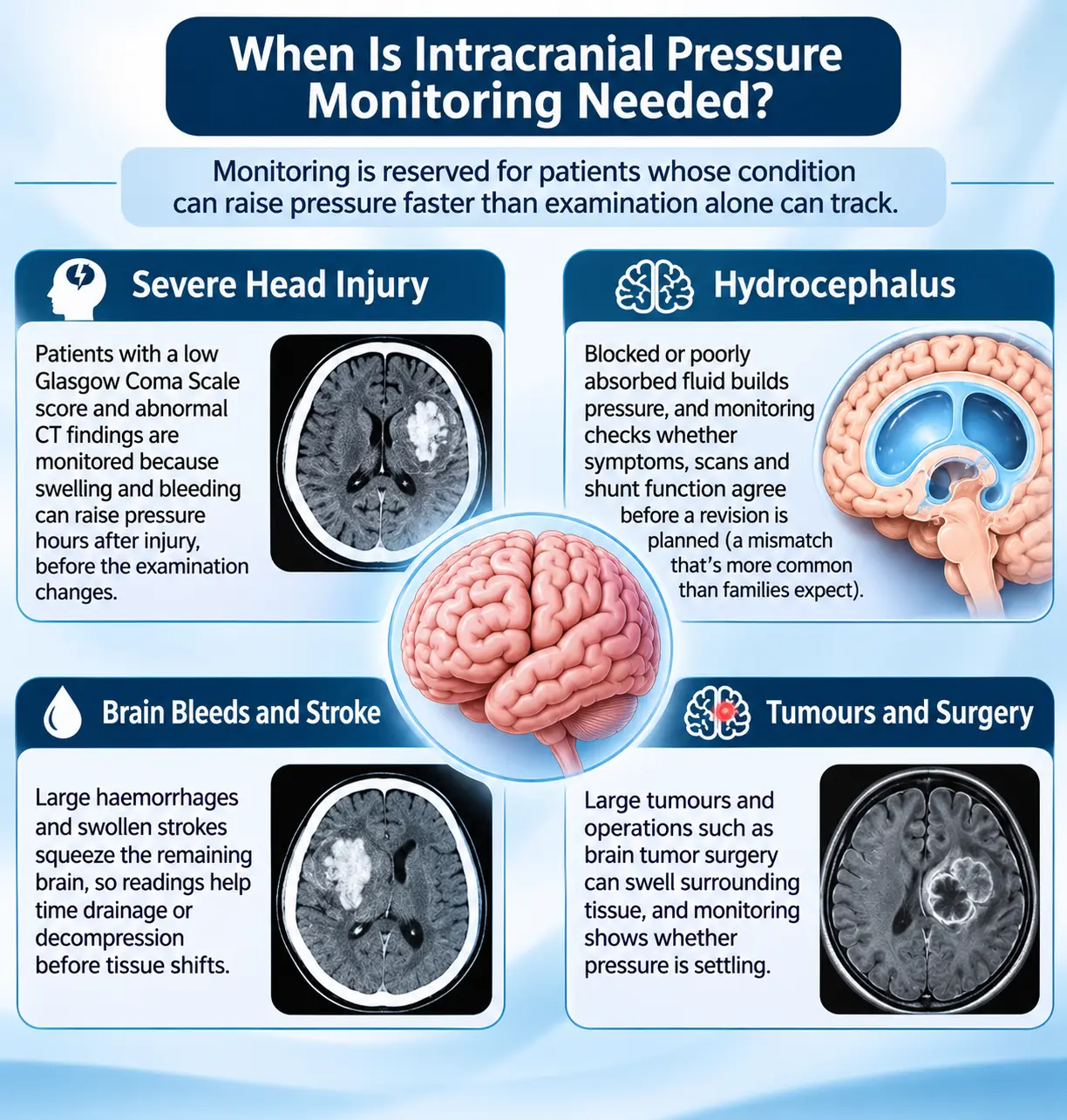
Short stay, close watch. Monitoring usually lasts days, not weeks. The fluid side of pressure is explained in hydrocephalus causes, symptoms and treatment.
What Determines the Right Treatment Approach?
The choice of monitor and the response to a high reading depend on the cause of the pressure and the patient’s condition.
- Underlying Cause: a bleed, tumour, blocked fluid pathway or swelling each needs a different response, so measurement is paired with imaging to find what’s pushing pressure up.
- Drainage Need: when excess fluid is the problem, a ventricular catheter is preferred because it measures and treats at once, while a tissue sensor suits patients who only need monitoring.
- Bleeding Risk: patients on blood thinners or with clotting problems need correction first, because even a small bleed along the catheter path can matter.
- Trend and Response: head elevation, medication, drainage or decompressive surgery are escalated according to how pressure responds over time, not on a single number.
Readings are interpreted together with scans and the examination, never as an isolated figure a principle that applies equally to decisions around brain tumor surgery.
Frequently Asked Questions
What is a normal intracranial pressure reading?
Roughly 7 to 15 mmHg in an adult lying flat.
Is intracranial pressure monitoring painful?
It’s placed under anaesthesia or sedation, so insertion isn’t felt.
Can intracranial pressure be measured without surgery?
Only estimated, using ultrasound, imaging signs or lumbar puncture in selected patients.
How long does intracranial pressure monitoring last?
Usually several days, until the risk of raised pressure settles.
References
Disclaimer: The information shared in this content is for educational purposes only and not for promotional use.