

Surgery and radiation are not interchangeable. Surgery removes tissue immediately — relieving pressure, providing histology, and reducing tumour volume in one step. Radiation kills tumour cells over weeks, working best on residual disease or lesions too deep to resect. The decision is made by a multidisciplinary team reviewing tumour type, grade, location, molecular profile, and patient fitness. Neither is universally better. The question is which combination, in which sequence, for this tumour.
According to Dr. Gurneet Singh Sawhney, a neurosurgeon in mumbai, brain tumour surgery, “The surgery versus radiation question is usually the wrong framing most high-grade brain tumours need. The question is what comes first and what the sequencing looks like for that patient’s specific pathology.”
Diagnosed with a brain tumour and uncertain whether surgery or radiation is the right first step?
What Factors Push Toward Surgery First?
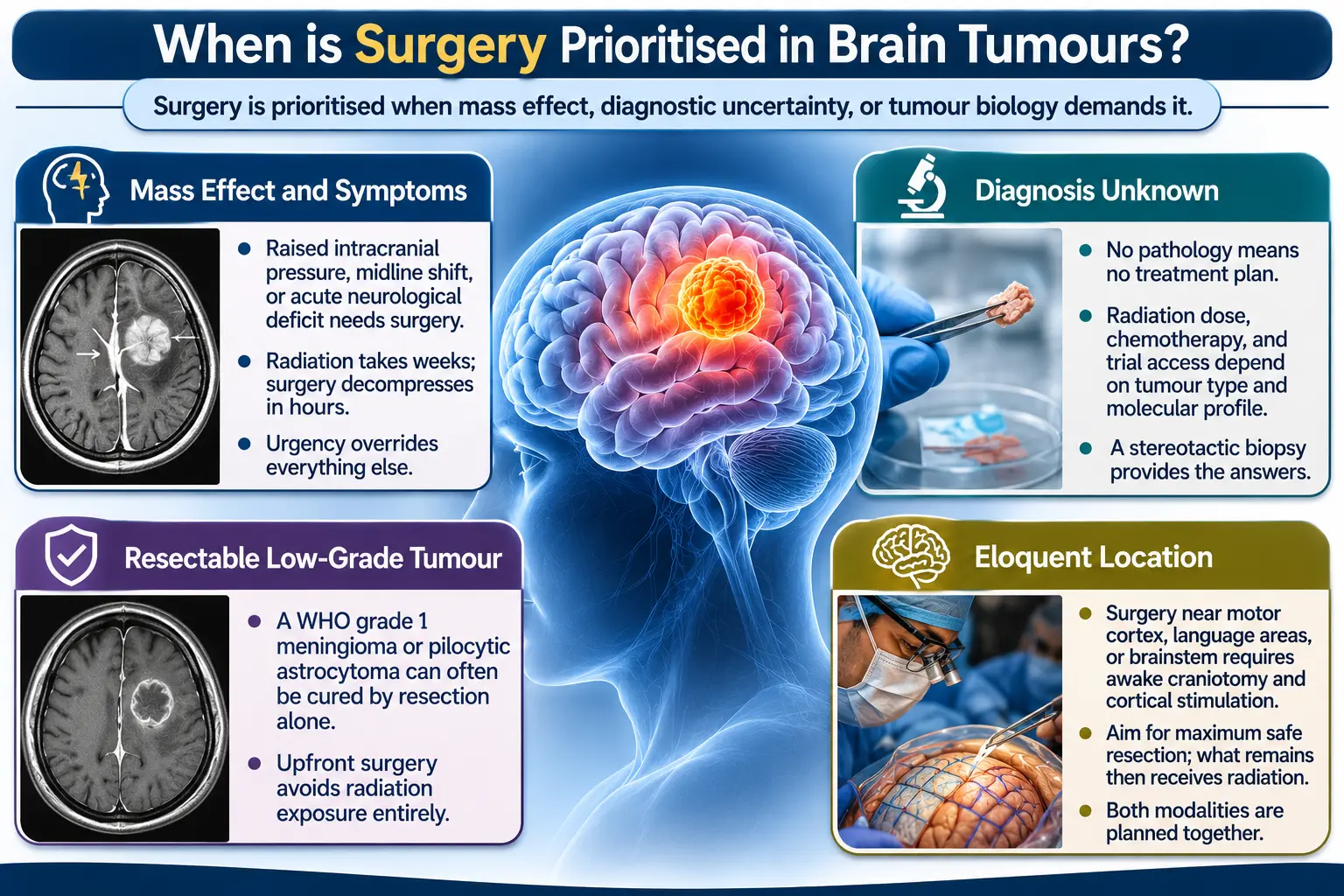
The pre-surgical workup feeds into the same planning framework used in brain tumor surgery for all eloquent-area tumours.
What Factors Push Toward Radiation Without Surgery?
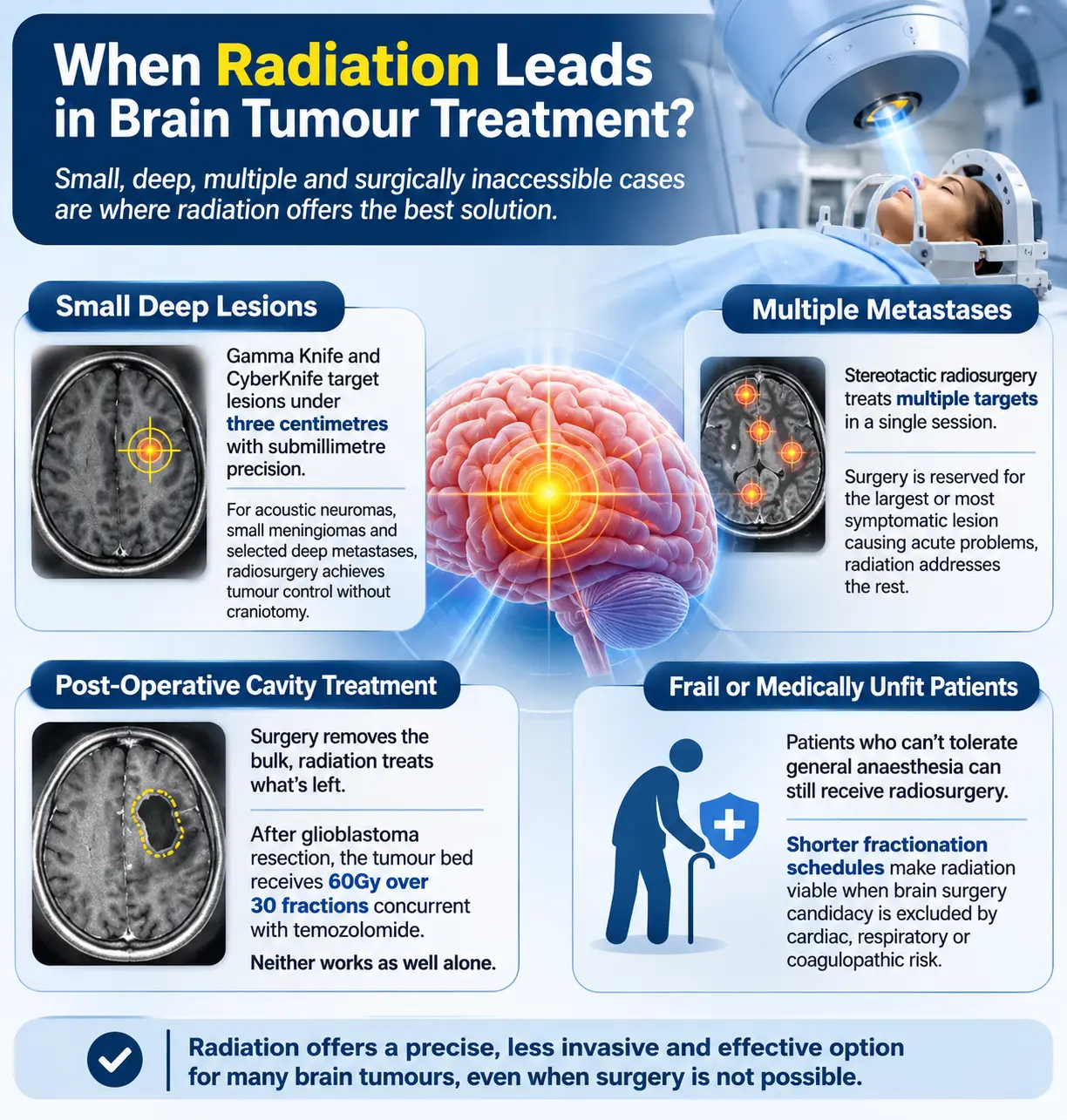
For the specific situation where the surgery-versus-radiation question is most commonly asked, see surgery vs radiation for brain mets.
What Determines the Right Treatment Approach?
No single specialist makes this call. The MDT meeting is where it’s made.
- Who’s in the room: Neurosurgeon, neuro-oncologist, radiation oncologist, radiologist, and neuropathologist. Each brings a different lens resectability, radiosurgery suitability, systemic disease context, and imaging interpretation.
- What the meeting decides: Primary modality, sequence, adjuvant treatment, and surveillance interval. Each tumour type has a pathway glioblastoma, meningioma, brain mets and each patient’s specific features modify it.
- Molecular profile input: MGMT methylation, IDH mutation, and 1p/19q co-deletion change radiation dose and chemotherapy selection. The MDT reconvenes after pathology to finalise the adjuvant plan two separate decisions, both requiring the full team.
- Patient involvement: The MDT recommendation is presented with rationale, alternatives, and anticipated outcomes. Informed consent in neuro-oncology is a process, not a form often across more than one conversation.
For the broader question of when a brain tumour requires surgery versus observation or non-surgical management, see do all brain tumours require surgery.
Frequently Asked Questions
Can radiation replace surgery for brain tumours?
In selected cases small deep lesions, acoustic neuromas, selected metastases yes. For large symptomatic tumours causing pressure, surgery can’t be replaced.
Why is surgery done before radiation for most brain tumours?
Surgery provides histology, reduces mass effect immediately, and determines which radiation dose and chemotherapy the tumour qualifies for.
Can surgery and radiation be used together?
Yes, it’s the standard of care for glioblastoma and many other high-grade tumours. Surgery removes bulk; radiation treats the residual infiltrated margin.
Who decides between surgery and radiation for a brain tumour?
A multidisciplinary team: neurosurgeon, neuro-oncologist, radiation oncologist, radiologist, and neuropathologist reviewing imaging, pathology, and patient fitness together.
References
Disclaimer: The information shared in this content is for educational purposes only and not for promotional use.