

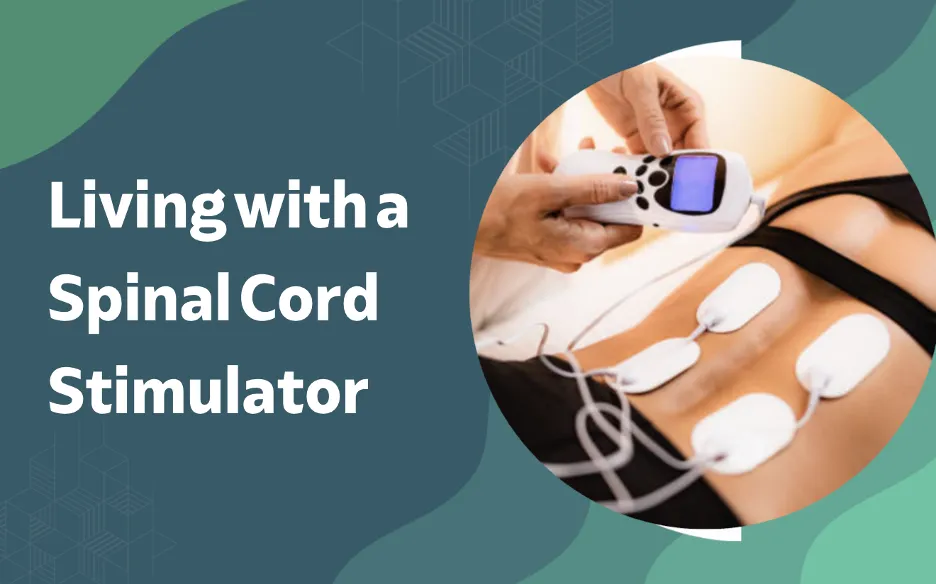
A spinal cord stimulator (SCS) is designed to fit into daily life, not restrict it. Most patients return to work, exercise, and travel within weeks of recovery. Driving needs a few sensible precautions, especially around switching the device off before getting behind the wheel. MRI scans are possible with most modern devices, but only under specific “MRI-conditional” settings that a trained team must activate and verify. Knowing your device model, carrying your ID card, and reporting unusual sensations early keeps the therapy safe and effective for years.
What Does Daily Life Look Like With a Spinal Cord Stimulator?

The First Few Weeks After Implantation
Healing around the device and leads takes a few weeks. During this window, patients are usually asked to avoid bending, twisting, and reaching overhead, similar to precautions after Specialised Spine Surgery. Once the incision has healed and the leads have settled, most restrictions ease off.
Everyday Activities
Walking, light housework, desk work, and most low-impact exercise are generally fine once cleared by your surgeon. Many patients find it helpful to keep the remote control handy to adjust intensity as their position changes, since stimulation can feel different lying down versus standing.
Exercise and Physical Activity
Gentle stretching and core-strengthening exercises support the muscles around the implant and improve overall outcomes. High-impact sports, heavy lifting, or activities with a fall risk are usually approached cautiously, and it’s worth checking in before resuming anything strenuous.
Electronic and Household Devices
Most household electronics, including phones and laptops, don’t interfere with a stimulator. Strong magnetic fields or security systems, such as anti-theft gates in stores or airport security wands, can occasionally cause a brief jolt or temporarily affect the device, so patients are advised to notify security staff and walk through at a normal pace.
Not sure what activities are safe for your recovery stage?Book a Consultation with Dr. Gurneet Singh Sawhney to get a personalised recovery and activity plan tailored to your implant and lifestyle.
Can You Drive With a Spinal Cord Stimulator?
This is one of the most common questions patients ask, and the answer depends on timing and device settings rather than the presence of the implant itself.
In the Early Recovery Period
Driving is usually paused for the first couple of weeks after surgery, or until the surgeon confirms the incision has healed and reflexes and movement feel normal.
Once You’ve Recovered
Many patients do return to driving. The key precaution is to turn the stimulator off, or set it to a very low, non-distracting level, before starting the car. Active stimulation can create a tingling sensation strong enough to distract from the road or unexpectedly change with body position, such as when turning to check a blind spot.
General Good Practice
Keep the remote accessible but not in a position where reaching for it becomes a distraction while driving. If your stimulation settings are being actively adjusted during a trial or early programming period, it’s best to avoid driving until the settings are stable. A structured review with a Functional Neurosurgeon can help confirm when it’s appropriate to resume.
Is a Spinal Cord Stimulator Safe for an MRI Scan?
MRI compatibility is one of the more technical aspects of living with a stimulator, and it deserves a careful answer rather than a simple yes or no.
It Depends on the Device
Older or “legacy” stimulator systems are generally not considered safe for MRI, due to the theoretical risk of the leads heating up inside the body during the scan. Many current-generation systems, however, are built and tested specifically to be MRI-conditional, meaning they can be scanned safely under a defined set of conditions.
What “MRI-Conditional” Actually Means
Even with a compatible device, an MRI cannot simply be scheduled like any other scan. The stimulator typically needs to be switched into a dedicated “MRI mode” using the patient programmer, the scanner settings need to stay within tested limits, and the radiology team needs to confirm the exact model and placement of the implanted generator and leads beforehand. Studies on MRI-conditional systems note that a large majority of spinal cord stimulator patients will need at least one MRI scan within five years of their implant, which is why confirming compatibility at the time of implantation matters.
What You Should Always Carry
Every patient is given an implant identification card listing the exact model and serial numbers of their device. This card should travel with you and be shown to any radiology or emergency team before a scan is booked, since the wrong assumption about device compatibility can lead to a scan being cancelled at the last minute, or in rare cases, to genuine harm.
If You Need an Emergency MRI
In urgent situations, your care team may need to contact your implanting surgeon’s office to confirm device details quickly. Keeping your device card in your wallet, and informing family members of your implant, removes this bottleneck when time matters most.
Planning an MRI or unsure if your device is MRI-conditional? Contact Dr. Gurneet Singh Sawhney’s team to confirm your device compatibility and get the right paperwork sorted before you book your scan.
What Are Signs You Should Report to Your Neurosurgeon?

While a spinal cord stimulator is generally low-maintenance, a few changes are worth flagging promptly:
- Stimulation that suddenly feels much stronger, weaker, or absent
- Redness, warmth, or swelling around the implant site
- New or worsening back or leg pain that doesn’t match your usual pattern
- A sensation of the device shifting under the skin
- Any loss of bladder or bowel control, which needs immediate emergency attention
According to research published by the National Institutes of Health, a notable share of stimulator patients eventually need imaging that involves confirming MRI compatibility, underscoring why routine follow-ups and accurate device records matter well beyond the first year. For persistent pain that isn’t fully controlled, or if you’re weighing Spinal Cord Stimulation against other options, a structured review helps map out the safest next step.
Dr. Gurneet Singh Sawhney, Neurosurgeon in Mumbai, adds:
“The device itself rarely causes problems once it’s settled in. What we watch for is a change in pattern, stimulation that suddenly feels different, or pain that returns in a new way. Patients who report that early almost always have an easier fix.”
Why Choose Dr. Gurneet Singh Sawhney for Spinal Cord Stimulator Care?

Dr. Gurneet Singh Sawhney is a nationally recognised neurosurgeon with expertise in minimally invasive spine surgery and advanced neuromodulation, including spinal cord stimulator trials, implantation, and long-term programming support. He uses image-guided planning to ensure precise lead placement, which directly affects how well the therapy performs day to day. His work was recognised with the “Most Preferred Top Neurosurgeon in Mumbai” honour at the Golden Aim Awards 2021.
Patients consult him at NeuroLife Brain & Spine Clinic in Mulund West and at Fortis Hospital Mulund, with additional clinics in Chembur, Sion, and Vashi, making follow-up care accessible across Mumbai. For those travelling from outside the city, the team at the Best Neurosurgeon in India network also coordinates care for out-of-town and international patients.
Living with chronic pain or considering spinal cord stimulation? Schedule a Consultation with Dr. Gurneet Singh Sawhney and get a clear, personalised treatment plan.
FAQ's
1. Can I travel by flight with a spinal cord stimulator?
Yes, most patients can fly once cleared by their surgeon. Carry your device ID card, and inform airport security before walking through metal detectors, as the device may occasionally trigger an alert.
2. Do I need to turn off my stimulator every night?
Not necessarily. Many patients keep it on at a comfortable level overnight, though some prefer to switch it off. Your surgeon or programmer can help you find a setting that works for your sleep.
3. Can all spinal cord stimulators safely undergo an MRI?
No. Only devices specifically labelled MRI-conditional, used under the manufacturer’s defined scan settings, are considered safe. Older systems may not be, so device confirmation is essential before any scan.
4. How soon after surgery can I return to driving?
Most patients wait until the incision has healed and any early programming adjustments are complete, often around two to three weeks, and should always turn stimulation off or to a minimal setting before driving.
5. What should I do if my stimulator suddenly feels different?
Contact your neurosurgeon’s office. A sudden change in sensation, intensity, or effectiveness can signal a lead shift, battery issue, or programming change that needs review, and catching it early usually makes it easier to fix.
References
- Boston Scientific — MRI & Medical Safety Information for SCS Systems: https://www.bostonscientific.com/en-US/patients-caregivers/device-support/scs/medical-procedure-safety.html
- NIH / NCBI — Failure of SCS MR-Conditional Modes Due to High Impedance: A Review of Literature and Case Series: https://pmc.ncbi.nlm.nih.gov/articles/PMC8119585/