

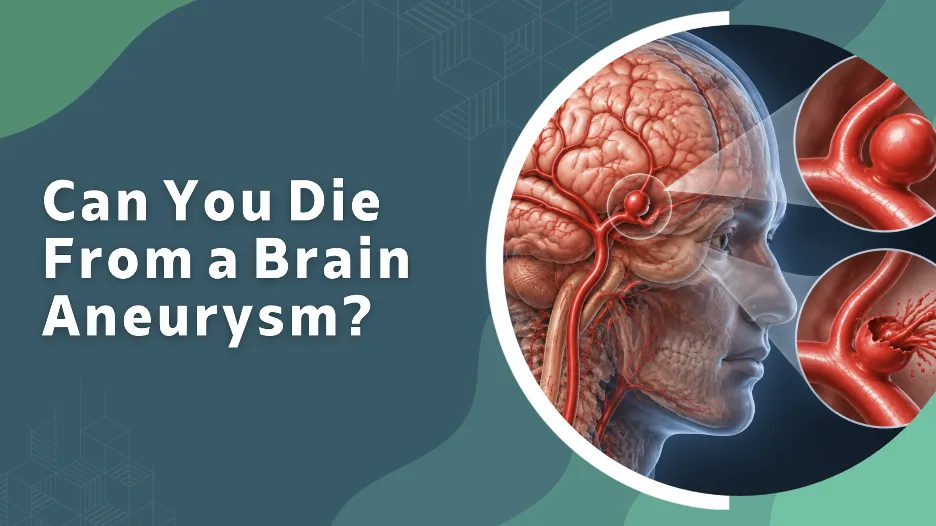
Yes, a brain aneurysm can be fatal, but mainly if it ruptures. Most unruptured aneurysms never cause problems and are often found incidentally. A rupture, however, is a medical emergency: roughly one in four people die within the first 24 hours, and about half do not survive beyond three months. Quick recognition of symptoms like a sudden “thunderclap” headache and immediate emergency care make the biggest difference to survival.
Can you die from a brain aneurysm? It’s a fair question, and a common one, since the word “aneurysm” alone is frightening. The honest answer is: it depends entirely on whether the aneurysm ruptures. An unruptured brain aneurysm can sit quietly for a lifetime without ever being noticed. A ruptured one is one of the most life-threatening events in neurosurgery, and every minute before treatment matters.
Dr. Gurneet Singh Sawhney, Neurosurgeon in Mumbai, explains that fear should not replace facts.
“Most brain aneurysms are found by accident and never rupture. The real danger is a rupture that goes unrecognised. A sudden, severe headache unlike anything the person has felt before is never something to sleep off. That single decision, to seek emergency care immediately, is often what separates survival from tragedy.”
What Happens When a Brain Aneurysm Ruptures?
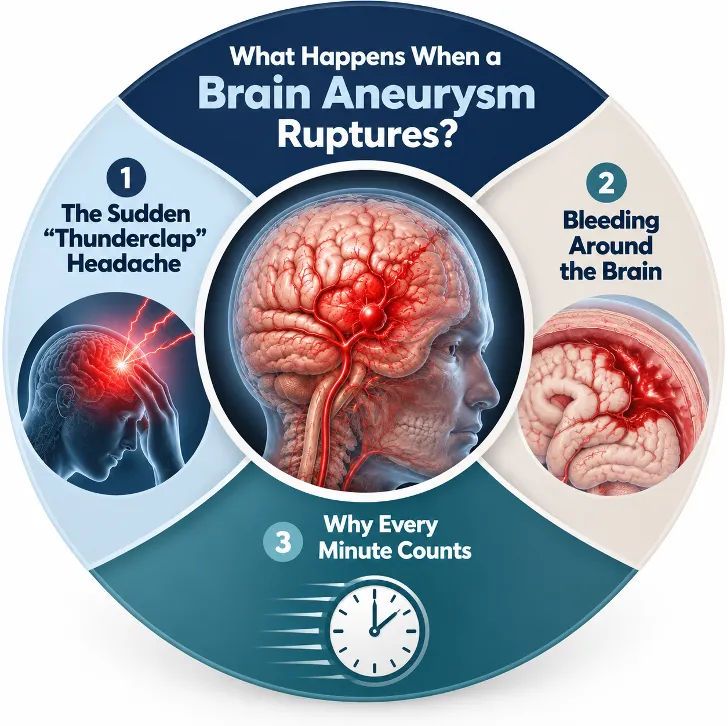
A brain aneurysm is a weak, bulging spot on the wall of an artery in the brain. As long as it stays intact, it usually causes no symptoms at all. The danger begins when that weakened wall gives way and blood leaks into the space around the brain, a condition called a subarachnoid haemorrhage.
The Sudden “Thunderclap” Headache
The hallmark symptom of a ruptured aneurysm is a severe headache that peaks within seconds, often described as the worst headache of a person’s life. It can come with a stiff neck, vomiting, sensitivity to light, blurred vision, or a brief loss of consciousness.
Bleeding Around the Brain
Once blood spreads into the space surrounding the brain, pressure inside the skull rises sharply. This can starve brain tissue of oxygen, trigger seizures, and in some cases cause the brain to swell dangerously within hours.
Why Every Minute Counts
The interval between rupture and treatment is the single biggest factor doctors can influence. Getting to a hospital with neurosurgical and neuro-critical care within this window meaningfully changes outcomes. A Brain Tumor and Spine Specialist equipped for emergency neurovascular care can make this difference.
Sudden, Severe Headache? Don’t Wait to Find Out. A ruptured brain aneurysm is a medical emergency where every minute counts. Seek immediate evaluation if you or a loved one experience a sudden, unbearable headache.
Can You Die From a Brain Aneurysm? The Survival Numbers
Yes, and the risk is highest in the first hours and days after rupture. Roughly a quarter of patients with a ruptured brain aneurysm die before they even reach a hospital, usually from the sudden, massive bleed itself. Among those who do reach medical care, close to half do not survive beyond three months, though outcomes vary widely with age, aneurysm location, and how quickly treatment begins. Of those who survive, a majority live with some degree of lasting neurological change, from mild memory or concentration issues to more significant physical deficits, while others recover well enough to return to normal life with rehabilitation.
These numbers sound alarming, and they are meant to. But they also explain why urgent, specialised treatment changes outcomes so dramatically. Patients treated quickly at a centre for Advanced Neurosurgery have meaningfully better odds than those whose diagnosis and treatment are delayed.
Unruptured Aneurysms Carry a Very Different Risk
It’s worth separating fact from fear here. Most brain aneurysms never rupture. Many are discovered incidentally during a scan done for an unrelated reason, and small, stable aneurysms in low-risk locations are often simply monitored. The decision to treat an unruptured aneurysm weighs its size, shape, location, and the patient’s overall health against the risks of the procedure itself.
Found an Aneurysm on a Scan? Get Clarity, Not Panic. An experienced neurosurgeon can assess your specific risk and recommend whether monitoring or treatment is the right path forward.
What Increases the Risk of a Fatal Rupture?
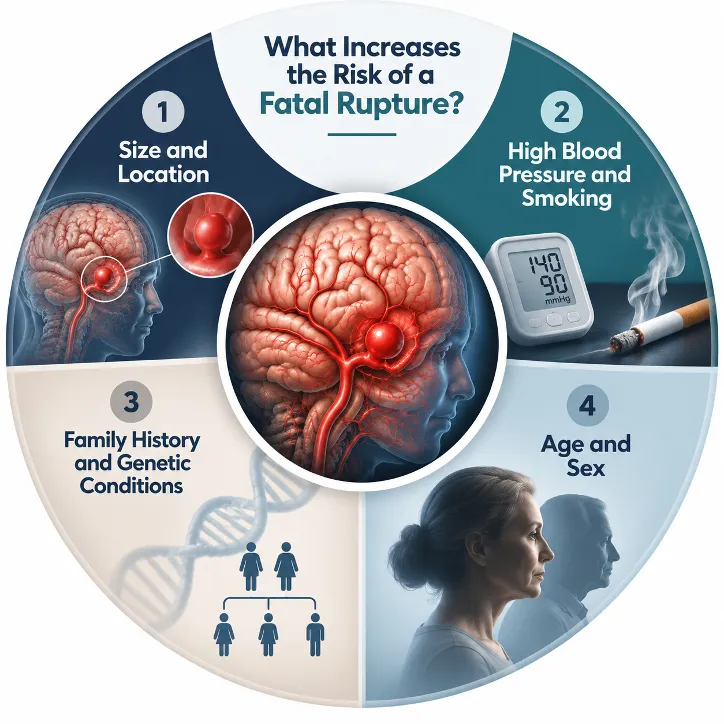
Not every aneurysm carries the same risk, and not every rupture behaves the same way. Several factors influence how dangerous a given aneurysm is.
Size and Location
Larger aneurysms and those in certain locations, particularly the posterior circulation at the back of the brain, tend to carry a higher risk of rupture and a poorer prognosis if they do rupture.
High Blood Pressure and Smoking
Uncontrolled hypertension and smoking are two of the most significant, and most modifiable, risk factors for both aneurysm formation and rupture. Both place repeated stress on already weakened artery walls.
Family History and Genetic Conditions
A family history of brain aneurysms, or certain inherited connective tissue and kidney conditions, raises the baseline risk and often warrants proactive screening even without symptoms.
Age and Sex
Aneurysms become more common with age, and women, particularly after 55, face a somewhat higher risk of rupture than men. This shift is thought to relate to hormonal changes affecting blood vessel strength. Support from a Functional Neurosurgeon can help patients with these risk factors plan appropriate long-term monitoring.
How Is a Ruptured Brain Aneurysm Treated?
Treatment focuses on two goals: stopping the bleeding and preventing the many complications that follow a rupture.
Emergency Stabilisation
The first priority is controlling blood pressure, managing pain, and preventing seizures while imaging confirms the diagnosis and maps the aneurysm precisely.
Surgical Clipping or Endovascular Coiling
Depending on the aneurysm’s size, shape, and location, a neurosurgeon may place a small metal clip at its base through open surgery, or seal it from inside the blood vessel using a minimally invasive coiling or flow-diversion technique. Both approaches aim to remove the aneurysm from circulation and prevent a second, often more dangerous, bleed.
Managing Complications
Survivors need close monitoring in the days that follow, since delayed complications such as vasospasm, where surrounding arteries narrow and reduce blood flow, can cause a stroke even after the initial bleeding is controlled. This is why treatment at a dedicated Neurosurgery Clinic with neuro-critical care support matters as much as the procedure itself.
Diagnosed With a Brain Aneurysm? Know Your Treatment Options. Whether it needs monitoring or intervention, a precise, personalised plan protects your long-term outcome.
When Should You Seek Emergency Care?
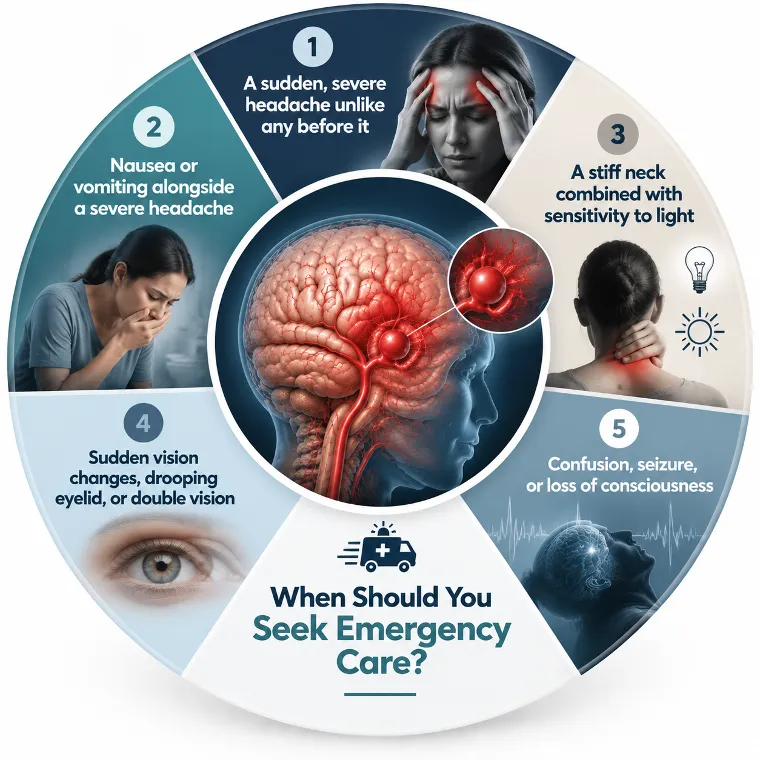
Recognising the warning signs quickly is the single most powerful tool a patient or family member has. According to the National Institutes of Health, factors such as the speed of diagnosis and access to specialised neuro-critical care strongly influence survival after rupture.
Seek emergency care immediately if you or someone with you experiences:
- A sudden, severe headache unlike any before it
- Nausea or vomiting alongside a severe headache
- A stiff neck combined with sensitivity to light
- Sudden vision changes, drooping eyelid, or double vision
- Confusion, seizure, or loss of consciousness
Do not wait to see if the symptoms pass. Call emergency services immediately rather than driving yourself or the person to the hospital.
Why Choose Dr. Gurneet Singh Sawhney for Brain Aneurysm Care?

Dr. Gurneet Singh Sawhney is a nationally recognised neurosurgeon experienced in complex cerebrovascular and minimally invasive neurosurgery, including the emergency management of ruptured aneurysms. He uses advanced neuronavigation and image-guided techniques to plan precise, safer interventions for both ruptured and unruptured aneurysms. His work has earned him the “Most Preferred Top Neurosurgeon in Mumbai” honour at the Golden Aim Awards 2021.
Patients reach him at NeuroLife Brain & Spine Clinic in Mulund West and at Fortis Hospital Mulund, where he also treats international patients seeking advanced neurovascular care. With clinics across Chembur, Sion, and Vashi, timely expert evaluation is accessible across Mumbai.
Frequently Asked Questions
1. Can a brain aneurysm kill you without warning?
2. What percentage of people survive a ruptured brain aneurysm?
3. Is an unruptured brain aneurysm dangerous?
4. What are the first signs of a brain aneurysm rupture?
5. Can you prevent a brain aneurysm from rupturing?
References
- Mayo Clinic — Brain Aneurysm: https://www.mayoclinic.org/diseases-conditions/brain-aneurysm/symptoms-causes/syc-20361483
- NIH / NCBI — Cerebral Aneurysm, StatPearls: https://www.ncbi.nlm.nih.gov/books/NBK507902/
Disclaimer: The information shared in this content is for educational purposes only and not for promotional use.