

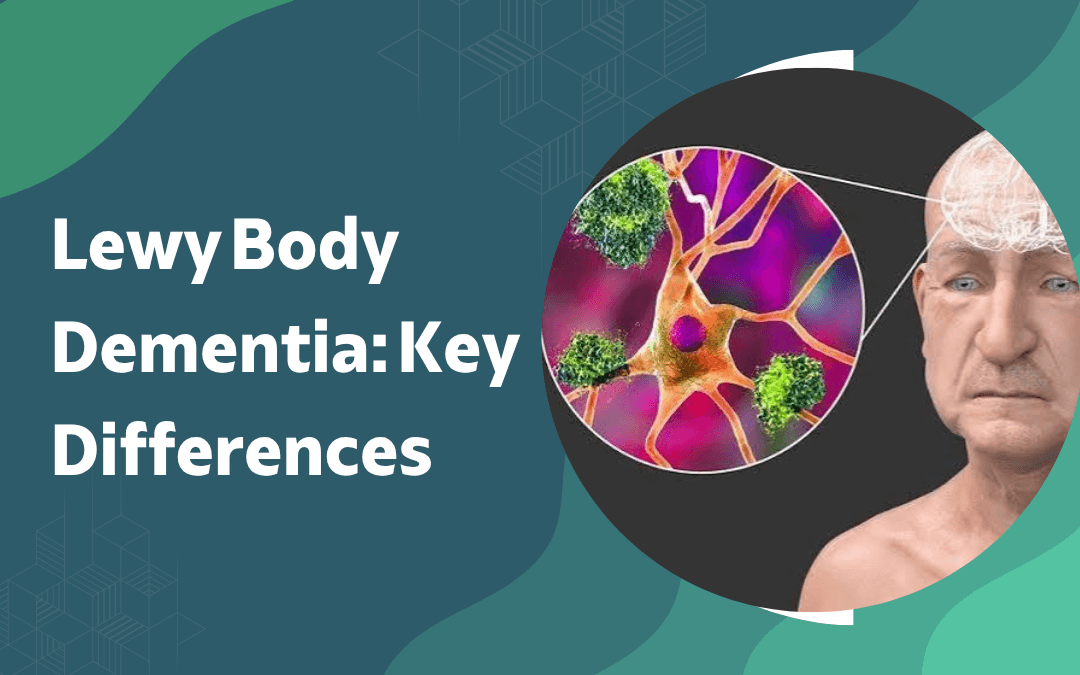
Lewy body dementia is a progressive brain disorder caused by abnormal protein deposits called Lewy bodies that accumulate in nerve cells and disrupt thinking, movement, behaviour, and mood. It is the second most common neurodegenerative dementia after Alzheimer’s and is routinely misdiagnosed for months to years. The distinction matters specific medication contraindications, particularly around antipsychotics, make an accurate diagnosis clinically critical.
According to Dr. Gurneet Singh Sawhney, a leading neurosurgeon in Mumbai, “Lewy body dementia gets missed because clinicians look for the classic Alzheimer’s memory pattern and don’t account for the fluctuating cognition and visual hallucinations that separate it and that missed diagnosis becomes a problem the moment someone prescribes a dopamine blocker.”
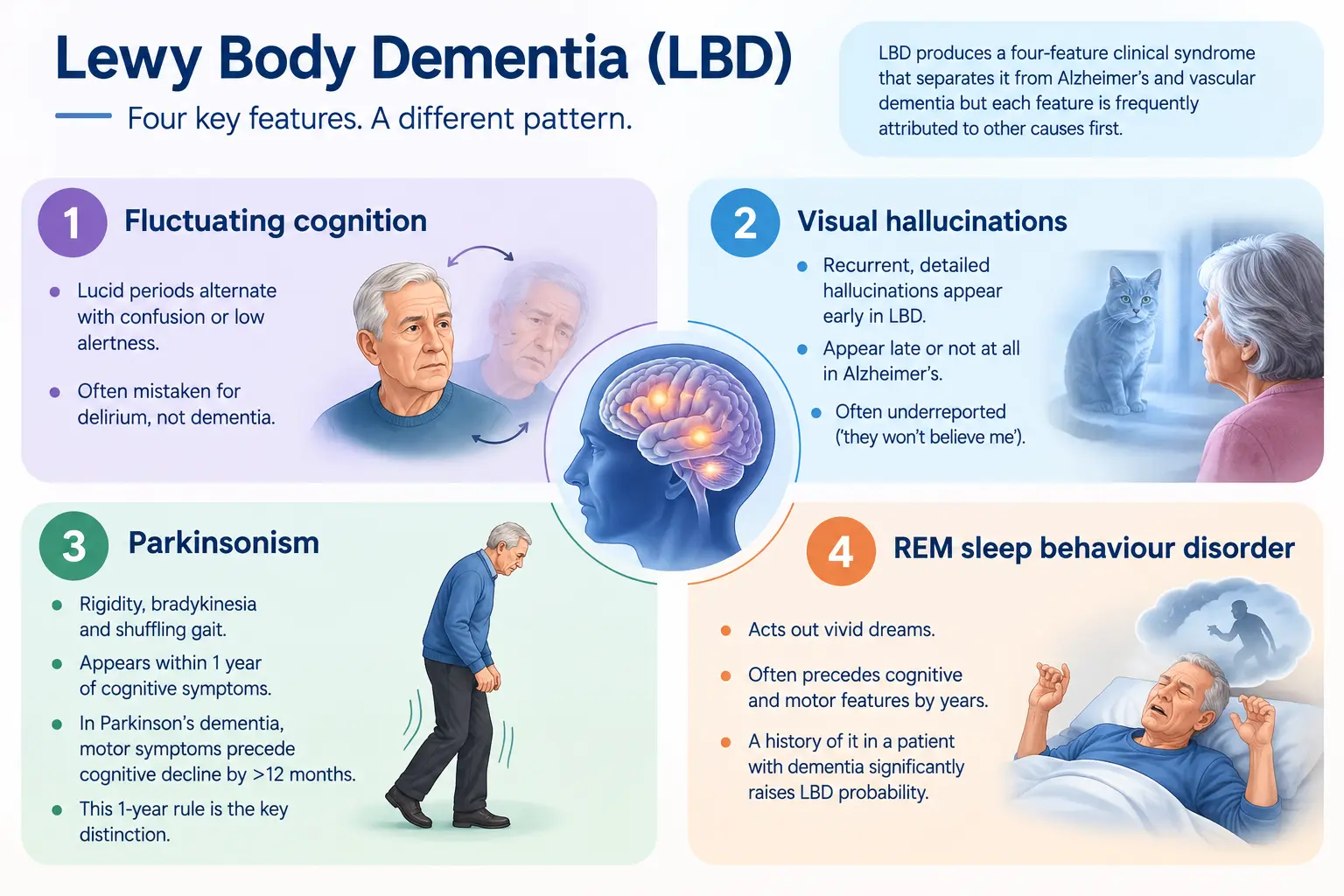
Cognitive symptoms fluctuating day-to-day alongside Parkinson-like movement changes?
What Symptoms Distinguish Lewy Body Dementia From Other Dementias?
For a full overview of how LBD is assessed and treated, visit our Parkinson’s disease treatment page.
How Is Lewy Body Dementia Diagnosed and Managed Differently?
Diagnosis determines treatment in LBD; several standard dementia treatments are specifically contraindicated.
- Diagnostic workup: McKeith criteria, dopamine transporter SPECT, polysomnography confirming REM sleep behaviour disorder, and FDG-PET showing occipital hypometabolism. Confirm changes and prescribe immediately.
- Antipsychotic contraindication: Haloperidol, risperidone, and olanzapine cause severe neuroleptic sensitivity reactions in 30 to 50% of LBD patients, producing profound Parkinsonism and reduced consciousness. Must be excluded before prescribing in any dementia patient with confusion.
- Cholinesterase inhibitors: Rivastigmine carries the strongest evidence for LBD, with a more consistent benefit for hallucinations and fluctuating cognition than in Alzheimer’s.
- DBS ineligibility: LBD patients are not appropriate candidates for deep brain stimulation surgery despite having Parkinsonism. Cognitive impairment places them outside candidacy criteria entirely.
Management requires input across neurology, neuropsychiatry, sleep medicine, and physiotherapy no single specialist covers the full clinical picture. For a broader overview, read our blog on how to choose the right neurosurgeon.
Why Choose Dr. Gurneet Singh Sawhney?
Dr. Gurneet Singh Sawhney holds MBBS, MS (General Surgery), and MCh (Neurosurgery), ranking first in the MCh university examination, with fellowship training in Functional Neurosurgery under Prof. Taira at Tokyo Women’s Medical University and Epilepsy Surgery under Prof. Sugano at Juntendo University, Japan, covering movement disorder surgery, DBS candidacy evaluation, and the neurosurgical interface with neurodegenerative conditions including LBD, Parkinson’s disease dementia, and related alpha-synucleinopathies.
His movement disorder assessments distinguish between Parkinson’s disease, Parkinson’s disease dementia, and Lewy body dementia before any surgical discussion begins because the diagnosis determines whether surgery helps or harms, and that distinction doesn’t get made in the operating room
Frequently Asked Questions
Is Lewy body dementia the same as Parkinson's disease dementia?
No, both involve Lewy bodies but differ by whether motor or cognitive symptoms appear first.
Why are antipsychotics dangerous in Lewy body dementia?
Conventional antipsychotics cause severe neuroleptic sensitivity reactions in up to fifty percent of LBD patients.
Can Lewy body dementia be confirmed by a brain scan?
DAT-SPECT showing reduced dopamine transporter uptake is the strongest imaging biomarker for LBD diagnosis.
Is Lewy body dementia more aggressive than Alzheimer's disease?
Median survival after diagnosis is shorter in LBD than in Alzheimer’s, with faster functional decline in most cases.
Disclaimer: The information shared in this content is for educational purposes only and not for promotional use.