

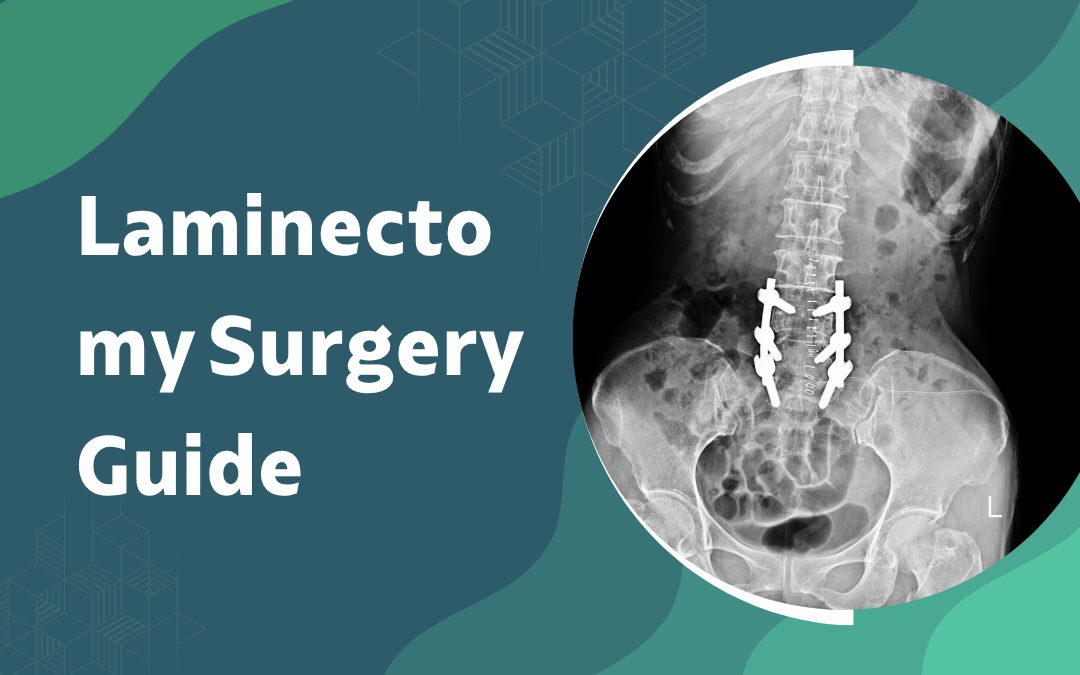
Laminectomy removes the lamina, the bony roof of the spinal canal, to take pressure off the spinal cord or nerve roots. Simple concept. One of the most performed spinal operations in the world. It is the standard surgical answer for spinal stenosis when physio and injections have run out of road. Whether it needs combining with fusion depends entirely on whether the spine holds its alignment once the roof is off.
According to Dr. Gurneet Singh Sawhney, a leading neurosurgeon in Mumbai, laminectomy is fundamentally a decompression operation, and the skill in planning it lies in removing enough to decompress fully while preserving enough to avoid creating instability. Getting that balance right is what separates a good outcome from a difficult revision.
Leg pain or weakness from stenosis not responding to physiotherapy or injections?
What Does Laminectomy Actually Involve?
The procedure goes after the posterior elements. How much comes out and at which level depends on where the compression sits and how extensive it is.
Lamina removal: The spinous process and lamina are removed to open the roof of the spinal canal, directly decompressing the dural sac and the nerve roots underneath
Extent: A full laminectomy removes the entire lamina at one or more levels; a laminotomy removes only a portion; laminoplasty is used in the cervical spine to hinge the lamina open rather than remove it entirely
Level: The procedure is performed at cervical, thoracic or lumbar levels depending on where the compression is, with lumbar laminectomy being the most frequently performed
Fusion: instrumented fusion is added when the decompression removes enough posterior support to create instability, or when spondylolisthesis is present at the same level
The decompression itself has decades of outcome data behind it. Whether fusion is added is a stability question, and that is where spine surgery assessment is centred.
When Is Laminectomy Actually Needed?
Compression is the indication. Timing is when the conservative options have genuinely been exhausted or when the neurology is moving in the wrong direction.
Spinal stenosis: Narrowing of the spinal canal causing neurogenic claudication, leg pain with walking or progressive weakness is the most common indication, and laminectomy reliably decompresses what the narrowing is pressing on
Failed conservative treatment: Three to six months of physiotherapy, activity modification and epidural injections without meaningful improvement is a reasonable threshold for surgical consideration in non-urgent cases
Neurological deficit: Progressive motor weakness, significant numbness or bladder and bowel involvement moves the decision from elective to urgent and cannot wait for a prolonged conservative trial
Tumour or trauma: Laminectomy is also performed to access and decompress the spinal cord in tumour surgery and to decompress the cord acutely after traumatic injury
The operation consistently delivers meaningful improvement in pain, claudication and function in well-selected patients. This guide on multi-level stenosis and fusion covers what happens when stenosis spans several levels and whether laminectomy alone is sufficient.
Why Choose Dr. Gurneet Singh Sawhney?
Dr. Gurneet Singh Sawhney trained in Japan and has spent over 18 years performing laminectomy at cervical, thoracic and lumbar levels. Open procedures, minimally invasive approaches, combined decompression-fusion cases. The full range, not just the straightforward end of it.
Most patients arrive having already tried the conservative options. They want to know if surgery is the next step, and if so, which kind. Getting that distinction clear, decompression alone versus decompression with fusion, is what the imaging-based assessment is for.
Frequently Asked Questions
Is laminectomy the same as spinal decompression surgery?
Yes, laminectomy is the most common form of spinal decompression surgery.
Does laminectomy always require spinal fusion?
No, fusion is only added when instability or spondylolisthesis is present alongside the stenosis.
How long is recovery after a laminectomy?
Most patients return to light activity within two to four weeks after a simple laminectomy.
Can spinal stenosis come back after laminectomy?
Adjacent segment disease can develop over time, though the decompressed levels typically remain open.
Disclaimer: The information shared in this content is for educational purposes only and not for promotional use.