

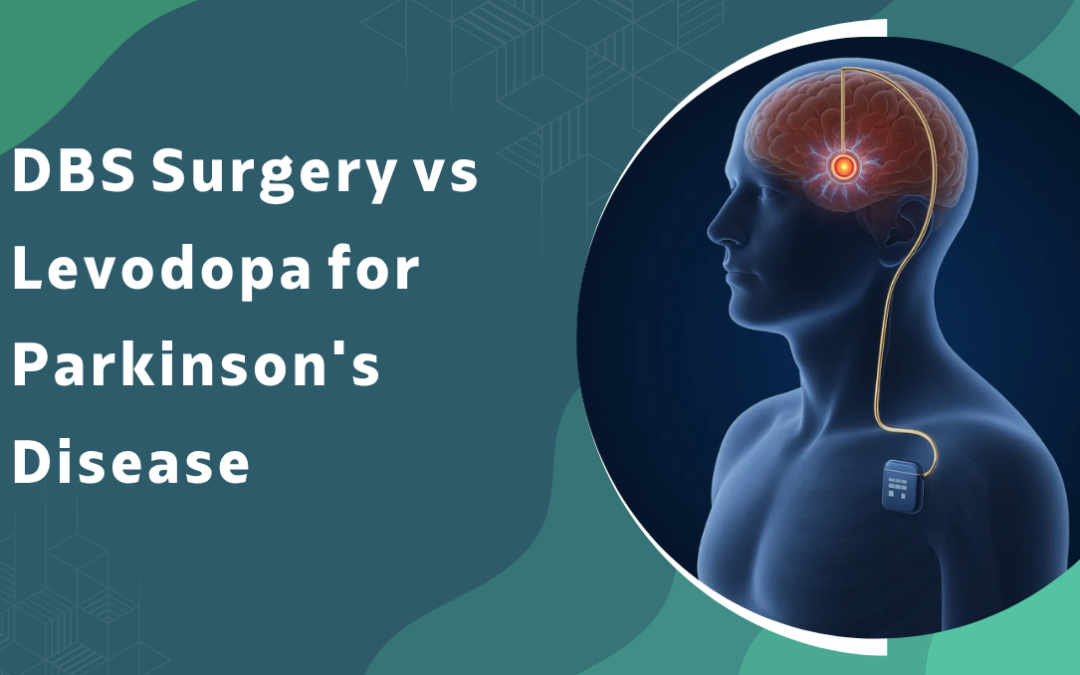
Levodopa replaces dopamine deficiency in Parkinson’s disease by converting to dopamine in the brain, reducing motor symptoms through pharmacological supplementation. Deep brain stimulation delivers continuous electrical impulses to specific basal ganglia targets, modulating abnormal motor circuit activity independent of dopamine levels. The two treatments operate through different mechanisms, have different indications, and produce different long-term outcomes and understanding that distinction determines when medication alone is insufficient.
According to Dr. Gurneet Singh Sawhney, Neurosurgeon in Mumbai, DBS does not replace levodopa it restores the brain’s ability to respond to levodopa more consistently, which is what medication alone progressively fails to do as Parkinson’s disease advances.
How Does Levodopa Work and What Are Its Limitations?
Levodopa remains the most effective symptomatic treatment for Parkinson’s disease. But its limitations become the primary driver for surgical evaluation as the disease progresses over years.
- Mechanism of levodopa: Levodopa crosses the blood-brain barrier and converts to dopamine in surviving nigrostriatal neurons, supplementing the dopamine deficit caused by progressive neuronal loss. Because it addresses the downstream consequence of neuronal loss rather than the process itself, its efficacy is directly tied to the number of surviving dopaminergic neurons available to metabolise it.
- Motor fluctuations and wearing off: As Parkinson’s disease progresses and dopaminergic neuron numbers decline, levodopa produces increasingly unpredictable on-off fluctuations. Wearing off between doses causes return of rigidity, bradykinesia, and tremor before the next dose is due and the on-period becomes shorter and less predictable despite dose adjustments.
- Dyskinesias from long-term levodopa use: Involuntary writhing movements called dyskinesias develop in the majority of patients after five to ten years of levodopa therapy. Because dyskinesias are dose-dependent and symptomatic control requires adequate dosing, patients become trapped between undertreated Parkinson’s symptoms and levodopa-induced dyskinesias that are themselves disabling.
- Non-motor symptoms unresponsive to levodopa: Cognitive decline, autonomic dysfunction, sleep disturbance, and postural instability with falls are Parkinson’s features that levodopa does not adequately address and that progress independently of motor symptom control.
Levodopa remains essential throughout Parkinson’s management. But its limitations define the clinical scenario where DBS produces better outcomes than continued medication adjustment.
Explore functional neurosurgery in Mumbai for Parkinson’s DBS surgical evaluation at Fortis Hospital Mulund West.
How Is DBS Different and When Does It Become the Better Option?
DBS does not cure Parkinson’s disease or slow its progression. But it produces a quality of motor symptom control that medication alone cannot achieve in patients with advanced motor complications.
- Mechanism of DBS: High-frequency electrical stimulation delivered continuously to the subthalamic nucleus or globus pallidus internus disrupts the abnormal oscillatory activity in the basal ganglia motor circuit. Because stimulation is continuous and adjustable, it produces consistent motor benefit independent of the fluctuating drug levels that drive on-off complications with oral medication.
- Effect on motor fluctuations and dyskinesias: DBS reduces on-off fluctuations and allows levodopa dose reduction of approximately 50 percent in most patients. Because dyskinesias are dose-dependent, reducing levodopa dose significantly reduces dyskinesia severity which is a benefit medication adjustment alone cannot consistently achieve without sacrificing motor control in the on-period.
- What DBS does not treat: DBS does not improve axial features including gait freezing, postural instability, speech, and swallowing that are levodopa-unresponsive. Because these features are not dopamine-mediated, neither levodopa nor DBS addresses them effectively and they represent the dominant source of disability in late-stage Parkinson’s disease.
- Ideal surgical candidate: Good levodopa responsiveness is the strongest predictor of DBS outcome DBS produces approximately the same motor benefit as the patient’s best levodopa response, more consistently over time. Patients with significant cognitive impairment, dementia, or predominant non-motor disability are not appropriate DBS candidates regardless of motor symptom severity.
Families who have read about whether neurological problems can exist with normal scans understand why pre-surgical neuropsychological assessment determines DBS candidacy as much as motor symptom severity does.
Why Choose Dr.Gurneet Singh Sawhney?
Dr. Gurneet Singh Sawhney completed dedicated fellowships in functional neurosurgery under Prof. Taira at Tokyo Women’s Medical University and epilepsy surgery under Prof. Sugano at Juntendo University, both high-volume academic centres where DBS surgery for Parkinson’s disease and movement disorders formed a structured component of the functional neurosurgical caseload. At Fortis Hospital Mulund West, Parkinson’s DBS candidates receive neurological assessment, levodopa responsiveness evaluation, neuropsychological testing, and MRI targeting before surgical planning is finalised.
Patients with Parkinson’s disease inadequately controlled on medication receive a direct assessment covering DBS candidacy, realistic outcome expectations for their specific motor profile, and what levodopa dose reduction and dyskinesia improvement look like for that individual case. The recommendation is based on objective clinical findings.
FAQ's
How is DBS surgery different from levodopa for Parkinson's disease?
Levodopa replaces dopamine pharmacologically while DBS modulates abnormal basal ganglia circuit activity through continuous electrical stimulation, producing more consistent motor control independent of drug levels.
When should a Parkinson's patient consider DBS surgery instead of medication?
DBS is indicated when levodopa-responsive motor symptoms are complicated by significant on-off fluctuations and dyskinesias inadequately controlled by medication adjustment alone.
Does DBS surgery replace levodopa medication?
DBS allows levodopa dose reduction of approximately 50 percent in most patients but does not eliminate the need for medication it restores more consistent response to lower doses.
What type of Parkinson's patient is not suitable for DBS surgery?
Patients with significant cognitive impairment, dementia, predominant non-motor disability, or levodopa-unresponsive motor features are not appropriate DBS surgical candidates.
References
1. National Institute of Neurological Disorders and Stroke. Neurological Diagnostic Tests and Procedures. NINDS, NIH.
2. Weaver FM, et al. Bilateral Deep Brain Stimulation vs Medication for Parkinson’s Disease. PubMed Central, NCBI.