

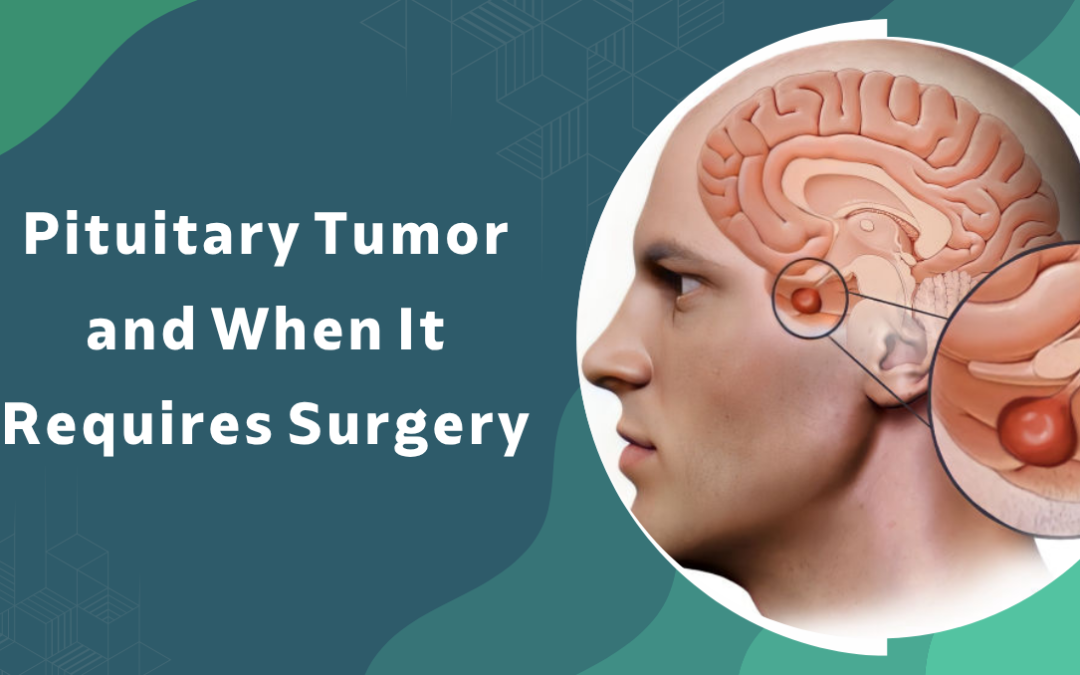
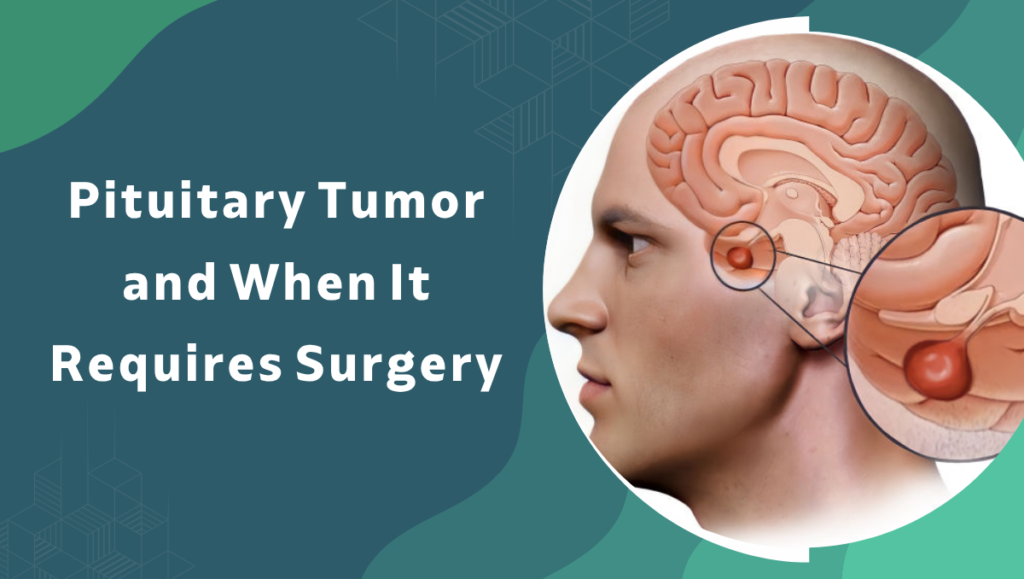
A pituitary tumor is an abnormal growth in the pituitary gland, the small brain-base structure controlling growth hormone, cortisol, thyroid function, and reproductive hormones. Most are benign and surgery isn’t the automatic answer. Treatment depends on whether the tumor secretes hormones it shouldn’t, presses on the optic nerve, or grows on surveillance imaging. Small non-functioning tumors found incidentally are often just watched with annual MRI and hormone panels.
According to Dr. Gurneet Singh Sawhney, brain tumor surgery in Mumbai, “most pituitary tumors have been sitting there for years before anyone connects the symptoms to a gland the size of a pea at the brain base.”
What Types of Pituitary Tumors Are There
Pituitary tumor classification determines treatment approach more than tumor size alone.
Functioning vs non-functioning: Functioning tumors produce hormones autonomously like prolactin, growth hormone, and ACTH each creating its own clinical syndrome, while non-functioning ones don’t secrete anything but grow and press on the optic chiasm or pituitary stalk causing headache, vision loss, and hormonal deficiency.
Micro vs macro: Under 10mm is microadenoma and above 10mm is macroadenoma, with larger tumors more likely to compress the optic chiasm and invade the cavernous sinus, though size alone doesn’t determine surgical indication.
Incidentaloma: Discovered on imaging ordered for an unrelated reason with no symptoms, no hormone excess, and no growth on repeat scan, managed with annual MRI and hormone panel surveillance without surgical intervention.
Invasive adenoma: Extends beyond the sella into surrounding structures with higher recurrence risk and some demonstrate aggressive behaviour despite benign histology, requiring surgery combined with adjuvant treatment.
Endoscopic transsphenoidal surgery approaches the pituitary through the nasal passage with no craniotomy required.
Explore functional neurosurgery in Mumbai for pituitary tumor surgery at Fortis Hospital Mulund West.
When Does a Pituitary Tumor Actually Need Surgery
Surgical indication is based on visual compromise, hormone excess, apoplexy, or confirmed tumor growth on surveillance imaging.
Vision loss: Optic chiasm compression produces bitemporal hemianopia and delayed surgical decompression results in permanent visual deficit that doesn’t recover even after tumor removal, making this an urgent surgical indication.
Hormone excess: Growth hormone excess causing acromegaly and ACTH excess causing Cushing’s disease require surgery as primary treatment for most hormone-secreting tumors since medication controls symptoms without addressing the underlying source.
Apoplexy: Hemorrhagic infarction within the pituitary tumor presents with sudden severe headache, acute visual loss, and ophthalmoplegia requiring emergency surgical decompression within hours of diagnosis.
Growing incidentaloma: A non-functioning tumor demonstrating measurable growth on serial MRI requires surgical evaluation before neurological or hormonal compromise develops rather than after symptoms are already established.
Endoscopic transsphenoidal resection uses no scalp incision, no craniotomy, and no bone removal with direct nasal access to the pituitary fossa.
Read about whether neurological problems can exist with normal scans to understand why surveillance MRI matters even when current imaging looks fine.
Why Choose Dr. Gurneet Singh Sawhney
Dr. Gurneet Singh Sawhney completed fellowships in functional neurosurgery under Prof. Taira at Tokyo Women’s Medical University and epilepsy surgery under Prof. Sugano at Juntendo University, both dedicated subspecialty programmes at high-volume centres where pituitary cases were part of the regular surgical caseload. At Fortis Hospital Mulund West every pituitary case gets full hormone panel, visual field testing, ophthalmology review, and pituitary-protocol MRI before any surgical decision is made.
Some patients need surgery within days of presentation and others need a repeat scan in twelve months with no intervention in between. The surgical decision is based on clinical findings and imaging correlation, not on the diagnosis alone. Call +91 8104310753 to book your consultation.
FAQ’s
What is a pituitary tumor?
Abnormal benign growth in the pituitary gland affecting hormone production or compressing surrounding brain structures.
Do all pituitary tumors need surgery?
No, small non-functioning tumors without symptoms are monitored with annual MRI and hormone testing.
What symptoms need urgent pituitary tumor evaluation?
Visual field loss, sudden severe headache, or uncontrolled hormone excess causing systemic symptoms.
What surgery is used for pituitary tumors?
Endoscopic transsphenoidal surgery through the nose, no craniotomy or scalp incision required.
References
- National Institute of Neurological Disorders and Stroke. Neurological Diagnostic Tests and Procedures. NINDS, NIH.
- Melmed S, et al. Pituitary Tumors. PubMed Central, NCBI.