

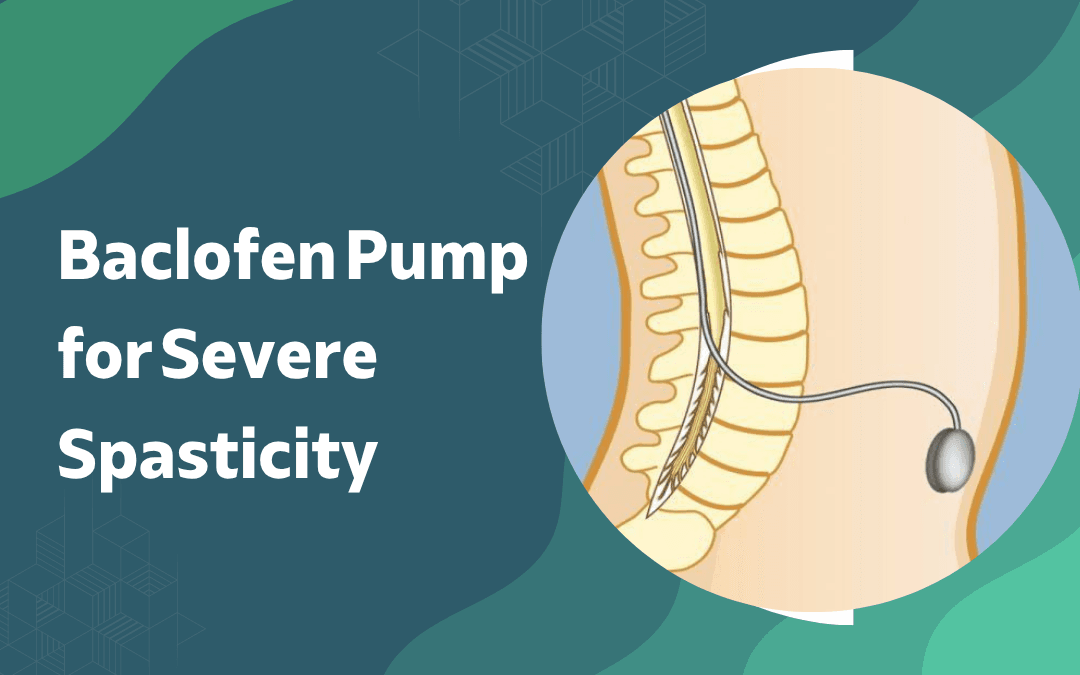
Managing spasticity that’s no longer controlled by oral medication or causing unacceptable sedation?
Why Does Oral Baclofen Fail and When Is the Pump Considered?

The pump doesn’t replace physiotherapy or spasticity treatment with botulinum toxin for focal spasticity those remain part of the management plan alongside pump therapy for many patients.
What Clinical Criteria Determine Baclofen Pump Candidacy?
Pump implantation follows a structured assessment process. Not all patients with severe spasticity will meet the criteria for proceeding.
Severity Threshold: Moderate to severe spasticity typically an Ashworth scale score of three or above affecting the lower limbs or trunk is the baseline requirement. Mild spasticity that preserves function doesn’t justify the surgical and refill commitment a pump demands.
Positive Baclofen Trial: A single intrathecal test dose via lumbar puncture must confirm adequate spasticity reduction before implantation is scheduled. The trial result determines both candidacy and the expected therapeutic response post-implantation.
Functional and Care Goals: Ambulatory patients need selective spasm reduction preserving walking tone. Non-ambulatory patients need pain relief, positioning stability, and reduced carer burden. Since functional neurosurgery planning must account for individual outcomes, the pump programme is built around specific patient goals rather than spasticity scores alone.
Surgical Fitness and Follow-Up Capacity: The pump requires refilling every two to six months and battery replacement every five to seven years. Patients must be assessed for surgical fitness, geographic access, and the practical capacity to maintain the refill schedule, since missed refills carry a serious risk of withdrawal.
Intrathecal baclofen is particularly well-suited to spinal cord injury and cerebral palsy with prominent lower limb involvement as outlined in How to Treat Spasticity After Stroke? because it reaches lower limb and truncal spinal segments most effectively.
Why Choose Dr. Gurneet Singh Sawhney?
Dr. Gurneet Singh Sawhney holds MBBS, MS (General Surgery), and MCh (Neurosurgery) qualifications with a first-rank finish in the MCh university examination. He completed dedicated fellowships in Functional Neurosurgery in Japan and carries specialised training in baclofen pump surgery, spinal cord stimulation, and lesioning procedures across 18 years of neurosurgical practice. He is a member of the Indian Society of Stereotaxy and Functional Neurosurgery (ISSFN).
His spasticity patients treated with intrathecal baclofen pumps consistently report reduced painful spasm frequency, improved sleep, easier carer-assisted positioning, and in ambulatory cases, preserved walking function. Those are the outcomes that determine whether the intervention was worth it.
Frequently Asked Questions
Can the baclofen pump be removed if it doesn't help?
Yes, the pump can be surgically removed, though abrupt baclofen withdrawal must be managed carefully.
Does the baclofen pump require general anaesthesia for implantation?
Implantation is typically done under general or spinal anaesthesia in a single planned surgical procedure.
How often does the baclofen pump need to be refilled?
Refills are needed every two to six months depending on the programmed daily dose and reservoir size.
Is the baclofen pump visible under the skin?
The pump is palpable below the abdominal skin surface and may be visible depending on body composition.
Disclaimer: The information shared in this content is for educational purposes only and not for promotional use.