
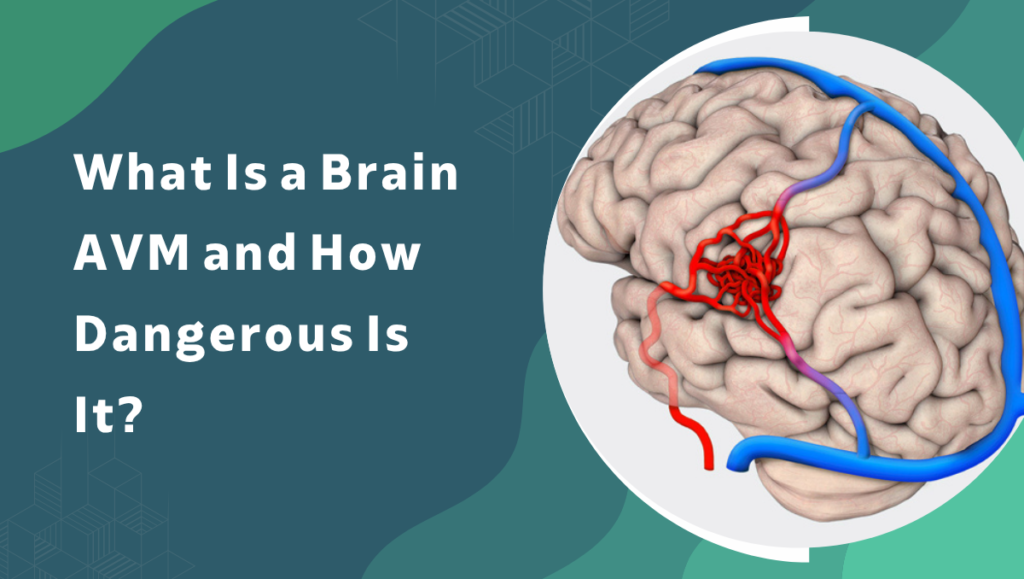
A brain arteriovenous malformation is an abnormal tangle of blood vessels directly connecting arteries to veins, bypassing the normal capillary network. This creates a high-pressure shunt carrying lifelong rupture risk. Annual rupture risk is approximately two to four percent and that figure compounds significantly over a patient’s lifetime without treatment.
According to Dr. Gurneet Singh Sawhney, Neurosurgeon in Mumbai, a brain AVM is not a condition where watchful waiting is a neutral decision every year without treatment is another year carrying rupture risk that causes death or permanent neurological deficit in a significant proportion of patients who bleed.
What Is a Brain AVM and How Does It Present?
Brain AVMs are congenital vascular lesions present from birth but frequently asymptomatic until rupture or incidental imaging detection. And the fact that a patient has had no symptoms for decades does not mean the lesion is safe it means the rupture has not happened yet.
- Haemorrhagic presentation: Sudden severe headache, focal neurological deficit, or reduced consciousness in a young adult without vascular risk factors should raise immediate AVM rupture suspicion. CT brain followed by MRI and cerebral angiography is mandatory the same day not the next morning.
- Seizure as presenting feature: Unruptured AVMs present with new-onset seizures in approximately 30 percent of symptomatic cases. Seizure control with medication alone is insufficient the underlying vascular malformation requires specific treatment planning regardless of how well the seizures are currently controlled.
- Incidental detection: An increasing proportion of AVMs are detected incidentally on MRI performed for unrelated symptoms. Incidental detection does not reduce rupture risk annual rupture risk applies regardless of whether the patient is symptomatic or not, and management decisions require the same structured risk assessment either way.
- Progressive neurological deficit: Large AVMs cause progressive neurological deficit through venous hypertension and steal phenomenon diverting blood from adjacent brain. These indicate haemodynamically significant lesions requiring urgent assessment without waiting for symptoms to worsen.
AVM diagnosis requires catheter cerebral angiography to define feeding arteries, nidus anatomy, and draining vein pattern before any treatment decision is made.
Explore functional neurosurgery in Mumbai for brain AVM evaluation and treatment planning at Fortis Hospital Mulund West.
How Dangerous Is a Brain AVM and When Is Treatment Indicated?
AVM danger is determined by rupture risk, haemorrhage severity, and neurological consequences of bleeding at that specific brain location. But untreated AVM in a young patient is not a safe default each year without treatment is compounding risk that surgery, radiosurgery, or embolisation could eliminate.
- Annual rupture risk: Two to four percent annual rupture risk produces ten percent mortality and permanent neurological deficit in thirty to fifty percent of those who bleed. A 30-year-old with an unruptured AVM faces cumulative lifetime rupture risk exceeding 50 percent without treatment and that number is not theoretical.
- Spetzler-Martin grading: AVM size, eloquent cortex involvement, and deep venous drainage determine grade from I to V. Grade I and II carry favourable surgical outcomes while grade IV and V require multidisciplinary treatment planning because operative risk is significantly higher and no single modality is sufficient alone.
- Surgical resection: Microsurgical resection achieves immediate cure with obliteration rates above 95 percent for grade I and II AVMs in experienced hands. Because resection eliminates rupture risk immediately and permanently, it is the preferred treatment for surgically accessible low-grade lesions in fit patients.
- Stereotactic radiosurgery: Gamma Knife achieves obliteration in 70 to 85 percent of small AVMs within two to three years. But the latency period before obliteration is confirmed means rupture risk persists during that window which is why radiosurgery is not equivalent to immediate surgical cure and patient selection matters significantly.
Families who have read about whether neurological problems can exist with normal scans understand why standard MRI sequences are insufficient for AVM characterisation and catheter angiography remains the gold standard investigation.
Why Choose Dr.Gurneet Singh Sawhney?
Dr. Gurneet Singh Sawhney completed dedicated fellowships in functional neurosurgery under Prof. Taira at Tokyo Women’s Medical University and epilepsy surgery under Prof. Sugano at Juntendo University, both high-volume academic centres where cerebrovascular and vascular neurosurgical cases formed a structured part of the caseload. At Fortis Hospital Mulund West, brain AVM cases receive MRI, catheter angiography, Spetzler-Martin grading, and multidisciplinary treatment planning before any management decision is finalised.
Patients with a diagnosed brain AVM receive a direct assessment covering rupture risk, grade, treatment options, and what realistic obliteration and complication rates look like for that specific lesion. Not generalised statistics a recommendation based on objective imaging and clinical findings for that individual case.
FAQ's
What is a brain AVM and how dangerous is it?
A brain AVM carries two to four percent annual rupture risk causing death in ten percent and permanent neurological deficit in thirty to fifty percent of patients who bleed.
What are the symptoms of a brain AVM?
Sudden severe headache from haemorrhage, new-onset seizures, progressive neurological deficit, and incidental detection on MRI are the most common presentations.
What treatment options exist for brain AVM?
Microsurgical resection, stereotactic radiosurgery, and endovascular embolisation used alone or in combination depending on AVM grade, location, and patient age.
Is an unruptured brain AVM safe to leave untreated?
Annual rupture risk accumulates with every year of untreated AVM. A 30-year-old faces cumulative lifetime rupture risk exceeding 50 percent without treatment
References
- National Institute of Neurological Disorders and Stroke. Neurological Diagnostic Tests and Procedures. NINDS, NIH.
2. Stapf C, et al. Predictors of Haemorrhage in Brain Arteriovenous Malformations. PubMed Central, NCBI.