

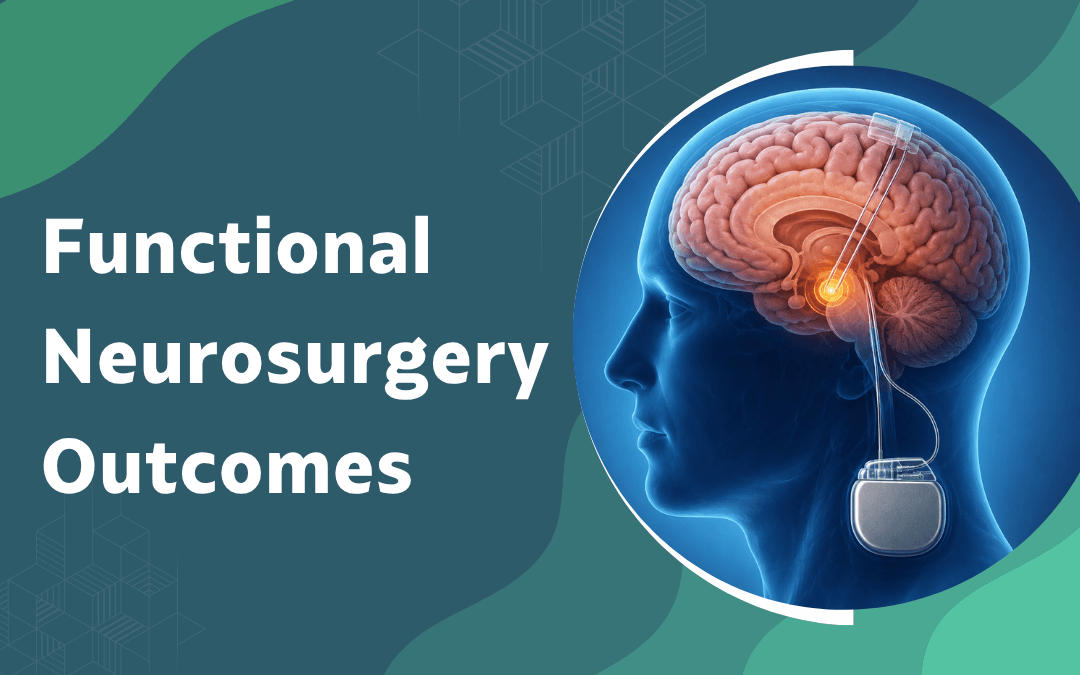
Wondering if you’re actually a good candidate for a minimally invasive approach?
What Outcomes Can Patients Expect From Functional Neurosurgery?
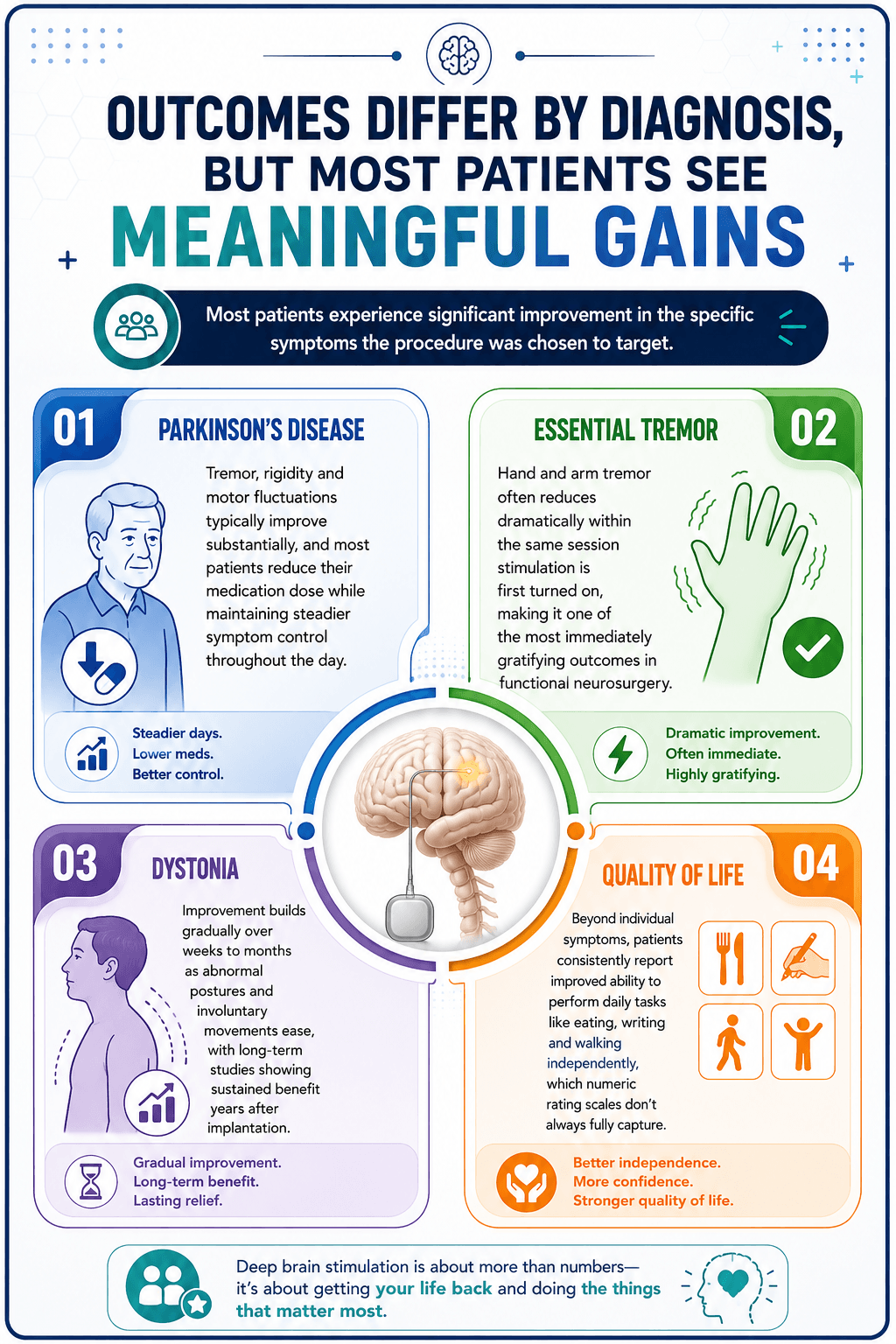
Outcomes are never guaranteed to be identical between patients, even within the same diagnosis, since underlying disease severity and duration both shape the final result.
Most of these results come from deep brain stimulation, which remains the most widely used functional neurosurgery technique for movement disorders.
What Factors Affect Functional Neurosurgery Outcomes?
A handful of variables consistently separate patients who do exceptionally well from those with more modest improvement.
- Diagnosis Accuracy: outcomes depend heavily on confirming the correct movement disorder and its specific subtype before surgery, since treatment for dystonia targets different brain structures than treatment for tremor or Parkinson’s disease.
- Symptom Response to Medication: Patients who respond well to medication before surgery, particularly in Parkinson’s disease, generally continue to respond well to stimulation afterward.
- Disease Duration: earlier intervention before symptoms become severe or complications like dyskinesia set in tends to produce better long-term functional results than surgery delayed to a late stage.
- Post-Surgical Programming: stimulation settings require ongoing adjustment over months, and patients who attend regular programming visits generally reach optimal symptom control faster than those who don’t.
Getting these variables right before surgery is what separates a good outcome from an exceptional one. A closer look at what the recovery and adjustment period actually involves is covered in what to expect after DBS surgery.
Why Choose Dr. Gurneet Singh Sawhney?
Dr. Gurneet Singh Sawhney brings 18 years of overall neurosurgical experience, including advanced fellowship training in functional neurosurgery and neuroendoscopy from Japan. Dr. Gurneet Singh Sawhney has treated Parkinson’s disease, essential tremor and dystonia with deep brain stimulation and other functional neurosurgery techniques, tailoring the surgical target and stimulation approach to each patient’s specific movement disorder.
Patients who are accurately diagnosed and appropriately selected before surgery consistently report better and more durable symptom control than those treated on a generic protocol. That upfront precision is what actually drives the outcome, not the surgery alone.
Frequently Asked Questions
How long does it take to see results from functional neurosurgery?
Essential tremor improves quickly, while dystonia can take months to fully respond.
Do functional neurosurgery outcomes last long term?
Yes, studies show sustained symptom improvement years after implantation in most patients.
Does functional neurosurgery cure movement disorders?
No, it manages symptoms significantly but doesn’t cure the underlying condition.
Can outcomes vary between patients with the same diagnosis?
Yes, disease severity, duration and diagnosis accuracy all affect individual results.
Reference:
- National Center for Biotechnology Information (NCBI) Advancements in the Clinical Outcomes of Functional Neurosurgery With DBS for Movement Disorders: A Literature Review
- National Center for Biotechnology Information (NCBI) Surgical Outcomes in Rare Movement Disorders: A Report of Seventeen Patients from India
Disclaimer: The information shared in this content is for educational purposes only and not for promotional use.