

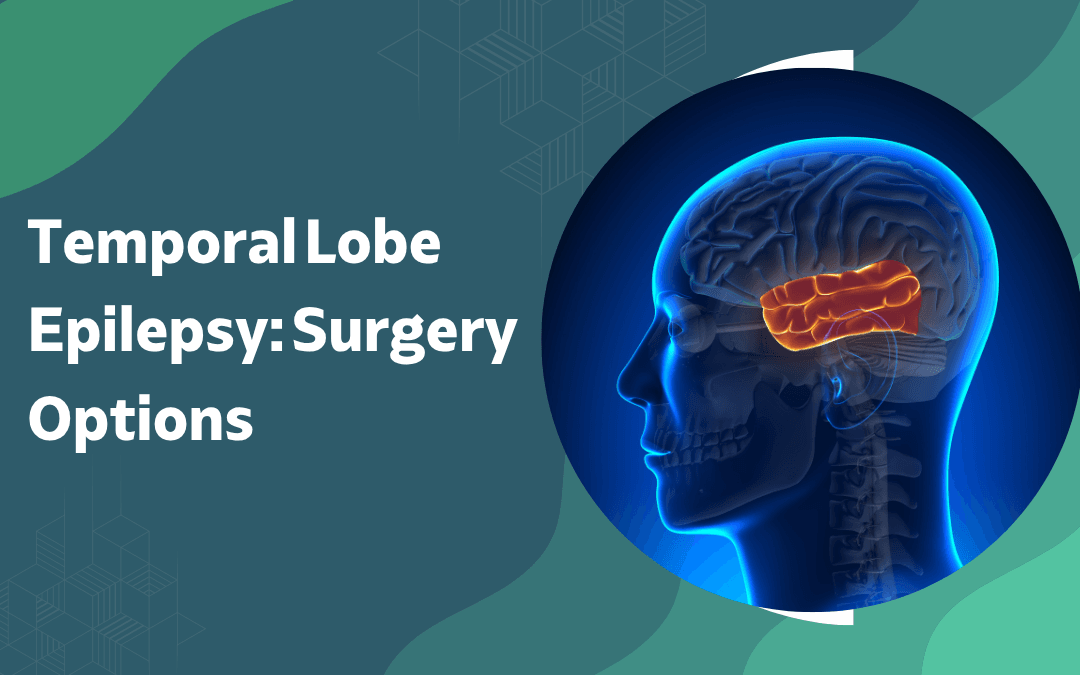
Temporal lobe epilepsy is the most common focal-onset epilepsy in adults and the most frequent indication for epilepsy surgery worldwide. Up to 40% of patients don’t achieve adequate control on antiepileptic drugs alone. Temporal lobe resection carries the highest seizure-freedom rate of any epilepsy surgery 60-70% long-term in well-selected cases.
According to Dr. Gurneet Singh Sawhney, a leading neurosurgeon in Mumbai, “Temporal lobe epilepsy is the epilepsy syndrome where surgery makes the biggest difference the seizure focus is identifiable, the resection is well-defined, and the outcomes data over decades consistently beats what drugs alone can achieve.”
Seizures continuing despite two or more antiepileptic medications at adequate doses?
What Symptoms Does Temporal Lobe Epilepsy Produce?
TLE symptoms reflect what the temporal lobe handles memory, emotion, smell, and auditory processing and the pattern is often highly stereotyped in each patient.
- Aura: Rising epigastric sensation, intense déjà vu, fear, or unusual smell focal aware seizure activity lasting seconds to a minute before consciousness is affected.
- Automatisms: Lip-smacking, chewing, hand-fumbling, or picking at clothing during unresponsiveness the hallmark of focal impaired-awareness seizure followed by post-ictal confusion lasting minutes.
- Memory impact: Recurrent TLE seizures progressively impair verbal memory when the dominant hemisphere is involved, often before MRI changes are visible.
- Secondary generalisation: Focal seizures spread to bilateral tonic-clonic events in some patients and it’s usually these that bring patients to diagnosis, while the focal origin has been present unrecognised for months or years.
The clinical pattern alone often localises onset to the temporal lobe before any investigation is ordered confirmed and refined through EEG and MRI. Antiepileptic drug optimisation runs parallel, since drug response informs whether seizure treatment and surgical candidacy need formal assessment.
What Surgical Options Exist for Temporal Lobe Epilepsy?
Surgery for TLE is among the most evidence-based interventions in neurosurgery RCT data shows it’s superior to continued medication in drug-resistant cases.
- Anterior temporal lobectomy: Resection of the anterior 4–5 cm including amygdala and hippocampus — the most performed procedure, achieving seizure freedom in 60–70% of selected patients.
- Selective amygdalohippocampectomy: When the focus is confined to mesial structures, selective resection preserves lateral temporal cortex potentially reducing language and cognitive side effects in dominant hemisphere cases.
- Laser interstitial thermal therapy: MRI-guided laser ablation of the hippocampus and amygdala minimally invasive, shorter stay, though seizure-freedom rates run slightly lower than open resection.
- Pre-surgical workup: Video-EEG, epilepsy-protocol MRI, neuropsychological testing, and intracranial EEG in non-lesional or bitemporal cases a workup within functional neurosurgery expertise that determines both eligibility and approach.
Best outcomes are predicted by a clear structural lesion concordant with EEG localisation and a unilateral seizure focus. For the most common structural cause driving mesial TLE, see mesial temporal sclerosis.
Why Choose Dr. Gurneet Singh Sawhney?
Dr. Gurneet Singh Sawhney holds MBBS, MS (General Surgery), and MCh (Neurosurgery) ranking first in the MCh university examination, with a dedicated epilepsy surgery fellowship under Prof. Sugano at Juntendo University, Japan, and a functional neurosurgery fellowship under Prof. Taira at Tokyo Women’s Medical University, covering temporal lobectomy, selective amygdalohippocampectomy, and the full pre-surgical workup pathway for drug-resistant focal epilepsy.
His epilepsy surgery practice manages the complete candidacy evaluation in-house: video-EEG, epilepsy MRI, neuropsychological testing, and intracranial EEG where indicated, because the workup and the surgery aren’t two separate steps, they’re one clinical decision made together.
Frequently Asked Questions
Is temporal lobe epilepsy curable with surgery?
Sixty to seventy percent of well-selected patients achieve long-term seizure freedom after temporal lobe resection.
How many antiepileptic drugs should fail before surgery is considered?
Drug resistance is defined as failure of two adequate antiepileptic drug trials surgical evaluation should follow.
Does temporal lobe surgery affect memory?
It can, particularly in dominant hemisphere cases neuropsychological testing before surgery maps this risk specifically.
What is the most common cause of temporal lobe epilepsy in adults?
Mesial temporal sclerosis scarring of the hippocampus is the most frequently identified structural
Disclaimer: The information shared in this content is for educational purposes only and not for promotional use.