
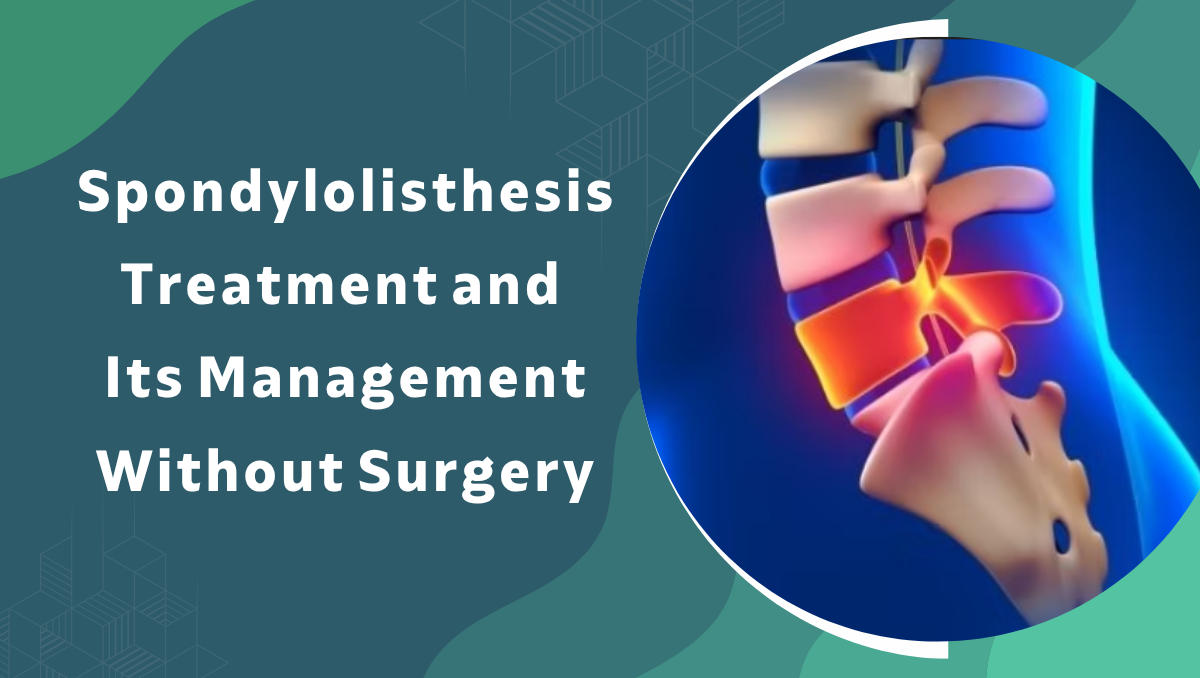
Spondylolisthesis is anterior or posterior displacement of one vertebral body relative to the adjacent vertebra, graded I through IV by percentage slip. Most cases are managed conservatively. Surgical intervention is reserved for neurological deficit, progressive slip, or failure of structured conservative management over an adequate trial period.
According to Dr. Gurneet Singh Sawhney, Neurosurgeon in Mumbai, “the grade of slip and neurological status at presentation determine the management pathway most low-grade spondylolisthesis responds to conservative care and does not require surgical correction.”
Presenting with back or leg pain from confirmed spondylolisthesis and seeking specialist assessment?
What Is Spondylolisthesis and How Is It Classified?
Spondylolisthesis classification determines management approach and predicts which cases are likely to progress. Aetiology and grade together inform every clinical decision made for this condition.
- Meyerding grading system: Slip is graded I through IV based on percentage displacement of the superior vertebral body over the inferior one. Grade I and II account for the majority of presentations and respond well to conservative management in most patients without neurological involvement.
- Isthmic spondylolisthesis: Caused by a pars interarticularis defect, most commonly at L5-S1, frequently identified in young athletes engaged in hyperextension-loading sport. But slip progression risk is meaningfully higher in skeletally immature patients and requires periodic radiological monitoring regardless of symptoms.
- Degenerative spondylolisthesis: Occurs secondary to facet joint arthrosis and disc degeneration, most commonly at L4-L5 in older adults. A significant proportion of these cases present with spinal stenosis and neurogenic claudication requiring assessment for nerve root or cauda equina involvement.
- High-grade spondylolisthesis: Grade III and IV slips carry higher risk of neurological compromise, sagittal imbalance, and progressive deformity. Surgical assessment is warranted at presentation regardless of neurological status because structural instability at this grade does not reliably stabilise without operative intervention.
Aetiology and grade together determine whether conservative management is appropriate or whether surgical planning should be initiated without delay.
Explore spine surgery in Mumbai for spondylolisthesis assessment and management at Fortis Hospital Mulund West.
When Is Conservative Management Appropriate and When Is Surgery Required?
Management selection depends on neurological status, slip grade, symptom trajectory, and response to conservative treatment. Both pathways require accurate clinical and radiological assessment before a decision is confirmed.
- Conservative management for low-grade slips: Grade I and II spondylolisthesis without neurological deficit is managed with structured physiotherapy targeting core stabilisation, activity modification, and pain management. Most patients achieve satisfactory symptom control over a six to twelve week supervised programme without requiring surgical intervention.
- Indications for surgical intervention: Progressive neurological deficit, cauda equina compromise, slip progression on serial imaging, and failure of conservative management over twelve weeks are established indications for spinal fusion surgery. High-grade slips with structural instability are evaluated for surgery at presentation — not after a failed conservative trial.
- Surgical procedure for spondylolisthesis: Posterior spinal fusion with pedicle screw instrumentation and interbody cage placement restores segmental stability and decompresses neural elements. Because sagittal alignment and neural compression together determine approach, fusion levels are confirmed on MRI before any surgical planning is finalised.
- Post-operative rehabilitation: Structured physiotherapy commencing within weeks of surgery is required to optimise functional recovery following spinal fusion. Return to sedentary work occurs at six to eight weeks and physical activity resumes over three to six months subject to fusion consolidation confirmed on imaging.
Serial radiological monitoring with standing lateral radiographs is required for conservatively managed cases to detect slip progression before neurological compromise develops.
Families who have read about whether neurological problems can exist with normal scans understand why clinical examination and imaging together determine management rather than imaging findings alone.
Why Choose Dr. Gurneet Singh Sawhney?
Dr. Gurneet Singh Sawhney completed dedicated fellowships in functional neurosurgery under Prof. Taira at Tokyo Women’s Medical University and epilepsy surgery under Prof. Sugano at Juntendo University, two high-volume academic centres with complex spinal neurosurgical caseloads. At Fortis Hospital Mulund West, spondylolisthesis cases are assessed with standing radiographs, dynamic flexion-extension views, MRI for neural element evaluation, and full neurological examination before any management decision is made.
Patients presenting with spondylolisthesis receive a graded assessment covering slip severity, neurological involvement, progression risk, and whether the clinical picture supports conservative management or requires surgical planning. The recommendation is based on objective clinical and radiological findings for that specific case. Call +91 8104310753 to book
FAQ's
What is spondylolisthesis?
Anterior or posterior displacement of one vertebral body relative to the adjacent vertebra, graded I through IV based on percentage slip at the affected level.
Can spondylolisthesis be managed without surgery?
Grade I and II spondylolisthesis without neurological deficit is managed with physiotherapy, activity modification, and pain management in the majority of cases.
When does spondylolisthesis require surgical intervention?
Progressive neurological deficit, cauda equina compromise, slip progression on serial imaging, high-grade slip, or failure of conservative management over twelve weeks are established surgical indications.
What surgery is performed for spondylolisthesis?
Posterior spinal fusion with pedicle screw instrumentation and interbody cage placement restores segmental stability and decompresses neural elements at the affected level.
References
- National Institute of Neurological Disorders and Stroke. Neurological Diagnostic Tests and Procedures. NINDS, NIH.
- Kalichman L, et al. Spondylolysis and Spondylolisthesis. PubMed Central, NCBI.