
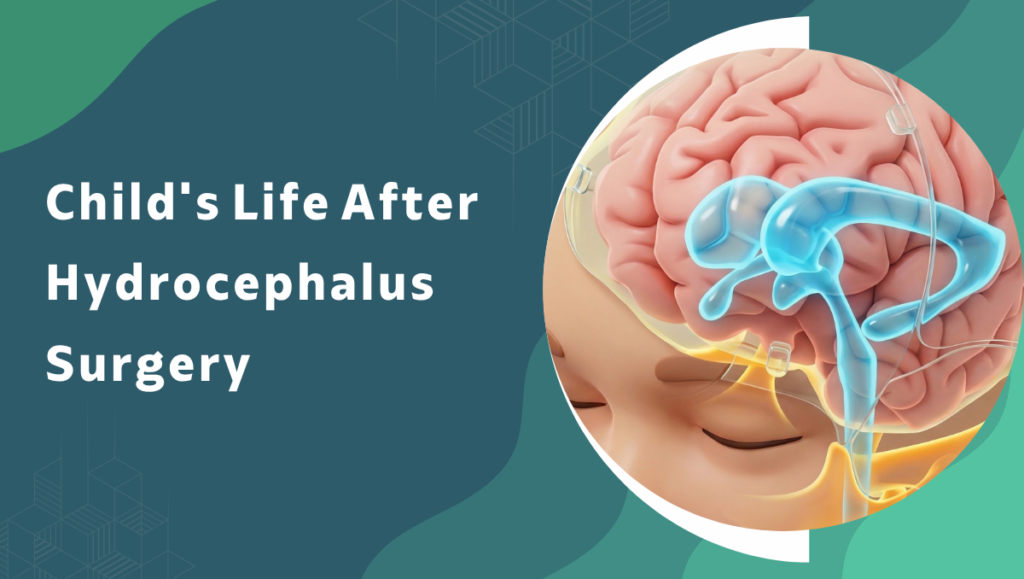
Most children treated for hydrocephalus attend mainstream school and develop without significant neurological impairment. Outcome depends on aetiology, duration of raised intracranial pressure before surgery, and shunt complication history. Early surgical intervention consistently produces better neurodevelopmental outcomes than delayed treatment.
According to Dr. Gurneet Singh Sawhney, Neurosurgeon in Mumbai, the question families should be asking is not whether their child can live normally after hydrocephalus surgery most can but whether treatment happened early enough and whether complications are being caught before they cause damage that cannot be undone.
What Determines Neurodevelopmental Outcome After Hydrocephalus Surgery?
Hydrocephalus surgery decompresses the ventricles. But how much of that decompression becomes normal development depends entirely on variables that existed before the operation and that is a fact most families are not told clearly enough.
- Aetiology and cortical injury: Congenital aqueduct stenosis without associated brain malformation carries the best neurodevelopmental prognosis of all paediatric hydrocephalus types. Post-haemorrhagic and post-infectious hydrocephalus carry higher rates of cognitive and motor impairment because the brain injury itself not the hydrocephalus alone drives the developmental outcome.
- Duration before surgery: Prolonged ventricular enlargement causes cortical thinning that does not fully recover after decompression. Delays in diagnosis produce permanent cognitive consequences directly proportional to how long the cortex was compressed before hydrocephalus surgery was performed.
- Shunt complications: Children requiring multiple shunt revisions from blockage or infection have measurably worse long-term cognitive outcomes than those whose shunts function without complication. Each revision carries risk of subdural haematoma, infection, and further cortical injury that compounds over time.
- Associated conditions: Epilepsy, cerebral palsy, and visual impairment coexist with hydrocephalus in a proportion of children particularly those with prematurity, congenital malformations, or post-infectious causes. These conditions contribute independently to developmental outcome and their management matters as much as treating the hydrocephalus itself.
Hydrocephalus surgery creates the conditions for normal development. But whether that potential is realised depends on everything that happens before, during, and after the operation not just the operation itself.
Explore functional neurosurgery in Mumbai for paediatric hydrocephalus follow-up at Fortis Hospital Mulund West.
What Families Should Realistically Expect After Hydrocephalus Surgery?
Outcome varies enormously across the hydrocephalus population. And what is realistic for a specific child depends on aetiology, surgical history, and current developmental trajectory not what population-level statistics say.
- Congenital obstructive hydrocephalus: The majority achieve normal intelligence and attend mainstream school without significant support. But a proportion have specific learning difficulties in mathematics, attention, and processing speed and those children need targeted educational intervention, not just reassurance that the surgery went well.
- Post-haemorrhagic and post-infectious hydrocephalus: Outcomes are more variable. Motor difficulties, intellectual disability, and epilepsy occur in a higher proportion of this group. But developmental trajectories should be assessed longitudinally because many children significantly exceed what early scans and early clinical findings suggested was possible, and premature predictions based on a single early MRI are regularly proven wrong.
- Shunt dependence: A shunted child requires neurosurgical follow-up indefinitely. Shunt failure can occur years after completely uneventful function. And because parents managing a shunted child at home are the first line of recognition, education about warning features is as important as any part of the surgical management itself.
- Educational support: Neuropsychological assessment identifying specific cognitive strengths and weaknesses allows targeted intervention. Early therapy through speech, physiotherapy, and occupational services consistently improves long-term functional outcomes beyond what surgery alone delivers in children with associated deficits.
Families who have read about whether neurological problems can exist with normal scans understand why ongoing neurodevelopmental assessment matters even when a child appears to be doing well after hydrocephalus treatment.
Why Choose Dr.Gurneet Singh Sawhney?
Dr. Gurneet Singh Sawhney completed dedicated fellowships in functional neurosurgery under Prof. Taira at Tokyo Women’s Medical University and epilepsy surgery under Prof. Sugano at Juntendo University both high-volume academic centres where paediatric neurosurgical follow-up formed a structured component of the caseload. At Fortis Hospital Mulund West, children treated for hydrocephalus receive structured post-operative follow-up covering neurodevelopmental assessment, shunt function monitoring, and identification of associated conditions requiring intervention.
Families receive a direct assessment of what their child’s specific aetiology, surgical history, and current developmental trajectory mean for long-term outcome. Not population averages. Not generalised reassurance. An honest appraisal of what is realistic for that individual child.
FAQ's
Can a child live a normal life after hydrocephalus surgery?
Most children with hydrocephalus achieve normal development, attend mainstream school, and reach adult independence with appropriate surgical treatment and follow-up.
What determines developmental outcome after hydrocephalus surgery?
Underlying aetiology, duration of raised intracranial pressure before surgery, shunt complication history, and associated neurological conditions determine neurodevelopmental outcome.
Do children with hydrocephalus need lifelong follow-up?
Shunted children require indefinite neurosurgical follow-up as shunt failure can occur years after uneventful function and requires prompt recognition and revision.
Does hydrocephalus surgery affect intelligence in children?
Most children with congenital obstructive hydrocephalus achieve normal intelligence. Post-haemorrhagic and post-infectious cases have more variable outcomes depending on associated brain injury.
References
- National Institute of Neurological Disorders and Stroke. Neurological Diagnostic Tests and Procedures. NINDS, NIH.
- Kulkarni AV, et al. Paediatric Hydrocephalus and Shunt Outcomes. PubMed Central, NCBI.