

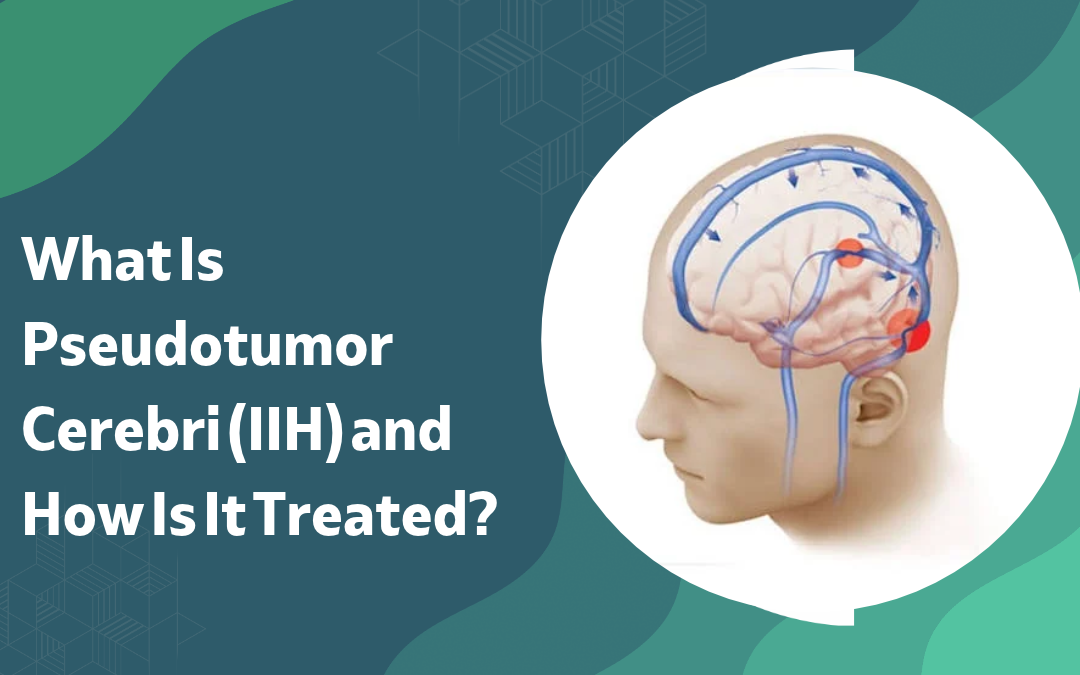
Idiopathic intracranial hypertension (IIH) is raised pressure around the brain with no tumour, blockage, or identifiable cause on scans. It most often affects overweight women of childbearing age. Symptoms include daily headaches, brief visual blackouts, a whooshing sound in the ears, and swelling of the optic nerve heads, which can cause permanent vision loss if untreated. Treatment targets pressure reduction and sight protection: weight loss, acetazolamide, and surgery when vision is threatened. Not a tumour, but not harmless. Early treatment is what saves vision.
According to Dr. Gurneet Singh Sawhney, neurosurgeon in Mumbai, “In this condition, the headache is rarely what costs a patient their sight, it’s the silent optic nerve swelling, which is why eye checks matter as much as the scan.”
Having daily headaches with blurred vision, double vision or a whooshing sound in the ears?
What Are the Symptoms and Causes of Pseudotumor Cerebri?
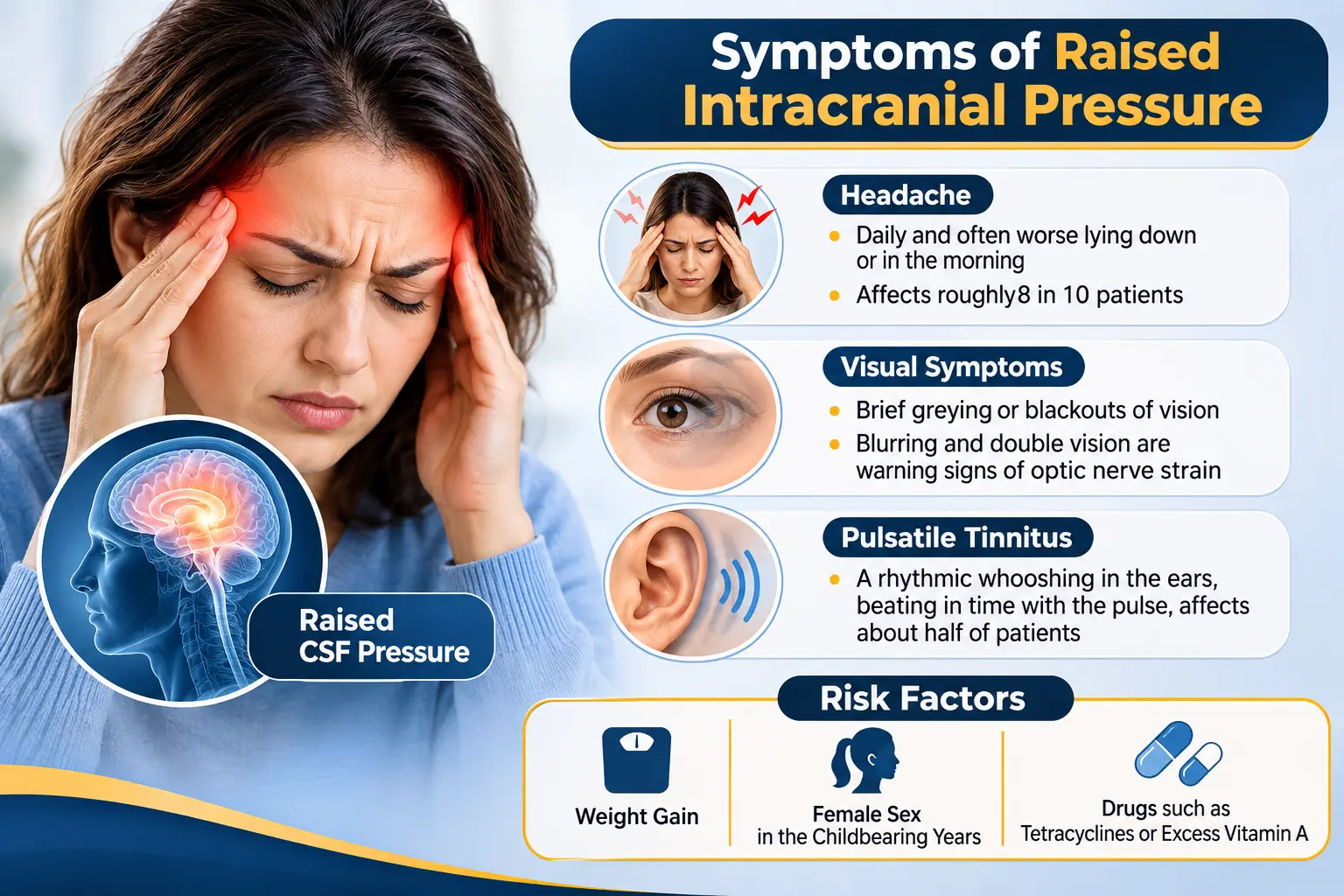
Swelling of the optic discs, called papilledema, is nearly always present on eye examination, and it’s the sign that turns suspicion into a workup. The headache is often mistaken for migraine, so persistent headaches with visual symptoms need review beyond standard migraine headache treatment.
How Is Pseudotumor Cerebri Treated?
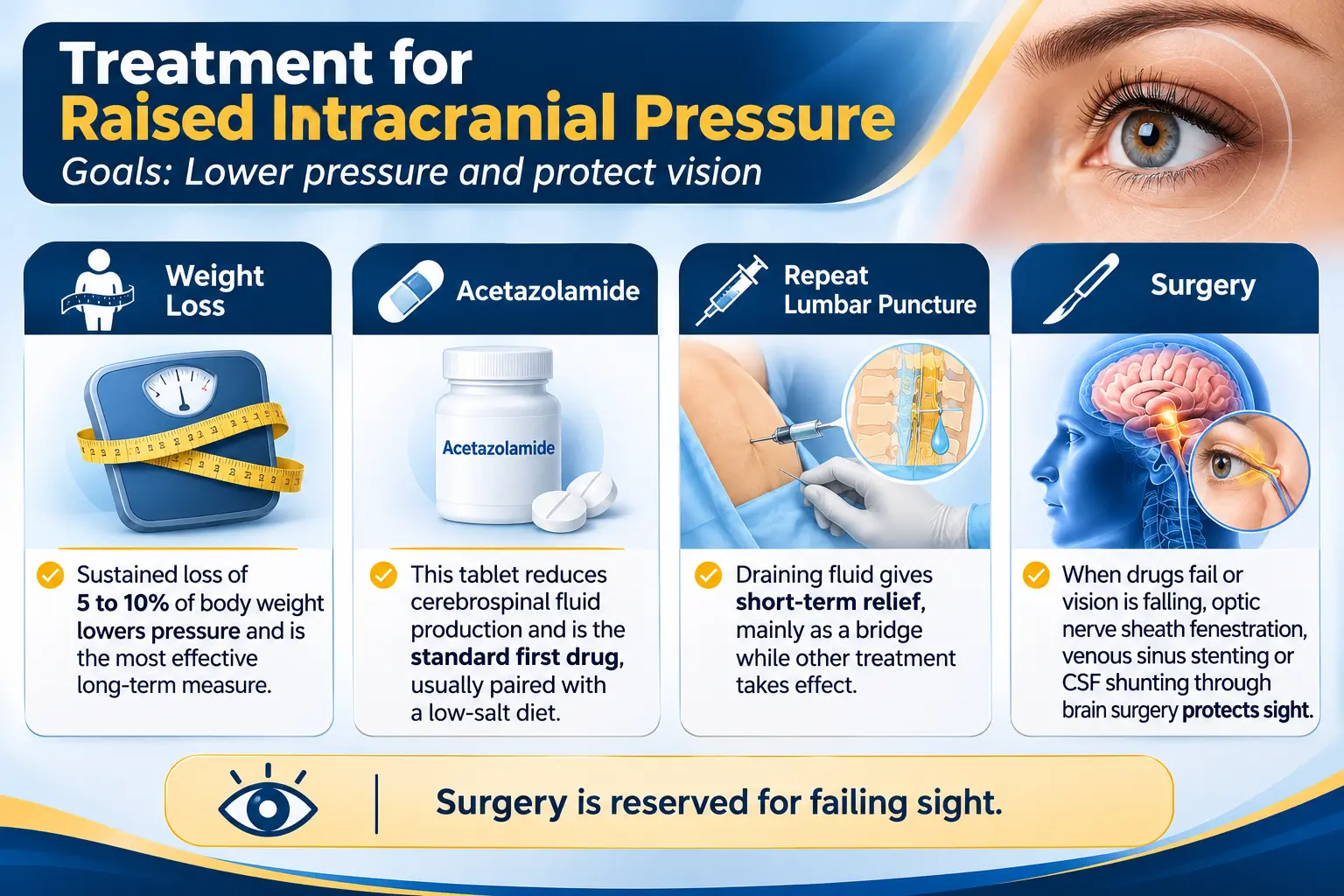
Vision is checked at every visit with formal field testing, because loss can progress silently. How fluid pressure is measured and relieved is covered in lumbar puncture.
What Determines the Right Treatment Approach?
The plan depends on how much the optic nerves are affected, not on headache severity alone.
- Visual Status: field tests and optic nerve imaging show whether sight is threatened, and failing vision moves treatment toward surgery early.
- Pressure and Symptoms: a high opening pressure with severe headache may need drainage, while milder cases settle on medication and weight loss alone.
- Body Weight: patients with obesity gain most from structured weight loss, and some are considered for bariatric surgery.
- Medical Triggers: stopping a causative drug or treating sleep apnoea or venous sinus narrowing removes the driver of pressure in some patients.
Eye, scan and pressure findings are weighed together, with vision as the deciding factor and when pressure cannot be controlled medically, brain surgery becomes the next step in protecting sight.
Frequently Asked Questions
Is pseudotumor cerebri a brain tumour?
No, there’s no tumour, only raised pressure around the brain.
Can pseudotumor cerebri cause blindness?
Yes, untreated optic nerve swelling can cause permanent vision loss.
Does pseudotumor cerebri go away?
It can remit with weight loss and treatment, but relapse is possible.
Who is most at risk of pseudotumor cerebri?
Overweight women of childbearing age are affected most often.
References
Disclaimer: The information shared in this content is for educational purposes only and not for promotional use.