

Sports Physiotherapist in Mumbai | Dr. Niraj Parmar
Pain doesn’t ask for permission before it disrupts your life. A stiff back, a nagging knee, a shoulder that won’t lift the way it used to, these small limitations add up fast, and they rarely fix themselves with rest alone. That’s where the right sports physiotherapist makes all the difference.
According to Dr. Niraj Parmar, one of Mumbai’s most trusted sports physiotherapists, “Sports physiotherapy isn’t just about relieving pain. It’s about understanding why the pain started in the first place, and building a plan that stops it from coming back.”
With years of clinical experience treating musculoskeletal, sports, and post-surgical conditions, Dr. Niraj Parmar has helped patients across Mumbai move better, recover, and get back to the activities they love, whether that’s walking without discomfort, returning to the gym, or simply climbing stairs without wincing.
If you’ve been putting off treatment because you assumed the pain would pass, or because you weren’t sure where to start, this guide walks you through exactly what sports physiotherapy treats, how a session works, and why the right therapist matters more than you might think.
Conditions Treated by a Sports Physiotherapist in Mumbai
Sports physiotherapy isn’t a one-size-fits-all treatment. It covers a wide spectrum of conditions, and the right approach depends entirely on what’s causing your discomfort.
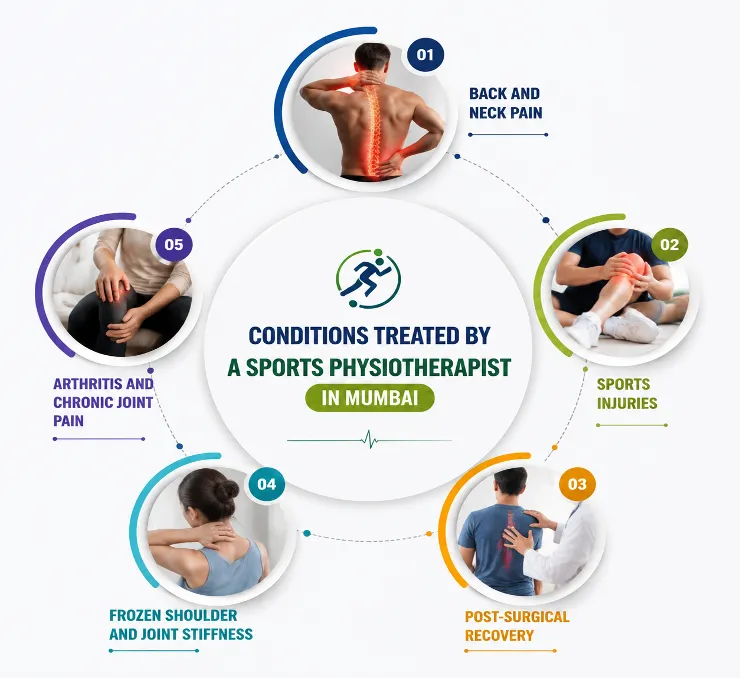
Back and neck pain: Manual therapy and targeted exercises relieve pressure on the spine and correct posture-related strain.
Sports injuries: Ligament sprains, muscle tears, and joint injuries are treated with a structured return-to-play protocol.
Post-surgical recovery: Rehab after orthopaedic or joint replacement surgery restores strength, mobility, and confidence.
Frozen shoulder and joint stiffness: Progressive mobilisation techniques gradually restore range of motion.
Arthritis and chronic joint pain: Low-impact strengthening and pain-management strategies help patients stay active longer.
No two patients experience pain the same way, which is why Dr. Parmar builds every plan around a detailed assessment rather than a generic template.
Sports Injury Physiotherapy
Post-Surgical Physiotherapy
Surgery repairs the structure, but physiotherapy restores function. Whether it’s a knee replacement, ligament reconstruction, or spine surgery, structured rehab prevents stiffness, rebuilds strength, and protects the surgical outcome. Patients who begin physiotherapy soon after surgery, under proper medical guidance, consistently report smoother recoveries.
How Sports Physiotherapy Treatment Works
Every sports physiotherapy journey starts with understanding the problem, not just treating the symptom.
Assessment: A thorough evaluation of posture, movement patterns, strength, and flexibility identifies the actual source of pain.
Manual therapy: Hands-on techniques reduce stiffness, ease muscle tension, and improve joint mobility.
Therapeutic exercise: Customised strengthening and stretching routines rebuild function and prevent recurrence.
Electrotherapy: Modalities like therapeutic ultrasound support pain relief and tissue healing where needed.
Education: Patients learn posture correction, ergonomic adjustments, and self-management techniques to sustain long-term results.
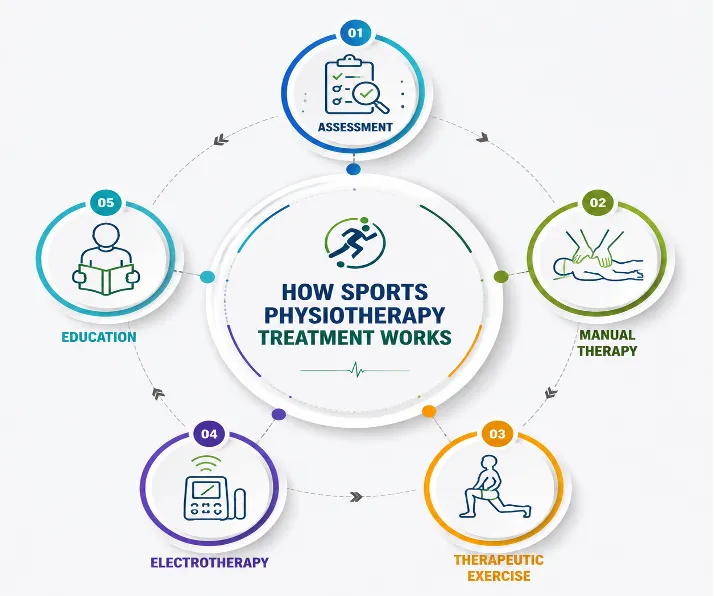
This combination is why sports physiotherapy remains one of the most effective, non-invasive approaches to pain management. The World Health Organization recognises rehabilitation as a core part of universal health coverage, precisely because it restores function without relying solely on medication or surgery.
What to Expect During Your Sports Physiotherapy Session
First visit: A detailed assessment of your condition, medical history, and movement patterns.
Goal setting: Clear, realistic targets are set together, whether that’s pain-free walking, returning to sport, or improved flexibility.
Hands-on treatment: Sessions combine manual therapy, guided exercises, and gentle progression based on your comfort level.
Home exercises: A simple daily routine helps you carry the progress made in the clinic into everyday life.
The pace and frequency of your sessions are tailored to your condition and how your body responds to treatment, rather than a fixed schedule. This structured, patient-paced approach mirrors global rehabilitation standards outlined by bodies like the American Physical Therapy Association, which emphasise individualised, progressive care over fixed protocols.
Why Choose Dr. Niraj Parmar as Your Sports Physiotherapist in Mumbai?
Not every physiotherapist takes the time to understand the “why” behind your pain, Dr. Niraj Parmar does. Known across Mumbai as one of the city’s most reliable sports physiotherapists, he combines clinical expertise with a genuinely patient-first approach, ensuring every treatment plan is built around the individual, not a checklist.
Whether you’re an athlete looking to get back on the field, a working professional dealing with desk-related back pain, or someone recovering from surgery, Dr. Parmar tailors every session to where you actually are in your recovery, not where a generic programme assumes you should be. For patients also focused on holistic recovery and long-term movement health, pairing sports physiotherapy with complementary rehabilitation and wellness support can further strengthen outcomes.
Whether you’re an athlete looking to get back on the field, a working professional dealing with desk-related back pain, or someone recovering from surgery, Dr. Parmar tailors every session to where you actually are in your recovery, not where a generic programme assumes you should be. For patients also focused on holistic recovery and long-term movement health, pairing sports physiotherapy with complementary rehabilitation and wellness support can further strengthen outcomes.
When Should You See a Sports Physiotherapist?
Many people wait far too long before seeking sports physiotherapy, often assuming the pain will resolve on its own. The truth is, early intervention almost always leads to a smoother recovery.
You should consider sports physiotherapy if you’re experiencing persistent joint or muscle pain, recovering from an injury or surgery, dealing with reduced mobility, or noticing that everyday movements have started to feel harder than they used to. Waiting rarely makes these issues easier to treat. Combining physiotherapy with a well-rounded movement and rehabilitation plan can also help prevent future injuries, especially for those returning to an active lifestyle.
Frequently Asked Questions
What does a sports physiotherapist treat?
How many sports physiotherapy sessions will I need?
Is sports physiotherapy painful?
Can sports physiotherapy help without surgery?
How soon after surgery should physiotherapy start?
References
- World Health Organization, Rehabilitation: https://www.who.int/news-room/fact-sheets/detail/rehabilitation
- American Physical Therapy Association: https://www.apta.org
Blogs
Recovery After Minimally Invasive Spine Surgery
Recovery after minimally invasive spine surgery is faster than open surgery because less muscle is...
When Is Spine Surgery Necessary and When to Avoid It
Spine surgery is necessary when nerve compression causes progressive weakness, numbness, or loss...

The Truth About Spine Surgery: 8 Myths Debunked
You have tried everything: painkillers, physiotherapy, massages, and yoga. However, your back pain...