

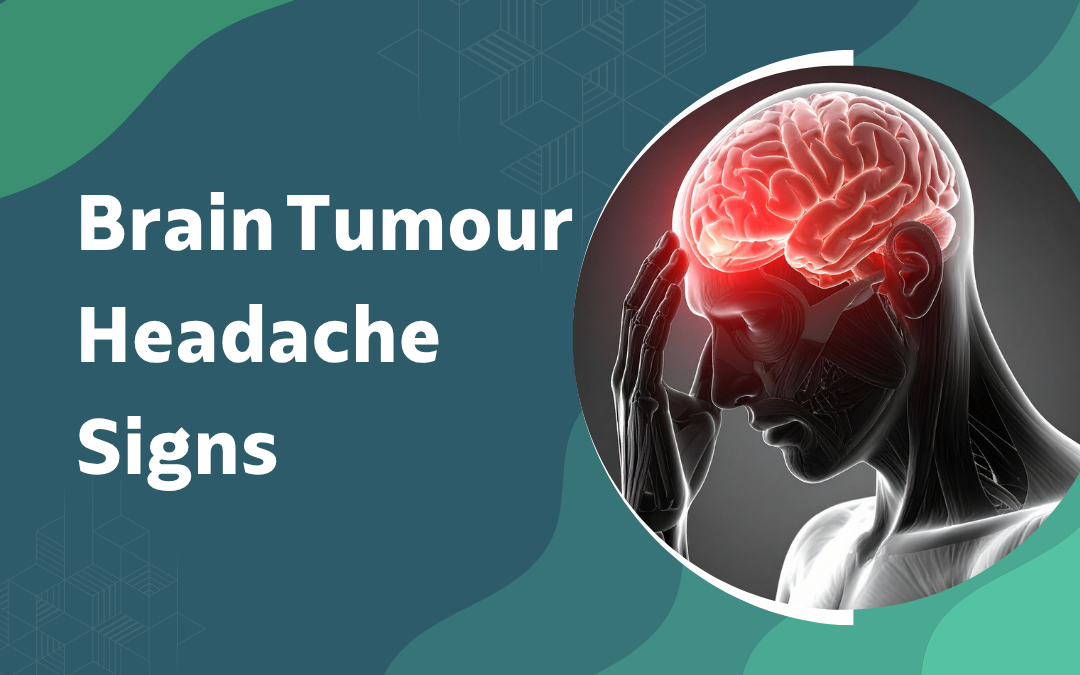
Headaches can be a sign of a brain tumour, though they are far more often caused by tension, migraine or other benign conditions. What distinguishes a brain tumour headache is not the pain itself but the pattern: progressive worsening over weeks, worse in the morning, aggravated by coughing or straining, and accompanied by other neurological symptoms. A headache that fits that pattern, or one that represents a new and persistent change, warrants investigation.
According to Dr. Gurneet Singh Sawhney, a leading neurosurgeon in Mumbai, the headache itself is rarely what diagnoses a brain tumour. What matters is whether it’s progressing, what time of day it’s worst, and whether anything else is changing alongside it. Those patterns together are what should trigger an MRI.
Headache that has changed in character or is getting progressively worse?
What Makes a Brain Tumour Headache Different?
The pain itself is not a reliable distinguishing feature. The pattern, the timing and what accompanies it are.
Morning onset: a headache worse on waking, caused by an overnight rise in intracranial pressure, is more characteristic of a space-occupying lesion than of tension or migraine
Progression: a headache that worsens consistently over weeks or months without the remission periods typical of migraine is a warning pattern that warrants investigation
Valsalva: Headache that intensifies with coughing, straining, bending forward or bearing down suggests raised intracranial pressure, not a feature of benign primary headache disorders
Accompanying symptoms: seizures, focal weakness, visual changes, speech difficulty or cognitive changes alongside headache are the features that most reliably point toward a structural cause
No single feature confirms a brain tumour, and most headaches will have a benign explanation. But when two or more of these patterns appear together, imaging is warranted. Brain tumor surgery always starts with a confirmed diagnosis, and that begins with an MRI.
When Should a Headache Be Investigated?
Red flags narrow the field considerably. Not every headache needs a scan, but certain combinations do.
New pattern: A headache new in someone over 50, or a change in a previously stable headache pattern at any age, is sufficient reason for investigation regardless of severity
Progressive: Any headache steadily worsening over weeks without a clear diagnosis, or failing to respond to standard treatment, should not be managed as primary headache without ruling out structural cause
Neurological change: Weakness, numbness, personality change or visual disturbance alongside headache removes the ambiguity — imaging is needed promptly
History: Patients with known cancer elsewhere, immunosuppression or HIV have a higher baseline risk of secondary brain tumours and a lower threshold for investigation
The threshold for scanning is low when these features are present. This guide on signs of a brain tumour covers the broader symptom picture beyond headache alone.
Why Choose Dr. Gurneet Singh Sawhney?
Dr. Gurneet Singh Sawhney is a cerebral tumour surgeon with fellowship training from Japan and over 18 years of experience in brain tumour diagnosis and surgical management. His practice sees patients across the full spectrum, from incidentally discovered tumours through to symptomatic cases presenting with headache and neurological change.
Most patients referred after a headache investigation don’t have a brain tumour. But the ones who do need to reach a specialist quickly. Getting the MRI reviewed by someone who operates on brain tumours is what turns uncertainty into a clear plan.
Frequently Asked Questions
Do all brain tumours cause headaches?
No, only about half of brain tumour patients report headache as an early symptom.
What kind of headache is associated with a brain tumour?
Progressive headaches worse in the morning and aggravated by coughing are more characteristic.
Can painkillers mask a brain tumour headache?
Sometimes, which is why response to painkillers does not reliably rule out a tumour.
What scan is needed to detect a brain tumour?
An MRI with contrast is the standard investigation for suspected brain tumours.
Disclaimer: The information shared in this content is for educational purposes only and not for promotional use.