

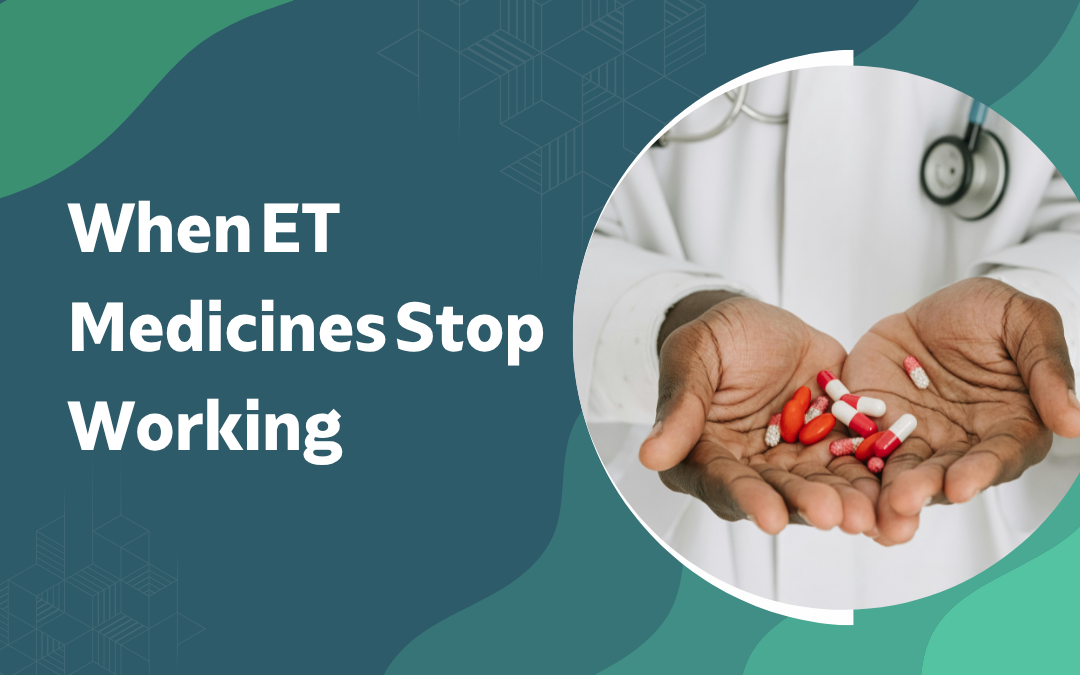
Medicines stop working for essential tremor when the tremor outgrows what the drug can suppress, or when side effects cap the dose before it helps. Propranolol and primidone are the usual first choices, and they ease shaking in roughly half of patients, rarely more. Over time the tremor often gets worse while the drug response stays flat. Fatigue, a slow pulse or low blood pressure can force the dose back down too. So control slips, even though nothing about the prescription has changed.
According to Dr. Gurneet Singh Sawhney, a leading neurosurgeon in Mumbai, patients almost never tell me the tablets stopped working, they tell me they’ve quietly stopped signing their own name, or won’t carry a cup across a room in company. That narrowing of what they’ll even attempt is usually the truest sign the medication has reached its limit, long before any test confirms it.
Tablets no longer steadying your hands?
Why Do Essential Tremor Medicines Lose Their Effect?
Drug response in essential tremor is limited from the start and tends to fade as the condition advances.
Progression: the tremor amplitude grows year on year while the medication ceiling stays the same, so the gap between them widens
Tolerance: some patients notice the early benefit dulling after months, needing a higher dose just to hold the same modest effect
Dosing: side effects like tiredness, a slow heartbeat or light-headedness often block the increase that better control would actually need
Coverage: first-line drugs only reach part of the tremor, and head or voice shaking tends to respond far less than the hands do
And response varies so much between people that the same dose can leave one patient steady and another barely helped. When tablets stop holding the line, a proper essential tremor treatment review weighs up what the next options can realistically offer.
What Happens When Medication Isn't Enough?
Once drugs fail to control disabling tremor, the focus shifts toward procedures that target the tremor circuit directly.
Threshold: tremor that wrecks eating, writing or holding a glass despite proper dosing is the usual signal to look past tablets
Surgery: DBS surgery places electrodes in the thalamic VIM and settles the shaking with adjustable electrical pulses
Alternatives: focused ultrasound and radiofrequency lesioning can quieten tremor on one side without a permanent implant for selected patients
Assessment: a proper workup confirms it’s essential tremor and not Parkinson’s or another cause before anything invasive gets planned
Surgery isn’t the first move for everyone, and plenty manage well on medication for years. But for drug-refractory cases, the reported DBS surgery success rates for tremors set honest expectations.
Why Choose Dr. Gurneet Singh Sawhney?
Dr. Gurneet Singh Sawhney trained in functional neurosurgery in Japan and has more than 18 years treating movement disorders, including tremor that no longer answers to medication. His focus covers stereotactic targeting and stimulator programming, the exact skills tremor surgery depends on.
Patients who’d given up on drinking from a full cup or signing their own name often get those moments back once the tremor circuit is treated. Medication has a ceiling. Surgery raises it.
Frequently Asked Questions
How long do essential tremor medicines usually work?
Benefit varies, but many patients find control slipping as the tremor progresses over years.
Which medicines are tried first for essential tremor?
Propranolol and primidone are the standard first-line options before anything else is added.
Does medication failure mean surgery is needed?
Not always, surgery is considered only when tremor stays disabling despite proper medication.
Can essential tremor be cured by medicines?
No, medicines reduce shaking but don’t cure the underlying condition or stop its progression.
Disclaimer: The information shared in this content is for educational purposes only and not for promotional use.