

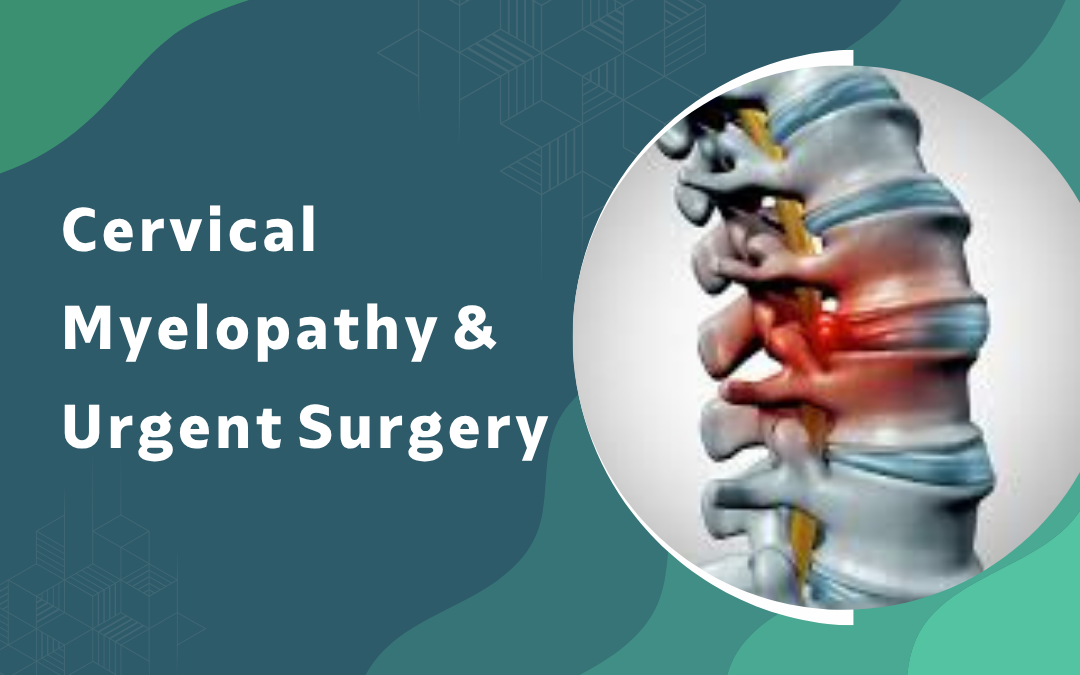
Cervical myelopathy is spinal cord compression in the neck, usually from degenerative wear like arthritis, slipped discs, or thickened ligaments pressing on the cord. Symptoms build slowly at first. Hand clumsiness, trouble walking, numbness creeping into arms or legs, fingers losing their grip on small things. Surgery becomes urgent the moment things speed up. Sudden weakness, gait falling apart over days, or new bladder or bowel control issues mean the cord is in trouble, and waiting risks permanent damage that no surgery can undo later.
According to Dr. Gurneet Singh Sawhney, spine surgeon, once myelopathy starts hitting hand function or balance, every month of delay locks in nerve damage that won’t fully bounce back.
Severe OCD or Tourette’s that won’t budge with therapy?
How does DBS work for OCD and Tourette's syndrome?
Short version. It hits the exact circuits driving the obsessive thoughts or the tics, and the stimulation quiets things down right where they’re firing wrong.
- Target areas: For OCD, the electrodes usually land in the ventral capsule or the nucleus accumbens. Tourette’s is different. There the target shifts to the thalamus or globus pallidus, and which one depends on whether it’s the tics doing the damage or the behavioural side.
- Mechanism: A thin lead sits in the picked circuit and just keeps pushing out steady pulses. Give it a few weeks, and the misfiring patterns running the compulsions or tics start backing off. It’s not overnight stuff.
- Adjustable: Nothing’s locked in once the lead’s placed. Frequency, voltage, pulse width, all of it gets nudged around over months as symptoms shift, and that’s something no pill on the market can match.
- Reversible: No brain tissue gets cut or destroyed, which is the big break from the older lesion surgeries. Not working out? The system gets switched off. Or pulled out entirely.
If symptoms are this severe and nothing’s worked, a proper DBS evaluation is honestly the cleanest way to find out whether surgery’s even on the table.
Is this the right option for you, and what results does it actually produce?
Not everyone makes the cut. And that’s intentional. Surgery this serious only earns its place once everything else has clearly run out of road.
- OCD criteria: Five years or more of documented severe OCD, multiple SSRIs tried at full doses with no real benefit, and a proper round of CBT with exposure response prevention done end to end. Skip any of that, and surgery’s the wrong call.
- Tourette’s criteria: The tics have to be doing real damage. Self-injury, social disability, sticking hard into adulthood, refusing to budge with behavioural therapy or the standard meds like alpha-agonists and antipsychotics. Mild stuff doesn’t qualify.
- Outcomes OCD: Roughly 6 in 10 well-screened patients see meaningful drops on the Y-BOCS scale. Full remission though? Uncommon. The gains build slowly, sometimes annoyingly so, and patients need to know that going in.
- Outcomes Tourette’s: Tic severity usually drops 40 to 50 percent, give or take. The bigger wins often arrive in year two once programming has been tuned properly. So patience matters a lot here.
Because expectations make or break the experience, our piece on movement disorder treatment options is worth a read before any surgical talk gets going.
Why Choose Dr. Gurneet Singh Sawhney
Dr. Gurneet Singh Sawhney has been in functional neurosurgery for over 18 years now, with hands-on DBS work across movement disorders, OCD, and Tourette’s. The stereotactic side of things runs deep in his training, and his case selection stays deliberately tight. Which, frankly, is what surgery at this level needs.
What patients keep saying is how every non-surgical avenue gets walked through first, properly, and how the conversation around what DBS can actually deliver stays straight. No overselling. No rushed timelines either.
FAQ's
Can cervical myelopathy be cured without surgery?
Mild stable cases respond to conservative care, but progressive cases need surgical decompression.
How urgent is cervical myelopathy surgery?
Within days if symptoms are progressing fast or after trauma with cord compression on MRI.
What surgery is done for cervical myelopathy?
ACDF or posterior laminectomy depending on where the cord is being compressed and how badly.
Can paralysis be reversed after myelopathy surgery?
Partial recovery is realistic if surgery happens early, but long-standing damage often won’t fully reverse.