

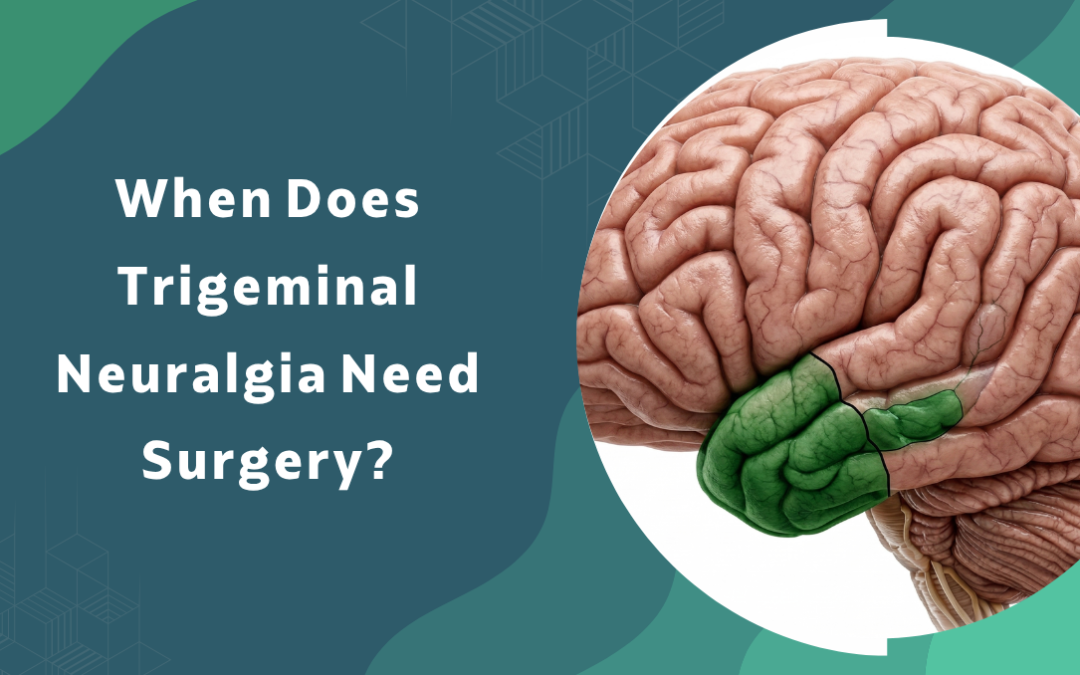
Trigeminal neuralgia surgery is indicated when medication fails to control pain, when side effects from medication become intolerable, or when MRI confirms vascular compression amenable to microvascular decompression. Carbamazepine remains the first-line drug. But for a significant proportion of patients it stops working and surgery at that point produces better outcomes than continuing to adjust doses of drugs that are no longer adequate.
According to Dr. Gurneet Singh Sawhney, Neurosurgeon in Mumbai, trigeminal neuralgia surgery should not be a last resort after years of inadequately controlled pain patients who fail two medications appropriately deserve surgical evaluation before the condition erodes their quality of life entirely.
When Does Medication Fail and Surgery Become Appropriate?
Two medications. Both appropriate. Both at adequate doses. Both failed. That is the threshold for surgical evaluation not after a decade of trying every available drug combination.
- Failed medication trials: Carbamazepine, oxcarbazepine, and baclofen at adequate doses failing to achieve pain control define medication-refractory trigeminal neuralgia. A third or fourth medication rarely achieves what the first two did not the pattern of diminishing returns in this condition is well established and continuing medication adjustments beyond this point delays treatment that works.
- Intolerable side effects: Cognitive slowing, hyponatraemia, ataxia, and bone marrow suppression from carbamazepine force dose reduction or discontinuation before adequate pain control is reached. Because the side effect burden can be as disabling as the pain itself, surgical evaluation at this point is clinically appropriate not premature.
- Confirmed vascular compression: Neurovascular contact between the superior cerebellar artery and the trigeminal nerve root entry zone on high-resolution MRI FIESTA or CISS sequences predicts microvascular decompression outcome. Patients with clear vascular compression who are medically fit are strong MVD surgery candidates regardless of how many medications have been tried.
- Progressive frequency and severity: Trigeminal neuralgia that was initially controlled on low doses and now breaks through despite maximum tolerated doses follows a recognised pattern of medication tolerance. Surgery addresses this more effectively than further dose escalation that produces side effects without proportionate pain control.
Surgical evaluation does not commit a patient to an operation. It determines which procedure is appropriate and what realistic outcomes look like for that specific presentation.
Explore functional neurosurgery in Mumbai for trigeminal neuralgia surgical evaluation at Fortis Hospital Mulund West.
What Surgical Options Exist for Trigeminal Neuralgia?
Three established procedures address trigeminal neuralgia by different mechanisms. The right procedure depends on imaging, patient age, medical fitness, and pain pattern.
Microvascular decompression: MVD addresses the underlying cause by separating the offending vessel from the trigeminal nerve root through a retromastoid craniotomy. Because it doesn’t damage the nerve, it produces the highest long-term pain relief rates above 80 percent at one year in patients with confirmed vascular compression.
Percutaneous rhizotomy: Balloon compression, glycerol injection, and radiofrequency thermocoagulation target the trigeminal ganglion through a needle inserted via the foramen ovale. These are day-case procedures suitable for older patients or those with medical comorbidity precluding open craniotomy.
Stereotactic radiosurgery: Gamma Knife delivers a focused radiation dose to the trigeminal nerve root entry zone without any incision. Pain relief onset is delayed by weeks to months making it less suitable for patients in severe acute pain but appropriate for those unable to tolerate general anaesthesia.
Atypical and secondary cases: Trigeminal neuralgia secondary to multiple sclerosis plaques or posterior fossa tumours follows a different management pathway. Because the underlying pathology drives the pain mechanism, treatment of the secondary cause takes priority over peripheral procedures.
Families who have read about whether neurological problems can exist with normal scans understand why high-resolution MRI sequences are essential in trigeminal neuralgia surgical planning and are not interchangeable with standard brain imaging.
Why Choose Dr. Gurneet Singh Sawhney?
Dr. Gurneet Singh Sawhney completed dedicated fellowships in functional neurosurgery under Prof. Taira at Tokyo Women’s Medical University and epilepsy surgery under Prof. Sugano at Juntendo University, both high-volume academic centres where microvascular decompression and functional neurosurgical procedures formed a structured component of the caseload. At Fortis Hospital Mulund West, trigeminal neuralgia cases receive high-resolution MRI, neurological examination, and a direct discussion about which procedure is appropriate before any surgical decision is made.
Patients with medication-refractory trigeminal neuralgia receive a structured assessment covering imaging findings, procedure selection, realistic pain relief probability, and recurrence risk for that specific case. The recommendation is based on objective findings alone.
FAQ's
When does trigeminal neuralgia require surgery instead of medication?
Surgery is indicated when two adequate medication trials have failed, when side effects are intolerable, or when imaging confirms vascular compression suitable for microvascular decompression.
What is the most effective surgery for trigeminal neuralgia?
Microvascular decompression achieves pain relief above 80 percent at one year in patients with confirmed neurovascular compression on high-resolution MRI.
Is surgery safe for elderly patients with trigeminal neuralgia?
Percutaneous rhizotomy procedures are suitable for older patients with medical comorbidity as they are performed under sedation without general anaesthesia or open craniotomy.
Does trigeminal neuralgia pain return after surgery?
Pain recurrence rates differ by procedure. MVD has the lowest long-term recurrence rate. Percutaneous procedures and radiosurgery carry higher recurrence rates but can be repeated.
References
- National Institute of Neurological Disorders and Stroke. Neurological Diagnostic Tests and Procedures. NINDS, NIH.
2. Zakrzewska JM, et al. Trigeminal Neuralgia Management. PubMed Central, NCBI.