
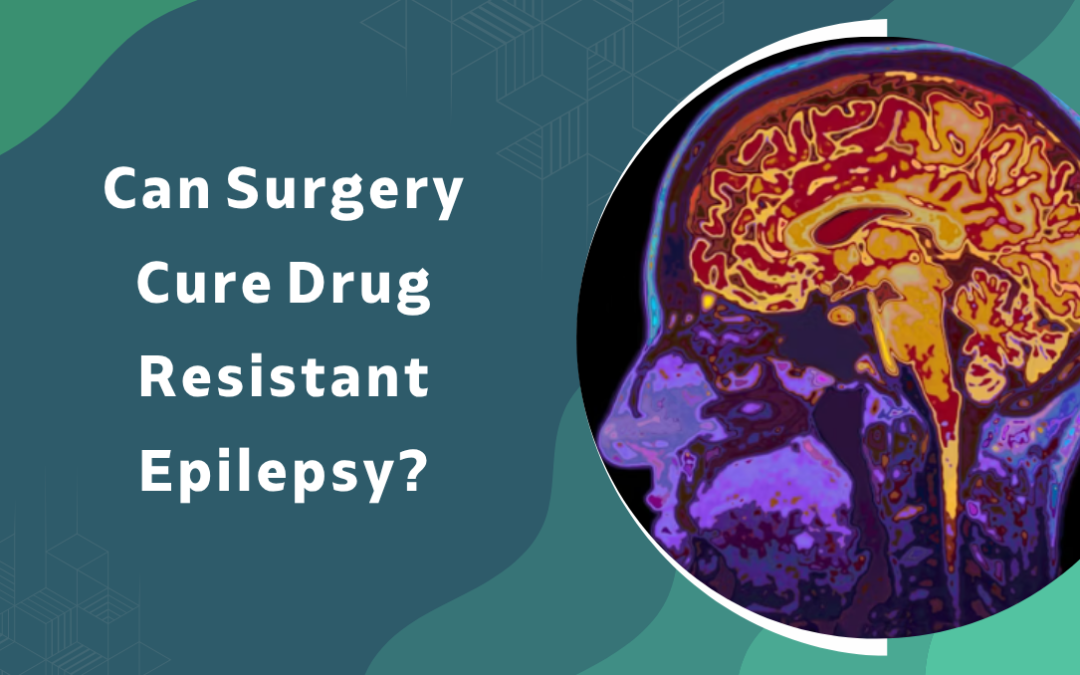
Epilepsy surgery achieves complete seizure freedom in 60 to 80 percent of appropriately selected drug-resistant patients. Surgical outcome depends on seizure focus location, underlying pathology, and completeness of resection. Surgery is reserved for drug-resistant cases in whom a resectable seizure focus is identified through structured pre-surgical evaluation.
According to Dr. Gurneet Singh Sawhney, Neurosurgeon in Mumbai, “epilepsy surgery offers the highest probability of seizure freedom for appropriately selected drug-resistant patients outcomes that decades of medication adjustment cannot replicate.”
Presenting with drug-resistant epilepsy and seeking surgical evaluation to determine candidacy?
When Does Epilepsy Surgery Achieve Complete Seizure Freedom?
Seizure freedom rates are procedure-specific and pathology-dependent. The following scenarios represent established indications with the highest probability of curative surgical outcome.
- Temporal lobe epilepsy with hippocampal sclerosis: Anterior temporal lobectomy for mesial temporal lobe epilepsy with hippocampal sclerosis achieves seizure freedom in 70 to 80 percent of cases at one year. Long-term seizure freedom remains above 60 percent at five years in appropriately selected patients.
- Focal cortical dysplasia with complete resection: Seizure freedom following resection of focal cortical dysplasia is directly correlated with completeness of resection confirmed on post-operative MRI. Complete resection achieves seizure freedom in approximately 60 percent of cases while incomplete resection significantly reduces this probability.
- Low-grade tumour and cavernous malformation-related epilepsy: Surgical resection of epileptogenic cavernous malformations and low-grade tumours including ganglioglioma achieves seizure freedom in 70 to 90 percent of cases. This represents the highest cure rate across all epilepsy surgery aetiological categories.
- Hemispherotomy for hemispheric epilepsy: Functional hemispherotomy for unilateral hemispheric epilepsy in patients with established hemiplegia achieves seizure freedom in 60 to 70 percent of cases. This procedure is indicated in patients with Rasmussen encephalitis or hemispheric cortical dysplasia causing catastrophic epilepsy.
Pre-operative MRI lesion identification, concordance of EEG localisation with imaging, and complete surgical resection are the factors most consistently associated with seizure-free outcome.
Explore epilepsy surgery in Mumbai for drug-resistant epilepsy evaluation and surgical candidacy assessment at Fortis Hospital Mulund West.
When Epilepsy Surgery Does Not Achieve Complete Cure?
Palliative epilepsy procedures offer meaningful seizure reduction without achieving complete freedom. Accurate pre-operative counselling requires clear distinction between curative and palliative surgical intent for each individual case.
- Non-lesional epilepsy with poor localisation: Drug-resistant epilepsy without an identifiable structural lesion on MRI and without concordant EEG seizure focus localisation carries significantly lower seizure freedom rates than lesional epilepsy. Seizure-free outcomes in non-lesional epilepsy range from 30 to 50 percent and require stereo-EEG in selected cases.
- Palliative procedures for generalised epilepsy: Corpus callosotomy, vagus nerve stimulation, and deep brain stimulation offer seizure frequency reduction rather than freedom. These neuromodulation procedures are indicated when resective surgery is not feasible due to bilateral epileptiform activity or absence of a localised focus.
- Incomplete resection and seizure recurrence: Incomplete resection of the epileptogenic zone is the most common cause of surgical failure in focal epilepsy surgery. Recurrence following incomplete resection may be managed with repeat resection, stereotactic radiosurgery, or neuromodulation depending on residual focus localisation.
- Drug-resistant epilepsy without surgical candidacy: Bilateral independent seizure onset, seizure focus in eloquent cortex not safely resectable, and significant comorbidity represent situations where neuromodulation is the appropriate management pathway rather than resective surgery.
Serial re-evaluation of surgical candidacy is warranted as neuroimaging and investigation protocols advance, as previously non-surgical candidates may become candidates with SEEG-guided localisation.
Families who have read about whether neurological problems can exist with normal scans understand why MRI protocol selection significantly influences lesion detection and surgical candidacy determination.
Why Choose Dr. Gurneet Singh Sawhney?
Dr. Gurneet Singh Sawhney completed a dedicated epilepsy surgery fellowship under Prof. Sugano at Juntendo University, Tokyo, one of Asia’s highest-volume epilepsy surgery programmes, and a functional neurosurgery fellowship under Prof. Taira at Tokyo Women’s Medical University. At Fortis Hospital Mulund West, pre-surgical epilepsy evaluation follows a structured protocol incorporating prolonged video EEG monitoring, MRI epilepsy protocol, neuropsychological assessment, and functional mapping where the seizure focus is adjacent to eloquent cortex.
Patients presenting with drug-resistant epilepsy receive a candidacy assessment determining whether a resectable seizure focus is identifiable, whether complete resection is achievable without neurological deficit, and what the realistic probability of seizure freedom is for that specific pathology and focus location. The surgical recommendation is based on objective pre-surgical evaluation findings. Call +91 8104310753 to book your consultation.
FAQ's
Can surgery cure drug-resistant epilepsy?
Epilepsy surgery achieves seizure freedom in 60 to 80 percent of appropriately selected drug-resistant patients depending on seizure focus location and underlying pathology.
Which epilepsy type has the best surgical outcomes?
Temporal lobe epilepsy with hippocampal sclerosis and tumour-related epilepsy from ganglioglioma or cavernous malformation have the highest seizure freedom rates following surgery.
Is epilepsy surgery suitable for all drug-resistant epilepsy patients?
Surgical candidacy requires identification of a resectable seizure focus on pre-surgical evaluation and is not appropriate for all drug-resistant epilepsy patients.
What are the options if epilepsy surgery does not achieve seizure freedom?
Palliative neuromodulation including vagus nerve stimulation, corpus callosotomy, and deep brain stimulation are available for patients in whom resective surgery is not feasible.
References
- National Institute of Neurological Disorders and Stroke. Neurological Diagnostic Tests and Procedures. NINDS, NIH.
- Wiebe S, et al. Randomised Trial of Surgery for Temporal Lobe Epilepsy. PubMed Central, NCBI.