
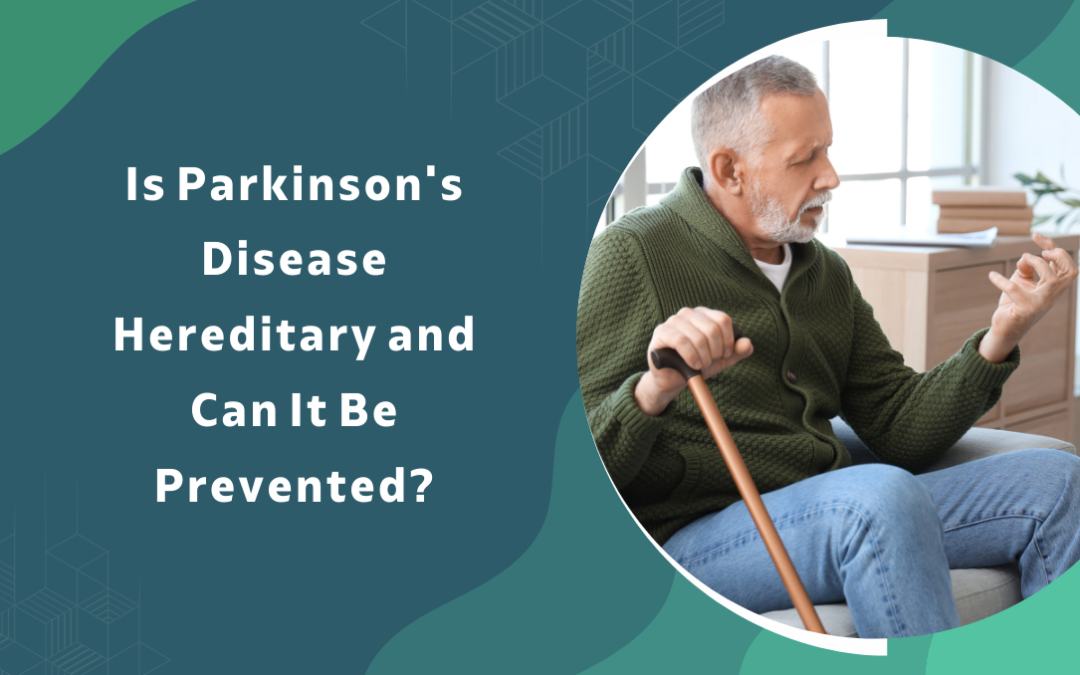
Here’s the thing families always want a cleaner answer to than actually exists.
Most people with Parkinson’s have no family history of it. Zero. No parent, no sibling, no uncle anyone can trace it back to. And most people who do have a parent with the disease never develop it themselves. So yes, genetics plays a role but it’s not the kind of role where one diagnosis in the family becomes a warning for everyone else. That’s the framing that causes the most unnecessary panic, and it’s not what the evidence supports.
Prevention is where the conversation gets even harder. Nothing stops Parkinson’s from developing in someone who’s going to develop it. That’s just the current reality of where the science sits. What exists and it’s worth distinguishing is risk reduction. Lower a probability. Not stop something from happening. Those aren’t the same thing and they shouldn’t be treated as if they are.
Dr. Gurneet Singh Sawhney is a neurosurgeon at Fortis Hospital Mumbai. Eighteen years managing complex neurological conditions. Parkinson’s patients come to him when medication has already done what it can and surgery is the next real question. The genetics question almost always comes up somewhere in that conversation.
Parkinson’s in the family and trying to make sense of what it means?
What Genetics and Parkinson's Actually Have to Do With Each Other
Less than most people assume. More than a few unlucky families discover.
Eighty-five to ninety percent of Parkinson’s cases are what medicine calls idiopathic. Which basically means we don’t have a clear answer yet. Age. Oxidative stress. Environmental exposures building up over decades. Some interaction between all of those things that researchers are still mapping. Having a parent who was diagnosed does raise your personal lifetime risk. But raise is doing a lot of work in that sentence. It’s a modest increase. Not a verdict.
The ten to fifteen percent of cases that do have an identifiable genetic mutation that’s a different conversation. LRRK2. SNCA. Parkin. PINK1. GBA. Each one works differently. Different inheritance patterns. Wildly different penetrance. GBA variants cluster in Ashkenazi Jewish populations. LRRK2 shows up more in some South Asian and North African groups. Parkin and PINK1 specifically turn up in younger patients people who develop Parkinson’s before fifty which is why genetic testing gets pushed harder in those cases. But here’s what tends to get left out when families are told about these mutations: carrying one does not mean you develop the disease. Some carriers never show a single symptom. Ever. That gap between having the gene and having the disease is enormous. And a test result handed to someone without that context does more harm than good most of the time.
Families already looking into Deep Brain Stimulation surgery in Mumbai with a known genetic mutation often ask whether it changes their surgical options. Generally it doesn’t. But it does shift how the disease trajectory conversation goes.
What genetic testing tells you is that your risk is elevated. Not when. Not how bad. Not whether. A negative result doesn’t clear anyone either because the majority of Parkinson’s has no detectable genetic cause in the first place. So the test has real limits and anyone going into it should understand those limits before they get the result, not after. That’s a conversation for a genetic counsellor, not just a lab report. Families who’ve spent time reading about whether neurological problems can exist with normal scans tend to come in already comfortable with medical uncertainty. It makes these conversations go better.
The Prevention Question What's Real and What Isn't
Genuinely hard to answer well because so much bad information exists about this.
Exercise is the one thing that keeps showing up in the research with any consistency. Not occasionally. Repeatedly. Across different populations. Different study designs. Regular aerobic exercise is associated with lower Parkinson’s risk in a way that most other lifestyle factors simply aren’t. The proposed mechanism involves neuroprotection supporting dopaminergic neuron health, reducing neuroinflammation, promoting BDNF. That’s not a cure and it’s not a guarantee. But it’s the most actionable, evidence-backed step someone with family history can actually take. Not a supplement. Not a specific food that someone read about online. Exercise. Consistent and vigorous.
Pesticide exposure is the other one that rarely gets mentioned outside research contexts, which is odd given how solid the association is. Paraquat and rotenone specifically both linked to meaningfully elevated Parkinson’s risk in people with heavy occupational or residential exposure. Not every exposed person develops Parkinson’s. But the signal is strong enough that reducing unnecessary exposure makes sense, particularly for anyone who already carries a genetic risk factor. Most patients have genuinely never been told this by a doctor.
Repeated head trauma. The connection between years of TBI contact sport athletes particularly and elevated Parkinson’s risk is reasonably established now. Chronic neuroinflammation. Protein aggregation from repeated impacts. One concussion in a lifetime isn’t the same as a decade of repeated head injuries. But it’s worth being aware of the pattern.
And then there’s the stuff that gets overblown. Caffeine. Urate levels. Certain epidemiological studies show modest associations that get turned into bold prevention claims. The effect sizes are small. The findings are inconsistent. A lot of what passes for Parkinson’s prevention advice is built on shaky ground that doesn’t hold up when you actually look at the research behind it.
As a Neurosurgeon in Mumbai who sees Parkinson’s patients years into their disease rather than at the start of it, Dr. Sawhney knows this genetics conversation is happening long before anyone thinks about surgery. But what families understand about the disease early shapes every decision they make later.
Why Choose Dr. Gurneet Singh Sawhney
At some point in Parkinson’s not at the start, but eventually for a meaningful number of patients medication stops being enough. The windows get shorter. The dyskinesias get worse. And surgery becomes the real question.
Dr. Sawhney trained under Prof. Taira at Tokyo Women’s Medical University for functional neurosurgery. Under Prof. Sugano at Juntendo University for epilepsy surgery. Two full fellowships. Not rotations. Actual subspecialty training at centres doing this work at genuine volume. That’s where the clinical judgment for these evaluations was built not in a textbook, in cases. Back at Fortis Hospital Mulund West, the pre-surgical evaluation for Parkinson’s goes through genetic history where relevant, medication timeline, levodopa response, cognitive status. And at the end of it a specific answer. Not a general one. Whether surgery is the right step, whether the timing is right, what the realistic outcome looks like for that particular patient. Families come in having already waited a long time for a direct answer. They tend to leave with one.
FAQ's
Is Parkinson's disease something you inherit from your parents?
Not usually most cases have no identifiable genetic cause, and having a parent with Parkinson’s raises your personal risk modestly rather than making the disease something you’ll definitely develop.
What genes are actually connected to Parkinson's disease?
LRRK2, SNCA, Parkin, PINK1, DJ-1, and GBA are the most studied but penetrance varies so much between them that a positive result needs proper genetic counselling to mean anything useful.
Is there anything that genuinely prevents Parkinson's disease?
Nothing proven to prevent it regular aerobic exercise, limiting pesticide exposure, and avoiding repeated head trauma are the factors with the most consistent research support for lowering risk.
My parent has Parkinson's. Should I get genetic testing?
Most useful if young-onset Parkinson’s is in the family or multiple relatives are affected but go in knowing a positive result confirms elevated risk, not certain disease, and a negative doesn’t fully clear you either.
When does Parkinson's reach the point where surgery like DBS makes sense?
When motor symptoms are disabling despite properly optimised medication and cognitive function is intact reach Dr. Gurneet Singh Sawhney at +91 8104310753 or gurneetsawhney@gmail.com for a specific evaluation at Fortis Hospital, Mulund West, Mumbai.
References
- National Institute of Neurological Disorders and Stroke. Neurological Diagnostic Tests and Procedures. NINDS, NIH.
- Doraiswamy S, et al. Use of Digital Technologies in Facilitating Healthcare Access. PubMed Central, NCBI.