

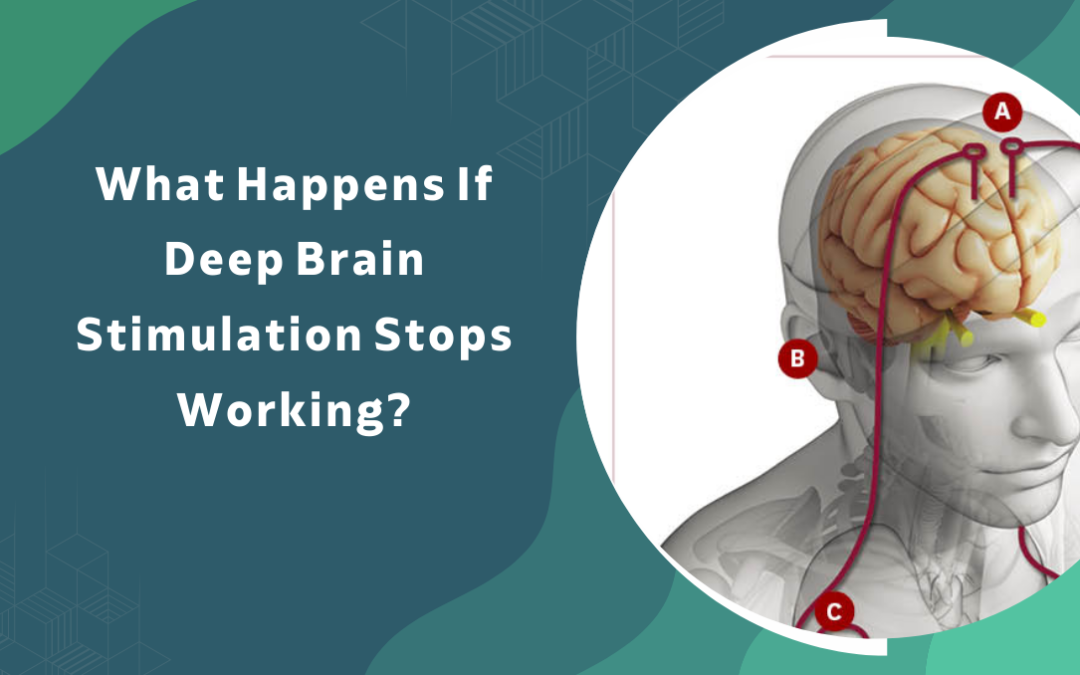
The first thing to understand is that “DBS stopped working” usually means one of several very different things and which one it is determines entirely what happens next. Sometimes the device is fine and the settings just need adjustment. Sometimes the battery is running low and nobody catches it. Sometimes the disease has progressed past what the stimulator can compensate for. And occasionally, rarely, there’s a hardware problem a lead that’s shifted or a connection that’s failed. These are not the same situation. Treating them like they are is where the confusion starts. Panicking that the surgery failed when what actually happened is the battery ran down that happens more than it should.
Dr. Gurneet Singh Sawhney is a neurosurgeon at Fortis Hospital Mumbai with a fellowship in functional neurosurgery from Japan. He manages DBS patients through their full post-surgical journey not just the procedure itself. When something changes after surgery, the evaluation starts from scratch, not from assumptions.
Noticing changes in your DBS response and not sure what’s happening?
Why DBS Might Seem Like It's Stopped Working
Most of the time there’s a specific, identifiable reason. Here’s what gets checked first.
Battery depletion: This is the most straightforward one and genuinely gets missed. The pulse generator battery has a lifespan typically three to five years for non-rechargeable devices, longer for rechargeable ones. When it runs low, stimulation weakens gradually. Symptoms creep back. Patients often interpret this as the treatment failing, when it’s actually just a battery that needs replacing. A quick check of the device with the programmer confirms it immediately. Patients who’ve been consistent about follow-up appointments including those who connected remotely as described in early post-surgical planning catch this early. Those who drifted away from follow-up often don’t. Families managing a loved one’s DBS long-term should have this checked first before drawing any bigger conclusions.
Stimulation settings need recalibration: Parkinson’s changes. The brain changes. What worked well at the settings programmed two years ago may not be adequate now. This isn’t device failure it’s a condition that evolves requiring a treatment that evolves with it. A programming session with the movement disorder neurologist can often restore a lot of the lost benefit. It’s one of the reasons post-surgical follow-up isn’t optional. Patients already managing DBS through Fortis Hospital who’ve been accessing Deep Brain Stimulation surgery in Mumbai information will recognise this from the original candidacy discussion programming optimisation is built into the process, not an afterthought.
Lead displacement or hardware issue: Rare. But it happens. The electrode can shift slightly from its original position, particularly in the period after surgery before the brain tissue stabilises around it. A connection between the lead and the extension wire can loosen. An MRI done without proper DBS protocols can damage the system. If settings adjustments aren’t restoring benefit and the battery is confirmed fine, imaging to check lead position is the next step. Hardware problems are fixable but they require identifying them accurately first.
Tolerance or habituation: Some patients more often essential tremor cases than Parkinson’s notice a gradual reduction in DBS effectiveness over years even with stable settings and a good battery. The mechanism isn’t fully understood. It’s less common with Parkinson’s targets but it does occur. Cycling stimulation, adjusting the target contacts, or reprogramming from a different starting point can sometimes recover effectiveness. Worth exploring before concluding the treatment has run its course.
Disease progression outpacing the device: This is the harder conversation. Parkinson’s advances regardless of DBS. After enough years, new symptoms emerge balance problems, cognitive decline, speech changes that are driven by broader neurodegeneration rather than the circuit activity the stimulator addresses. The device is still working. It’s just that the disease has added problems it was never designed to fix. Families reading about whether neurological problems can exist with normal scans sometimes already understand this distinction by the time they ask the question. The device doing less than it used to and the disease doing more are not the same thing, even though they feel the same from the outside.
What the Evaluation Involves When DBS Response Changes
It’s not complicated. But it has to be done in the right order.
Device check first: Battery level confirmed. Impedances checked. Stimulation parameters verified as still active. This takes minutes with the programmer. It rules out the simplest explanations before anything more involved is considered.
Programming review: Current settings reviewed against the patient’s current symptom profile. Sometimes a single session restores most of the lost benefit. Sometimes several sessions over weeks are needed to find a better parameter set. The patient’s daily symptom diary when symptoms are worst, what activities are affected is useful input here.
Imaging if hardware is suspected: If the above doesn’t explain the change, MRI or CT to check lead position. Compared against post-operative imaging from after the original surgery. Any shift becomes visible. Any hardware discontinuity can be identified.
Honest disease progression assessment: If the device and settings are confirmed fine and symptoms are still worsening and the worsening is in areas DBS doesn’t address the conversation becomes about what the disease is doing now and what other supports are available. That’s a different management question from a device problem.
As a Neurosurgeon in Mumbai who manages patients well beyond the surgery itself, Dr. Sawhney works through this systematically. Not every change in DBS response is a crisis. Most have a specific cause and a specific response.
Why Choose Dr. Gurneet Singh Sawhney
DBS doesn’t end at the surgery. The patients who get the most from the procedure over the long term are the ones with a surgical team that stays involved and a neurosurgeon who treats post-surgical changes as part of the job, not as someone else’s problem.
Dr. Sawhney trained in functional neurosurgery under Prof. Taira at Tokyo Women’s Medical University a centre that handles the full DBS lifecycle, not just the implantation procedure. That’s where the post-surgical management framework was built. Back at Fortis Hospital Mulund West, patients aren’t discharged into a programming void. Follow-up is built in. Device checks happen. Programming gets reviewed as the condition changes. And when something does go wrong battery, lead, settings, disease the evaluation is thorough and the answer is direct. No assumption that the surgery failed when a battery replacement fixes everything. No dismissing a genuine hardware problem as disease progression. The difference matters, and getting it right requires someone who’s seen enough cases to know what they’re looking at.
FAQ's
What should I do if my DBS device seems to have stopped working?
Contact your neurosurgical team immediately for a device check battery level, impedances, and stimulation parameters should be verified first before any other cause is investigated, as battery depletion is the most common and easily fixable reason for reduced DBS effectiveness.
Can DBS settings be adjusted if they stop working well?
Yes. Parkinson’s changes over time and stimulation parameters often need recalibration to match the current disease state a programming session with the movement disorder team can often restore significant benefit without any hardware intervention.
How long does a DBS battery last before it needs replacing?
Non-rechargeable DBS batteries typically last three to five years depending on the stimulation settings used. Rechargeable devices last longer but require regular charging. Battery replacement is a minor surgical procedure done under local anaesthesia.
Can DBS lead displacement cause the device to stop working?
Yes. Lead displacement particularly in the early post-surgical period can reduce or eliminate DBS effectiveness. Imaging compared against post-operative scans confirms whether displacement has occurred and whether surgical correction is needed.
When does reduced DBS effectiveness mean disease progression rather than a device problem?
When the device and settings are confirmed working correctly but symptoms in areas DBS doesn’t address balance, cognition, speech are worsening, disease progression is the more likely explanation rather than a hardware or programming issue.
References
- National Institute of Neurological Disorders and Stroke. Neurological Diagnostic Tests and Procedures. NINDS, NIH.
- Doraiswamy S, et al. Use of Digital Technologies in Facilitating Healthcare Access. PubMed Central, NCBI.