

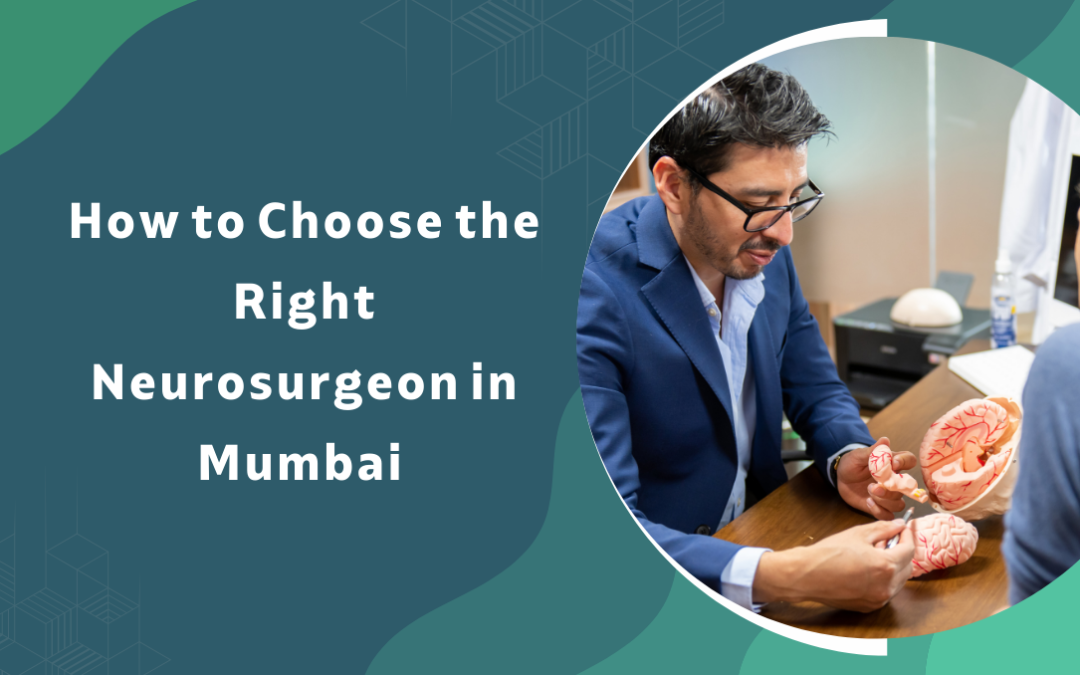
Nobody teaches you this. You get a diagnosis, someone hands you a referral, and suddenly you’re expected to pick the person who’ll operate on your brain or spine like you’re ordering off a menu. Most people just go with whoever’s available. That’s not a knock on them it’s genuinely confusing from the outside. But the difference between surgeons isn’t cosmetic. It’s in training, volume, and whether they’ve actually gone deep in your specific condition or just see it occasionally between other cases.
Dr. Gurneet Singh Sawhney spent 18 years at Fortis Hospital Mumbai. He’s also the surgeon patients end up with after going somewhere else first. That pattern repeats more than it should.
You don’t have to figure this out alone.
What Actually Matters Before You Book Anything
Forget the hospital branding for a minute. Here’s what to look at.
Where did they train after the degree: MCh in neurosurgery is the entry ticket. It doesn’t tell you much beyond that. What matters is what came after. Did they do a fellowship? In what specifically? Under whom? A surgeon who spent two years training under a functional neurosurgery specialist in Japan is not the same as one who covers functional cases as part of a general practice. Ask the question directly. The answer either has specifics in it or it doesn’t. Patients looking at Deep Brain Stimulation surgery in Mumbai especially this question matters a lot for DBS. It’s not a procedure where you want someone who does it occasionally.
How many times last year, not career: Surgeons don’t love this question. Ask it anyway. Not “do you have experience with this” that always gets a yes. Ask for a number. Last twelve months. Because a surgeon doing your procedure once a month and one doing it twice a year are not operating at the same level. Frequency matters. Hands stay sharp through repetition, not through credentials.
The hospital itself, separately: Good surgeon, poorly equipped hospital that’s still a limited situation. Ask about intraoperative neurophysiological monitoring. Ask about the ICU setup. Ask about post-surgical neuro rehab. These aren’t bonus features. They’re part of what determines how your recovery goes.
How they talk to you in the room: This one’s underrated. You should leave the consultation knowing what’s wrong, what the actual options are, what surgery looks like, what skipping surgery looks like, and what realistic recovery means. Not a version of it. Your case. If the answers feel generic or you’re being moved along, pay attention to that. It usually means the surgeon hasn’t sat with your case properly yet.
Questions to Write Down Before You Go
Bring a list. Don’t rely on remembering in the moment.
How many times have you done this procedure in the past year: Specific. Not “many times.” An actual number. If the question makes them uncomfortable, that’s useful information.
What risks are specific to my scans: Not the consent form checklist. Your imaging. Your anatomy. What can go wrong in your case given what they’re actually looking at. A surgeon who has reviewed your MRI properly can answer this. One who hasn’t, won’t be able to.
What if I wait: This is the one people forget. Surgery isn’t always the immediate right answer. And a good surgeon will tell you honestly when it isn’t. If watchful waiting is appropriate for your situation, you should hear that. Patients who’ve already read about whether neurological problems can exist with normal scans tend to ask this one better. Worth reading before the appointment.
Who’s there after surgery: Same surgeon? A junior team member? What happens if something unexpected comes up on day three post-op? The answer tells you a lot about how that practice actually runs when things get complicated.
Can I take time to decide: Should be yes. Unless it’s a true emergency, you’re entitled to think. Pressure to commit quickly outside an acute situation isn’t normal. It’s a flag.
As a Neurosurgeon in Mumbai with two subspecialty fellowships and 18 years of complex cases at Fortis, Dr. Sawhney doesn’t just tolerate these questions. He expects them.
Why Choose Dr. Gurneet Singh Sawhney
There are a lot of neurosurgeons in Mumbai. Genuinely. And a fair number of them are good. But good and subspecialised aren’t the same word.
Dr. Sawhney trained under Prof. Taira at Tokyo Women’s Medical University for functional neurosurgery. Then under Prof. Sugano at Juntendo University for epilepsy surgery. Two full fellowships. Not a short rotation, not an observership. Years of focused training in two areas most surgeons don’t go near. Back in Mumbai at Fortis Mulund West, the cases he sees are the ones that ran out of road elsewhere. And his consultations aren’t timed. He’ll tell you honestly if surgery isn’t the answer for you right now. He’ll tell you why. But if it is the answer, you’ll leave knowing exactly what that means for your case, your scans, your situation — not a general version of it.
FAQ's
How do I know if a neurosurgeon in Mumbai is trained for my specific condition?
Ask about fellowship training after their primary MCh degree not general experience, but subspecialty work directly relevant to your condition. A surgeon with dedicated training in epilepsy surgery or functional neurosurgery has gone much deeper than a general qualification shows.
Is getting a second opinion before brain surgery actually normal?
Completely normal, and every experienced surgeon expects it. If someone discourages a second opinion for a non-emergency procedure, that’s worth noting. A proper second opinion either confirms the plan or opens up better options.
What's different about Dr. Gurneet Singh Sawhney compared to other neurosurgeons in Mumbai?
Two dedicated fellowships from Japan functional neurosurgery and epilepsy surgery. That’s uncommon in India. Add 18 years at Fortis Hospital Mulund West and a Top Neurosurgeons in Mumbai recognition from India Today 2020, and the depth of his subspecialty training is directly relevant for complex and treatment-resistant cases.
Can I talk to Dr. Gurneet Sawhney online before coming in person?
Yes. He reviews your scans and records before the call so it’s already a clinical conversation when you connect. Call +91 8104310753 or email gurneetsawhney@gmail.com to set it up.
What does Dr. Gurneet Singh Sawhney treat?
Brain tumours, Parkinson’s disease, drug-resistant epilepsy, movement disorders, hydrocephalus, disc disease, cord compression, complex spine conditions. Fortis Hospital, Mulund West, Mumbai.
References
- National Institute of Neurological Disorders and Stroke. Neurological Diagnostic Tests and Procedures. NINDS, NIH.
- Doraiswamy S, et al. Use of Digital Technologies in Facilitating Healthcare Access. PubMed Central, NCBI.