

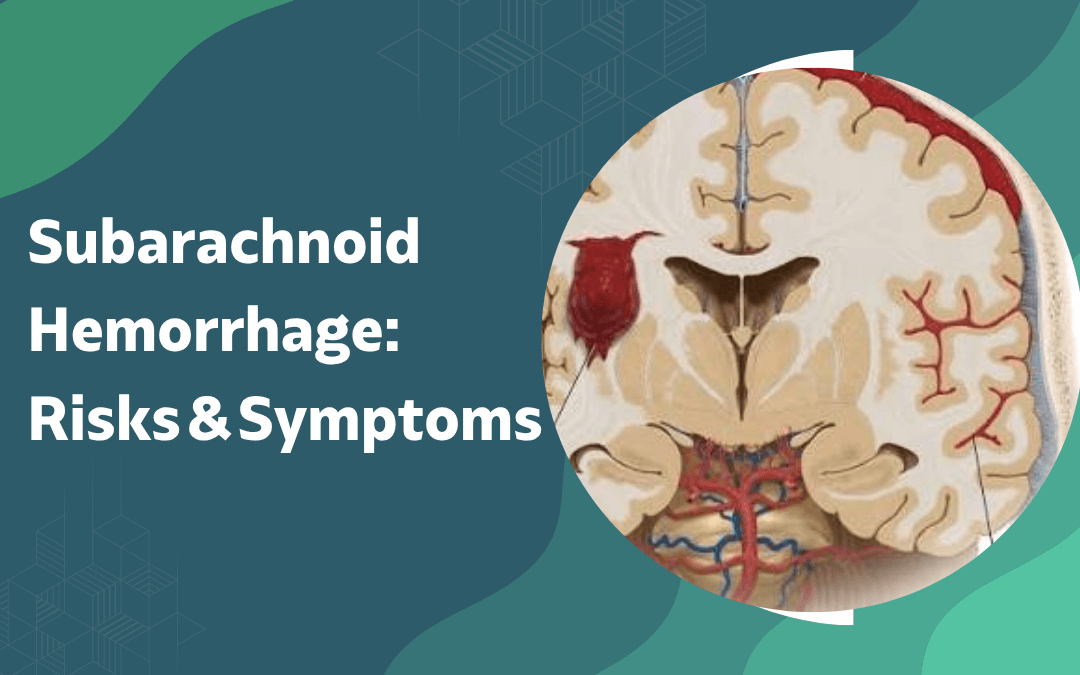
Subarachnoid hemorrhage is bleeding into the space between the brain and its covering membranes, most commonly from a ruptured intracranial aneurysm. It accounts for around 5% of all strokes but carries disproportionately high mortality 10–15% die before reaching hospital, with 30-day mortality at 30–40% even with treatment. Outcome depends on clinical grade at presentation, time to treatment, and whether the aneurysm is secured before rebleeding occurs.
According to Dr. Gurneet Singh Sawhney, a leading neurosurgeon in Mumbai, “The thunderclap headache is the symptom that saves lives when patients act on it it’s the aneurysm warning them before it fully ruptures, and the window between that warning and catastrophic rebleed is narrow.”
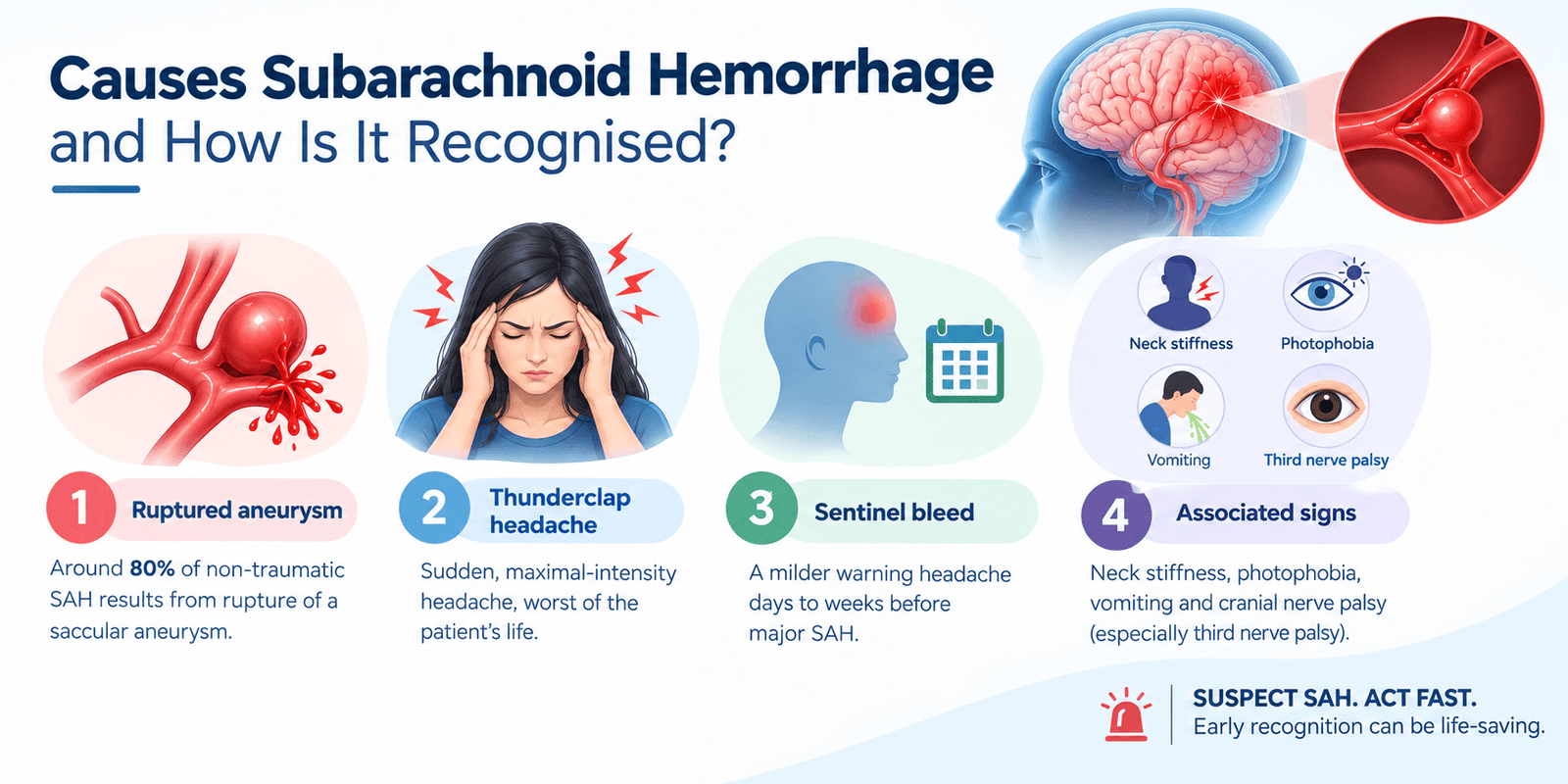
Sudden severe headache unlike anything before, with or without neck stiffness?
What Causes Subarachnoid Hemorrhage and How Is It Recognised?
CT brain without contrast diagnoses SAH in over 90% of cases within six hours. Beyond that window, lumbar puncture for xanthochromia is the required next step the same diagnostic urgency that drives early imaging in brain tumor surgery workups.
What Determines Whether Subarachnoid Hemorrhage Is Fatal?
- Clinical grading: Hunt-Hess and WFNS grading classify SAH from grade one (awake, mild headache) to grade five (deep coma). Grade one to two patients achieve good functional recovery in over 70% of cases; grade four to five in under 20%.
- Rebleeding risk: Untreated ruptured aneurysms carry 4% rebleed risk on day one, accumulating to 20% at two weeks; each rebleed carries 50% mortality. Aneurysm securing within 24 to 48 hours is now standard practice.
- Cerebral vasospasm: Between days four and fourteen, vasospasm produces delayed ischaemic deficit in 30% of patients. Managed with nimodipine, induced hypertension, and endovascular intervention, this complication accounts for much of the disability in survivors.
- Hydrocephalus: Acute obstructive hydrocephalus occurs in 20% of SAH patients and requires emergency external ventricular drainage a procedure with the same stereotactic accuracy demands as functional neurosurgery. Chronic communicating hydrocephalus requiring permanent shunting develops in a further subset during recovery.
Outcome remains heavily dependent on admission grade and speed of clinical response. For a closer look at the underlying aneurysm pathology, see brain aneurysm.
Why Choose Dr. Gurneet Singh Sawhney?
Dr. Gurneet Singh Sawhney holds MBBS, MS (General Surgery), and MCh (Neurosurgery) ranking first in the MCh university examination with specialised expertise in vascular neurosurgery including aneurysm clipping and endovascular procedures, fellowship training in Functional Neurosurgery from Japan, and over 18 years of surgical experience managing neurovascular emergencies, complex brain surgery, and post-SAH complications.
His vascular neurosurgery practice covers the full SAH pathway from emergency aneurysm securing through vasospasm monitoring and hydrocephalus management because outcomes in SAH is decided across the entire admission, not just in the operating room.
Frequently Asked Questions
What is the survival rate after subarachnoid hemorrhage?
Overall thirty-day survival runs at sixty to seventy percent, varying significantly with clinical grade at presentation.
Can subarachnoid hemorrhage be treated without surgery?
Small or low-grade bleeds may be managed endovascularly with coiling rather than open surgical clipping.
How quickly does rebleeding occur after subarachnoid hemorrhage?
Rebleeding risk is highest in the first 24 hours and cumulates to twenty percent within two weeks untreated.
Is a thunderclap headache always a subarachnoid hemorrhage?
Not always but it requires emergency CT and lumbar puncture to exclude SAH before any other diagnosis is considered.
Disclaimer: The information shared in this content is for educational purposes only and not for promotional use.