

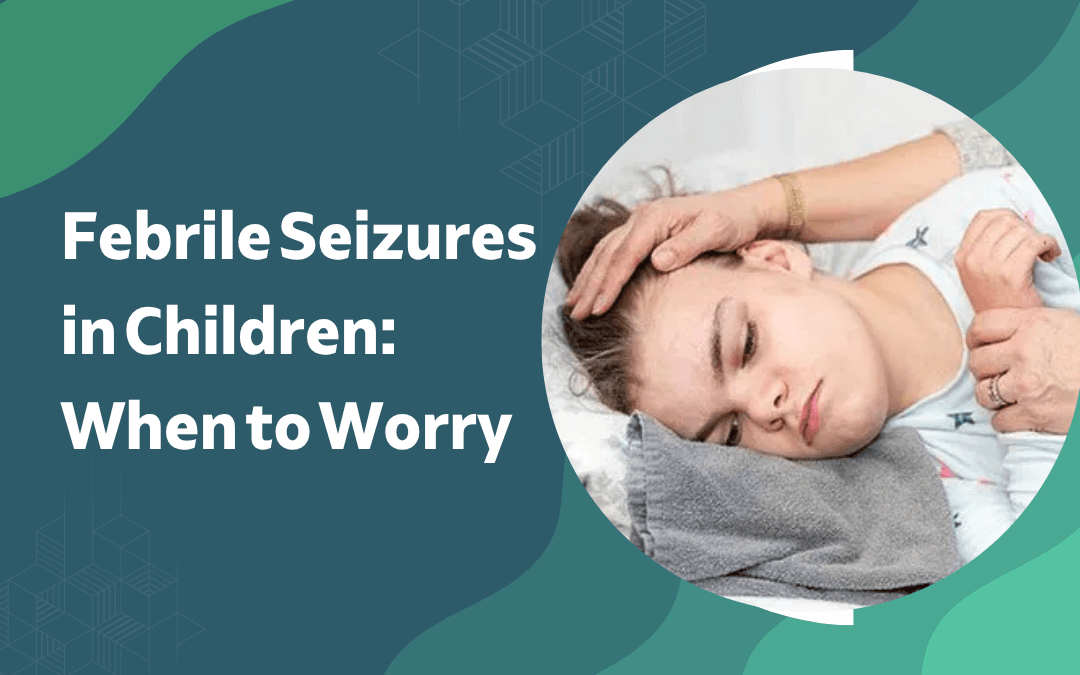
Febrile seizures occur in 2–5% of children between six months and five years, triggered by a rapid rise in body temperature rather than a primary neurological problem. Most are brief, generalised, and self-terminating stopping within two minutes with no permanent neurological deficit. But duration beyond five minutes, focal onset, recurrence within the same febrile illness, and age under six months shift a febrile seizure from a benign event into one that warrants urgent assessment and imaging.
According to Dr. Gurneet Singh Sawhney, a leading neurosurgeon in Mumbai, “A febrile seizure lasting under five minutes in a previously well child over six months is almost always benign but a prolonged or focal seizure needs the same urgency as any other first-time neurological event in a child.”
Child had a febrile seizure lasting more than five minutes or with focal features?
What Features Separate a Simple Febrile Seizure From a Complex One?
The simple versus complex distinction isn’t semantic it directly determines whether the child needs imaging, hospital admission, and neurology follow-up.
- Duration: Simple febrile seizures stop within five minutes without medication. Complex seizures extend beyond 15 minutes or require benzodiazepine to terminate prolonged seizures risk febrile status epilepticus, a medical emergency.
- Focal onset: Seizures beginning in one limb, asymmetric clonic activity, or post-ictal focal deficit indicate focal cortical involvement and require MRI to exclude a structural lesion.
- Recurrence: Any seizure recurring within the same febrile episode (within 24 hours) is classified as complex, regardless of duration.
- Age under six months: Falls outside the typical febrile seizure window. Lumbar puncture to exclude bacterial meningitis is standard at this age, not optional.
Simple febrile seizures don’t require EEG, imaging, or anticonvulsant medication after a single event. Complex ones need full epilepsy-pathway evaluation.
When Does a Febrile Seizure Become a Neurological Concern?
- Febrile status epilepticus: Seizure activity exceeding 30 minutes or repeated seizures without full recovery carries real risk of hippocampal injury and subsequent mesial temporal lobe epilepsy.
- Meningitis exclusion: Neck stiffness, bulging fontanelle, petechial rash, photophobia, or failure to recover consciousness within an hour require emergency lumbar puncture. These signs override the febrile seizure diagnosis until results are available.
- Structural lesion: Focal, prolonged, or developmentally concerning complex febrile seizures need MRI. Cortical dysplasia, low-grade tumour, and vascular malformation can all present this way and workup for such lesions follows the same pre-surgical mapping protocol used in functional neurosurgery.
- Developmental regression: Any loss of milestones in a child with febrile seizure history needs urgent neurological evaluation regression can signal an evolving epileptic encephalopathy.
Recurrence risk runs at 30 to 40 percent after a first episode. Parents need clear guidance on warning signs and when to call emergency services. For when a seizure crosses into epilepsy, see seizure vs epilepsy.
Why Choose Dr. Gurneet Singh Sawhney?
Dr. Gurneet Singh Sawhney holds MBBS, MS (General Surgery), and MCh (Neurosurgery) ranking first in the MCh university examination with a dedicated epilepsy surgery fellowship under Prof. Sugano at Juntendo University, Japan, and functional neurosurgery fellowship under Prof. Taira at Tokyo Women’s Medical University, covering the full spectrum of paediatric and adult seizure evaluation, epilepsy surgery candidacy workup, and drug-resistant epilepsy management.
Children presenting with complex febrile seizures or unexplained recurrent seizures are assessed with video EEG and epilepsy-protocol MRI before any treatment decision is made because the workup determines the answer, not the clinical impression alone.
Frequently Asked Questions
Do febrile seizures cause brain damage in children?
Simple febrile seizures don’t cause brain damage; prolonged febrile status epilepticus carries a small risk.
Does a febrile seizure mean my child has epilepsy?
No febrile seizures are provoked events and don’t meet the diagnostic criteria for epilepsy.
Should a child have an EEG after a simple febrile seizure?
Routine EEG is not recommended after a simple febrile seizure in a neurologically normal child.
What is the risk of febrile seizure recurrence after a first episode?
Recurrence risk is 30 to 40 percent, higher in children under 18 months at first seizure.
Disclaimer: The information shared in this content is for educational purposes only and not for promotional use.