

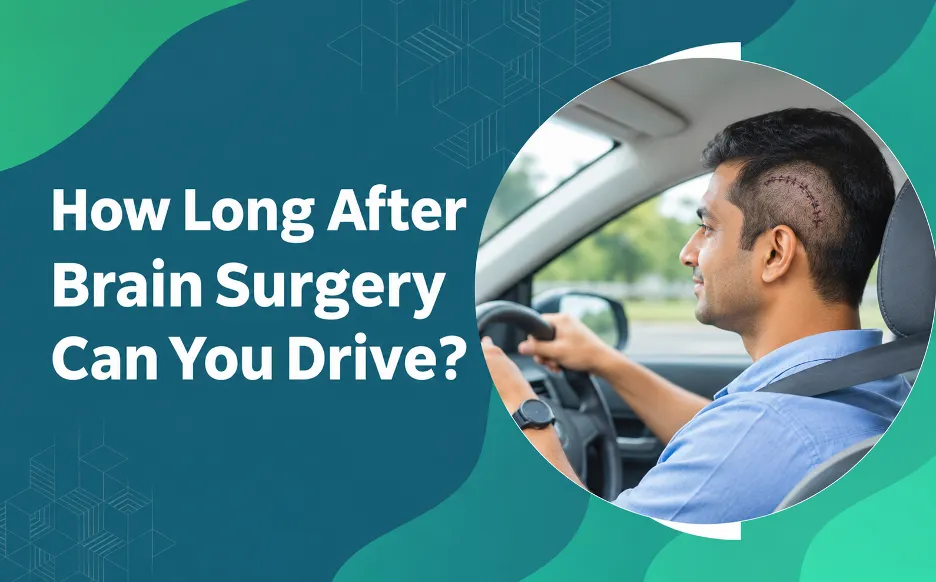
There are many variables involved in giving an exact time frame. It includes type of surgery, type of condition for which surgery was done, and how your post op course is progressing. With some minor procedures you may be back in your car in a week or so, whereas a patient who has had a craniotomy might take longer to get back on the road to recovery. So, in summary, it is best to leave this to your Neurosurgeon. He/She will know best when you can get back on the road.
Patients usually are eager to get back to driving within a few days of brain surgery as this helps them get back to work and to return to normal life. The question most frequently asked by the patient is “how long after brain surgery will I be able to drive?”
Yes, most of us get back to our normal lives after our brain surgery including driving. It signifies our return to independence. There are a number of factors which may affect your vision, your attention and your reaction time even when you feel that you are returning to normal after your brain surgery.
“Patients are always keen to get a date for their return to driving. In my case, I give them the conditions and once the patient is doing well and we get the scans to show improvement, then we can start thinking about driving. We need to make sure that everybody is safe on the road,” says Dr. Gurneet Singh Sawhney, Neurosurgeon in Mumbai.
When Is It Safe to Drive Again After Brain Surgery?
There is no universal number of days or weeks for when it is safe to return to driving a car after brain surgery. It is determined by your neurosurgeon after reviewing your individual case.
- There is no universal number: Practice varies. A survey of Canadian neurosurgeons found that recommendations differed widely, with most advising a return to driving within about one month of craniotomy for patients without prior seizures. The authors noted a lack of standard evidence behind these decisions.
- Some countries set formal limits: In the United Kingdom, for example, patients who have had a craniotomy are told to stop driving for six months, with longer limits for certain tumour types and for seizures. Rules in India and other countries differ, so follow your surgeon’s advice and your local licensing requirements.
- Never drive straight after surgery: You will not be cleared to drive immediately, including for the trip home from hospital. Plan for someone else to drive you.
Why Is Driving Restricted After Brain Surgery?
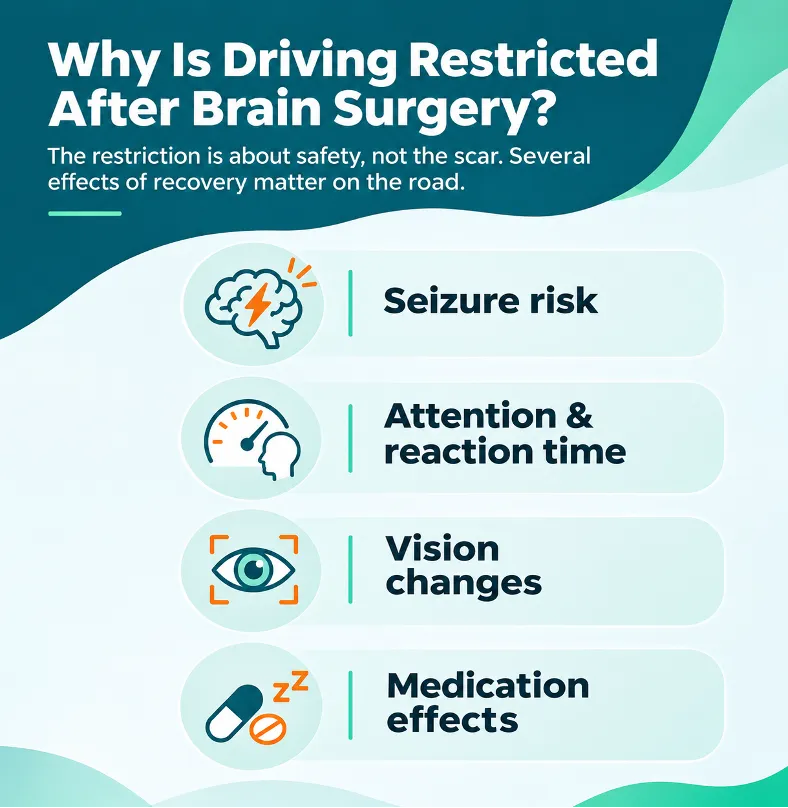
Restricting driving has nothing to do with the scar on your skull but everything to do with several aspects of your recovery which could put you or others at risk when driving.
Seizure risk:
Surgery on the surface of the brain can induce seizures in a few patients. Some seizures can occur in the weeks following the surgery and in a smaller group of patients, seizures can occur at a later date. A seizure whilst driving is very hazardous.
Attention and reaction time:
Driving requires split attention and quick reaction. Fatigue and decreased mental processing speed for complex tasks, such as driving, can occur even when an individual reports feeling completely rested.
Vision changes:
Blurred vision, double vision or loss of a sector of vision can occur after surgery in certain brain areas and only be detected by testing.
Medication effects:
Medications such as anti-seizure medications, pain and steroids can cause drowsiness or affect balance and cause dizziness that can affect driving.
10 Factors That Decide When You Can Drive
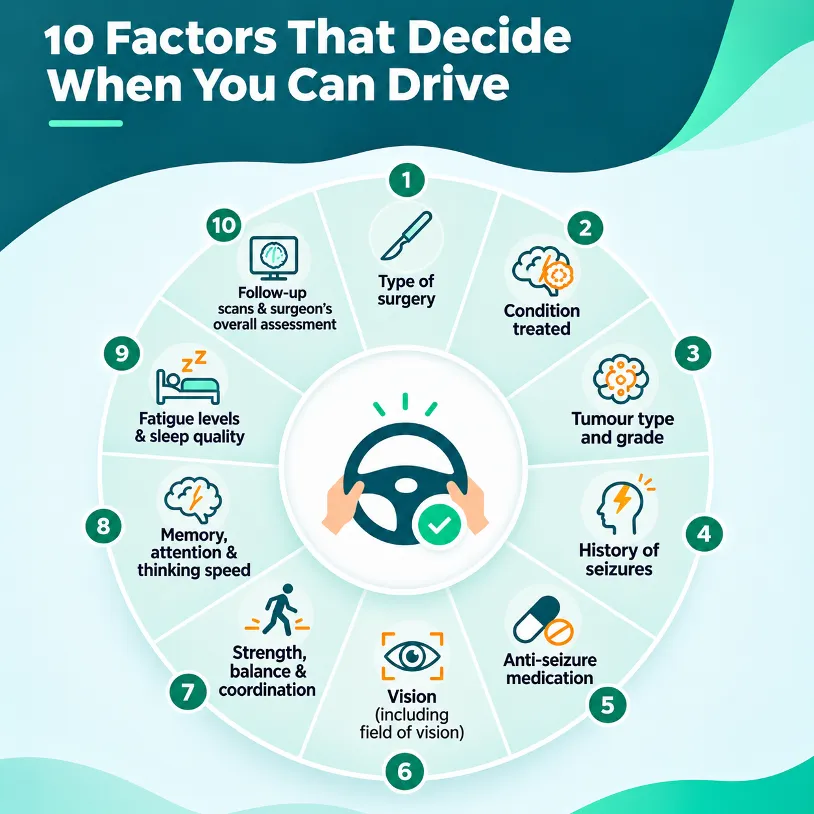
These are the factors with which surgeons determine their patients’ ability to drive following their neurosurgical procedure. Use this list as a map rather than a checklist.
- The type of surgery, for example biopsy, minimally invasive procedure, or craniotomy.
- The condition for which the surgery is undertaken (e.g. a tumor, hemorrhage, etc.).
- Tumour type and grade, where relevant.
- Whether you had seizures before or after surgery.
- Whether you take anti-seizure medication.
- Your vision, including field of vision.
- Strength, balance, and coordination.
- Memory, attention, and speed of thinking.
- Fatigue levels and sleep quality.
- Follow-up scans and your surgeon’s overall assessment.
Driving Timeline: General Guide by Situation
| Situation | What Is Commonly Advised |
| Needle biopsy or very small procedure | Shorter wait, often once you feel alert and your surgeon agrees |
| Craniotomy, no seizures, no deficits | Often weeks to several months, as decided by the surgeon and local rules |
| Seizures before or after surgery | A seizure-free period is usually required, commonly six to twelve months or more in some countries |
| Vision, strength, or thinking problems | Wait until these are assessed and have recovered |
Seizures and Driving After Brain Surgery
The main factor that affects driving after brain surgery is seizures. In the UK, for example, people with seizures are usually advised not to drive for 6-12 months following their last brain surgery. However details do vary between countries and individual cases.
If seizures continue despite medication, specialist review matters. Options such as epilepsy surgery are considered in selected patients whose seizures are not controlled by drugs, and your neurosurgery team can explain whether this applies to you.
Don’t stop or adjust your anti-seizure medications in an attempt to get back on the road faster.
How Is Fitness to Drive Assessed?
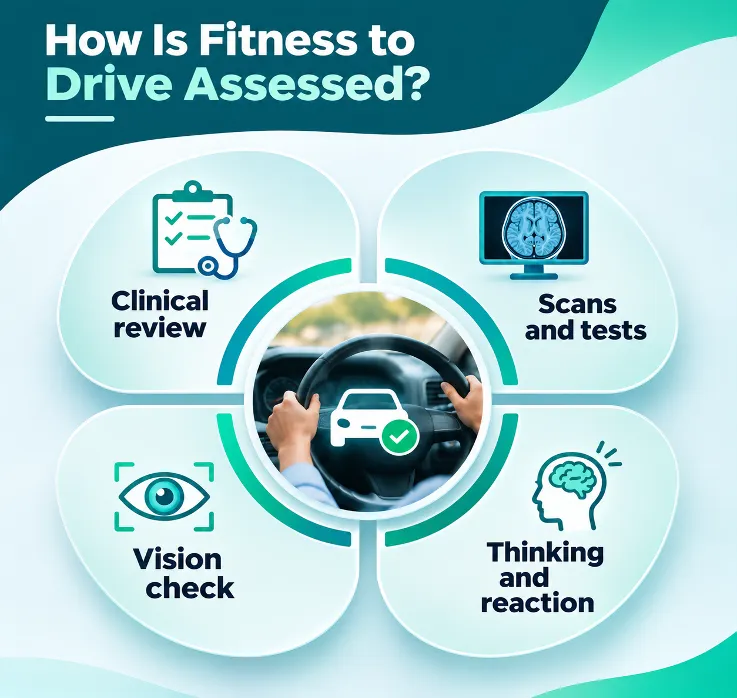
Clinical review:
How will your fitness to drive be assessed by your surgeon?Scans and tests:
Follow-up imaging can confirm the tumor has healed. If seizures are a problem an EEG may be recommended.Vision check:
Formal eye assessment would be arranged for patients who have had surgery to areas near the visual pathways.Thinking and reaction:
Attention and reaction time can be tested in a cognitive assessment or by an occupational therapist where concerns exist.
Staying Mobile Until You Are Cleared
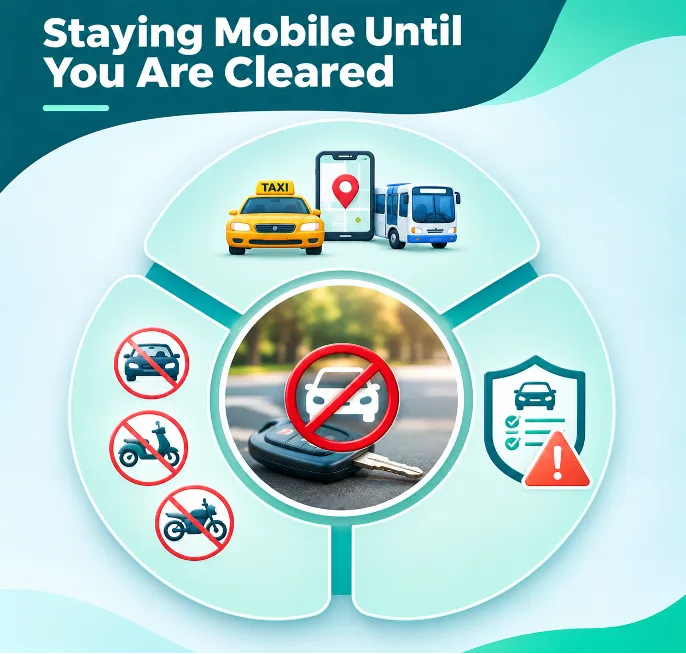
Waiting is easier with a plan.
- For essential travel, use taxis, ride sharing services or public transportation.
- Similarly, refrain from operating a scooter or bicycle as the same safety issues apply.
- Also remember that driving against medical advice can have implications regarding insurance.
When Should You Contact Your Neurosurgeon?
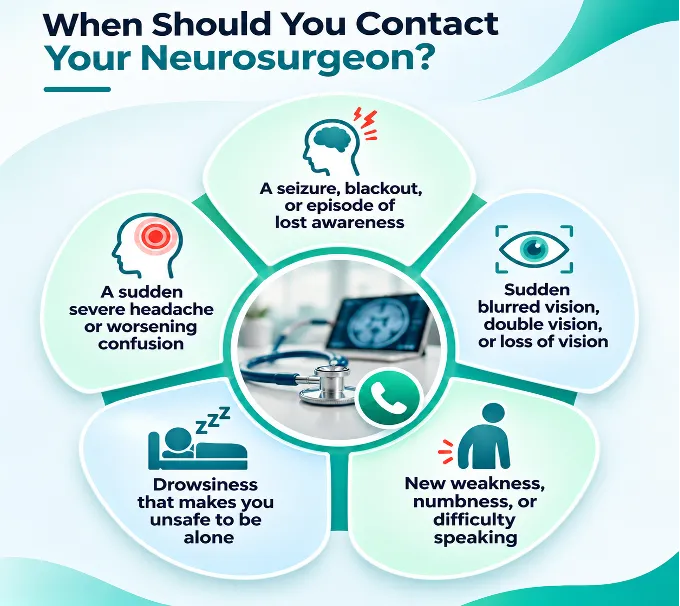
Contact your team promptly for any of the following during your recovery:
- A seizure, blackout, or episode of lost awareness
- Sudden development of blurred vision, double vision or loss of vision.
- New weakness, numbness, or difficulty speaking
- A sudden severe headache or worsening confusion
- Drowsiness that makes you unsafe to be alone
Studies have highlighted that there is a lack of consensus regarding return to driving following a craniotomy. However, it is widely agreed that the risk of seizures is a major factor to take into account. For information on road use and brain tumors, see the Brain Tumour Charity’s driving guide.
Dr. Gurneet Singh Sawhney from Mumbai says, “An honest report of even a single short episode of ‘blackout’ helps in management. A small flag raised at the right time is easy to manage and to keep you and others safe.”
Frequently Asked Questions
1. How long after brain surgery can you drive?
2. Can I drive home from the hospital after brain surgery?
3. I have had a seizure after brain surgery, will I be able to return to driving?
4. Will my vision affect when I can drive?
5. Can I ride a scooter or bike after my brain surgery?
References
- PubMed — Return to Driving after a Craniotomy: A Systematic Review and Evidence-Based Approach: https://pubmed.ncbi.nlm.nih.gov/41131906/
- The Brain Tumour Charity — Driving and brain tumours: https://www.thebraintumourcharity.org/living-with-a-brain-tumour/maintaining-your-independence/driving-and-brain-tumours/
Medical Disclaimer
This article is intended for general educational purposes and does not replace professional medical advice, diagnosis, or treatment. Seizures have different causes and require individual assessment. In an emergency, contact 112 in India or seek immediate medical assistance.